
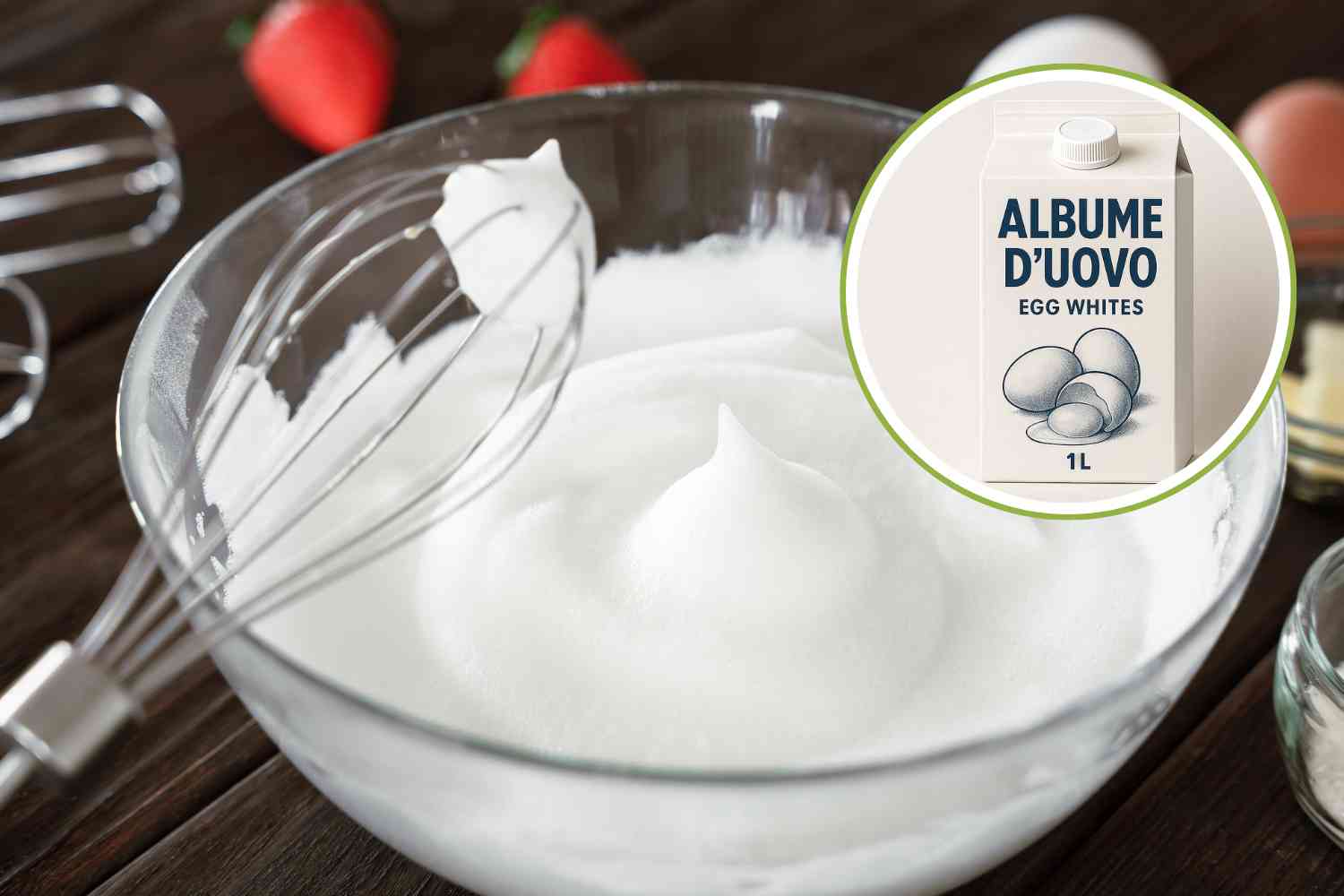
It is found in the fridge counter, in packs similar to those of milk, it is white, fluid and without smell. Let’s talk about the‘pasteurized liquid egg whitesan increasingly widespread and refined product, now entered the Italian kitchens of the Italians.
But where does all that albume come from in the brick? Thousands of eggs, it would be answered. And it’s true. The point is that A production chain is hidden behind each liter of egg white. Let’s see what it is.
The egg white is not born liquid in the brick
Who does not know the composition of the eggs? They have a shell, a yolk and, in fact, an egg white. In nature, everything remains united, in industry no. There are specialized systems that mechanically separate yolks and egg whiteswhere thousands of eggs are broken automatically every day. The machines, calibrated to the millimeter, divide the components without crossed contaminations. At that point, the egg white is filtered, subjected to severe hygienic checks and then pasteurized.
The passage of pasteurization is fundamental. By heating the egg white at controlled temperatures for a precise time, potentially dangerous bacteria are eliminated, such as Salmonella, while maintaining the intact protein structure. The product remains liquid, but safe, and it is thanks to this treatment that the egg white can be sold ready for use.
Where do all these eggs come from?
The answer is simple and complex together: come on industrial farms. The large al egg white manufacturers collaborate with those companies that manage millions of ovary hens. In many cases, these are hens bred on the ground and in the sheds, fed with standardized feed, subjected to very rigid production cycles.
Every day, each hen can lay an egg. And if the market requires it, part of that production does not end in the classic trays of six, but enters another circuit.
In fact exists a share of production specifically intended for industrial transformation. Eggs that are never sold with the shell, eggs born to be broken, separated and treated. The egg white of these products ends up in the brick. The yolk, in many cases, is used elsewhere: in the production of fresh pasta, in the preparation of industrial desserts, in sauces such as mayonnaise.
Why is Brick egg white more and more widespread?
In recent years, the liquid egg white demand has grown exponentially. The reason? Food fashions. The HEAPERPROTEIC DIETlo sportthe search for Fast and light meals They find a pure protein source in album, without fat or cholesterol. In one package the proteins of a dozen eggs are concentrated, ready to be cooked and/or mounted.
Those who follow a protein diet often prefer to avoid yolk, which are more caloric, and so the almond bricks become A very practical solution. Open, verses and kitchens in a few seconds, without slamming the eggs, avoiding waste and without having to throw the advanced yolk. A convenience that has conquered athletes, fitness enthusiasts and people attentive to nutrition.
But is it really the same egg white of the whole egg?
Yes, but with some difference. At the nutritional level, the egg white in brick is practically identical to the fresh onesince it contains the same proteins, the same amino acids, the same biological value. What changes is the consistency: pasteurized egg white can be slightly more liquidmore homogeneous, it mounts less easily by stiff, precisely because of pasteurization. Some chefs prefer it for certain preparations, others continue to use fresh egg white for perfect meringue.
The least known side: ethics and the environment
There is also a less known aspect than this production: the ethical impact. The ovaiole hens that produce the eggs for brick often live in standardized conditions, where only the quantity counts. The production cycle is continuous, pushed to the maximum, and obviously not very natural. These are not always intensive farms in the most brutal sense of the term, but the industrial system does not leave much room for the hen as an animal, but rather to the hen as a productive gear.
In addition, the transport of eggs, the consumption of water and energy for washing, mechanical breakage, pasteurization, brick packaging and maintenance at controlled temperature entails A relevant environmental imprint.
To conclude
The egg white in the brick certainly does not constitute an unsolved mystery, because it is the result of a well -oiled supply chain. Born from selected eggs for the transformation, it crosses a separation process, it is pasteurized and packaged. It is comfortable, fast and safe. However, like any industrial product, it brings both advantages and shaded areas, and understanding its origin means choosing more consciously.
