
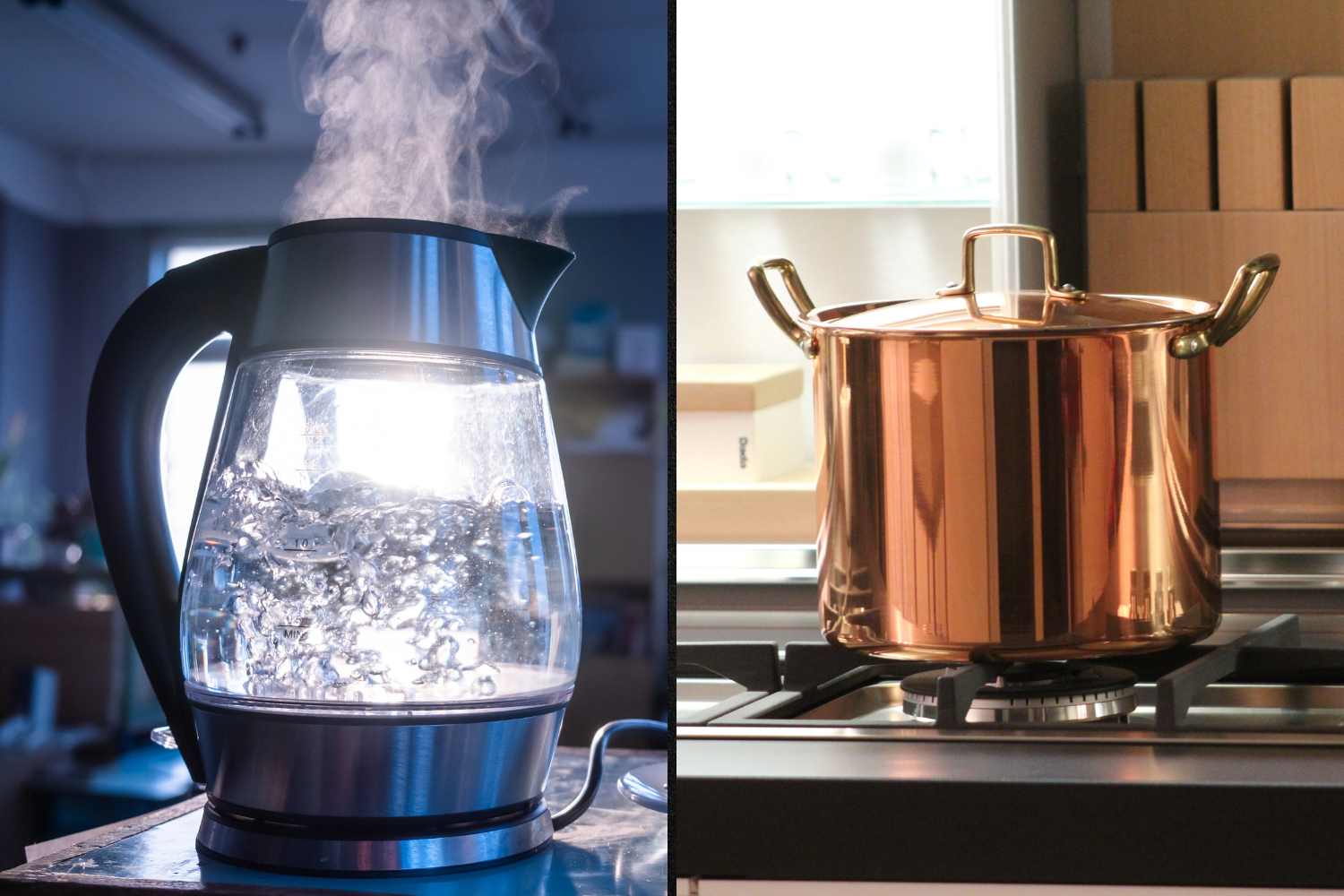
Who needs boiling water – to cook the pasta and make culinary preparations, for an evening herbal tea or an afternoon tea – is located in front of a domestic dilemma as simple as it is recurrent: better to use an electric kettle or to put the classic pot on the stove?
The answer depends on many factors. Speed, energy consumption, practicality, type of cuisine, initial cost, therefore, to answer the initial question we must go deep, compare real performance and understand which device represents the most efficient solution in everyday life.
Speed: who does first?
We immediately test the two contenders. To boil a liter of water, an electric kettle takes on average from 2 to 3 minutes. The most performing models are able to reduce time to just over 90 seconds, especially if designed with 2000-2400 watts resistance and with well isolated containers.
A traditional pot on gas stove-in standard conditions-needs 5-8 minutes, depending on the diameter of the bottom, material (steel, aluminum, copper) and firepower. With a induction stove, the times improve, but you hardly go down below 4 minutes, even with optimized pots.
The data is clear: The electric kettle is faster. The great efficiency in transferring heat directly to the water, without lateral dispersions, makes the difference.
Energy efficiency: who consumes less?
Here the question becomes more technical, because it is not enough to know how long it takes a tool to boil the water and you need to understand how much energy consumes to do it.
The electric kettle, thanks to the immersed resistance, transfers almost all the energy to the water, therefore the thermal dispersion is minimal. On a domestic scale, this means that – with the same heated quantity – consumes less electricity than a pot would consume under a gas stove.
In direct comparison, boiling a liter of water with a kettle can cost about 3-5 cents of eurosdepending on the electrical rate. With a Pot on gas stove, the cost is around 5-8 centsaccording to the duration of the flame and the dispersion of heat (the estimates are obviously very generic).
The induction is an exception: a induction stove, combined with a suitable pot, can approach the efficiency of the kettle, even if rarely exceeds it.
Practicality: who wins in comfort?

From the point of view of practicality, The kettle wins with low hands. Just press a button, wait a few minutes, and the water is ready, without considering that many models have automatic shutdown, temperature settings (70 ° C, 80 ° C …) and the heat maintenance function.
The pot requires more attention: it must be positioned on the stove, controlled from time to time, and just removed the water starts to boil to avoid waste. In addition, steam can damage the hoods if used too close to the wall.
There is also a factor that concerns safety, because the kettle has a closed system, with insulating handle and stable base, while the pot can be more dangerous, especially if left unattended or if full to the edge.
Maintenance and durability: which one does most resist?

The electric kettle has an average life of about 3-5 years, depending on the quality of the model and the hardness of the water. The limestone is the main enemy: without regular cleaning, the resistance is incrusted and the performance worsens. Some models include filters or anti -valcare treatments, but they are not enough.
The pots – in particular those in stainless steel – can last decades, with minimal maintenance, since there are no electrical parts, no risk of short circuit and no need for decalcification, just wash and dry them. From this point of view, The old pot remains unbeatable.
Initial cost: who is more convenient?

A pot is a long -term investment, and its cost is distributed over the years. With 20-30 euros You buy a reliable, resistant model, even aesthetically pleasant.
An electric kettle starts from about 15 eurosthe quality models are around 40 and 70 eurosWhile The most advanced exceed 100 eurosespecially if equipped with intelligent functions and/or author design.
Over time, energy savings can compensate for the initial cost, but the advantage depends on the frequency of use.
So what to choose?
If you are looking for speed, energy efficiency and practicality, the electric kettle It is the answer: intelligent choice for those who often prepare tea, coffee, instant broths or pastines, since it reduces times, limits consumption and simplifies life.
If you prefer a lasting, universal object, without electronic components and also suitable for other uses (vegetable cooking, soup heating), the traditional pot maintains its charm.
The choice, after all, is not definitive, and most of the kitchens host them both, each ready to fulfill their task, one for rapidity, the other for versatility. It depends on the time you have, on how you live the kitchen and what, every day, you find yourself preparing.
