
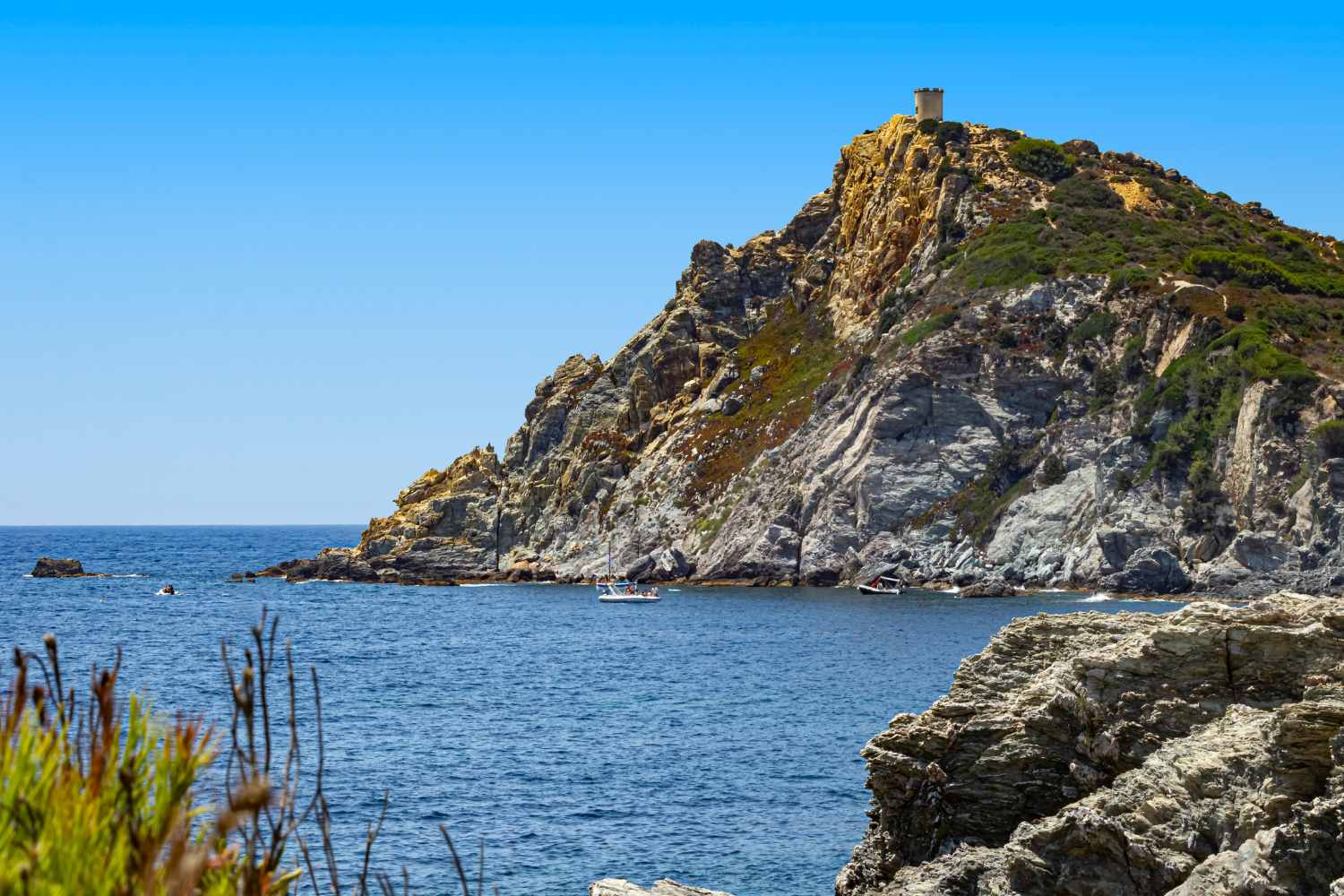
Ninety-five hectares, zero cars, a ferry every morning from the port of Le Brusc. These three facts are enough to understand why the island of Embiez, off the coast of Six-Fours-les-Plages in the Var department, is confirming itself among the most searched destinations of the 2026 season by those who have stopped looking for Provence on advertising posters.
Opposite the coast of the Var department, in the Provence-Alpes-Côte d’Azur arc, lies a tiny archipelago that many ignore until someone whispers its name. Nicknamed “the island of flowers” by locals for its excellent botanical biodiversity, Embiez is not too far from Italy — the Ligurian coast is less than a two-hour drive from Le Brusc — and functions as a universe with a rhythm all its own.
The legacy of Paul Ricard
On this 1.5 km long island, used for salt works until 1934, there were only Fort Saint-Pierre, the castle of Sainte-Cécile and an old customs barracks, at least until 1958, when it was purchased by Paul Ricard. The Marseille magnate, famous for pastis, had something specific in mind: to set up an accessible but protected paradise at the same time, where nature was not a mere side dish but the true protagonist. The philosophy he imposed then has remained intact, which is why both overbuilding and private traffic are absent, and biodiversity is a value to be protected.
The Embiez archipelago is classified as a Natura 2000 area, the European network of natural sites identified for the rarity and/or fragility of wild animal and plant species and their habitats. It is not a bureaucratic detail, but rather the reason why the waters are what they are.
The Oceanographic Institute
The scientific heart of the island is the Institut Océanographique Paul Ricard, founded in 1966, a Mediterranean research center that studies marine biodiversity and sea health.
View this post on Instagram
The results are there for all to see, because the port is Blue Flag certified, the seagrass is constantly monitored (seagrass is an endemic plant of the Mediterranean, classified as a protected species according to the dictates of the Habitats Directive 92/43/EEC and of extreme importance for the surrounding ecosystem, given that it produces large quantities of oxygen and contributes to the protection of the coasts from erosion) and the waters maintain a rare transparency for the coastal Mediterranean.
Coves and organic vineyards
The beaches are not the classic equipped beaches, with stacked deckchairs, umbrellas and shops, but primitive places, where nature dominates. There are 8 main coves, each wilder than the other, with crystal clear waters and no bars in the immediate vicinity. The Plage des Allemands is the most accessible and popular, the Crique de la Trirème requires a little more walking but offers a quiet that is certainly worth the effort.
View this post on Instagram
The ten hectares of vineyards on the island, grown organically in the terroir of the Côtes de Provence, produce wines that bring the salt of the Sirocco and the warmth of granite into the bottle. A tasting at Domaine Ile des Embiez is an integral part of the experience.
How to move and when to go
The most convenient airports are Toulon-Hyères and Marseille, from which you can continue by train or car towards Le Brusc. Regular boats leave from Quai Saint-Pierre throughout the year; in summer the first ride is at seven in the morning, while the last return can exceed midnight during evening events.
Once disembarked, given the total absence of cars, you move on foot, by bicycle or with the seasonal tourist train that runs through pine forests and panoramic points. The coastal path measures seven kilometers, therefore, at a leisurely pace, it takes about an hour and a half.
The ideal season is from April to June and from September to October, when the climate is mild and the waters invite you to swim without the summer crowds. Summer brings entertainment, open-air concerts, Provencal markets and cinema under the stars, winter, as almost always happens, returns a more intimate face, with almost deserted paths.
Of note: the reopening of the Oceanographic Institute is scheduled for spring 2026, which makes the current season particularly suitable for a complete visit.
If you want to get to know a truly uncontaminated place, where the Mediterranean still has the color and transparency it had before concrete and cars arrived, Embiez is the island for you: take the ferry from Le Brusc, and for once leave the car on the continent
