
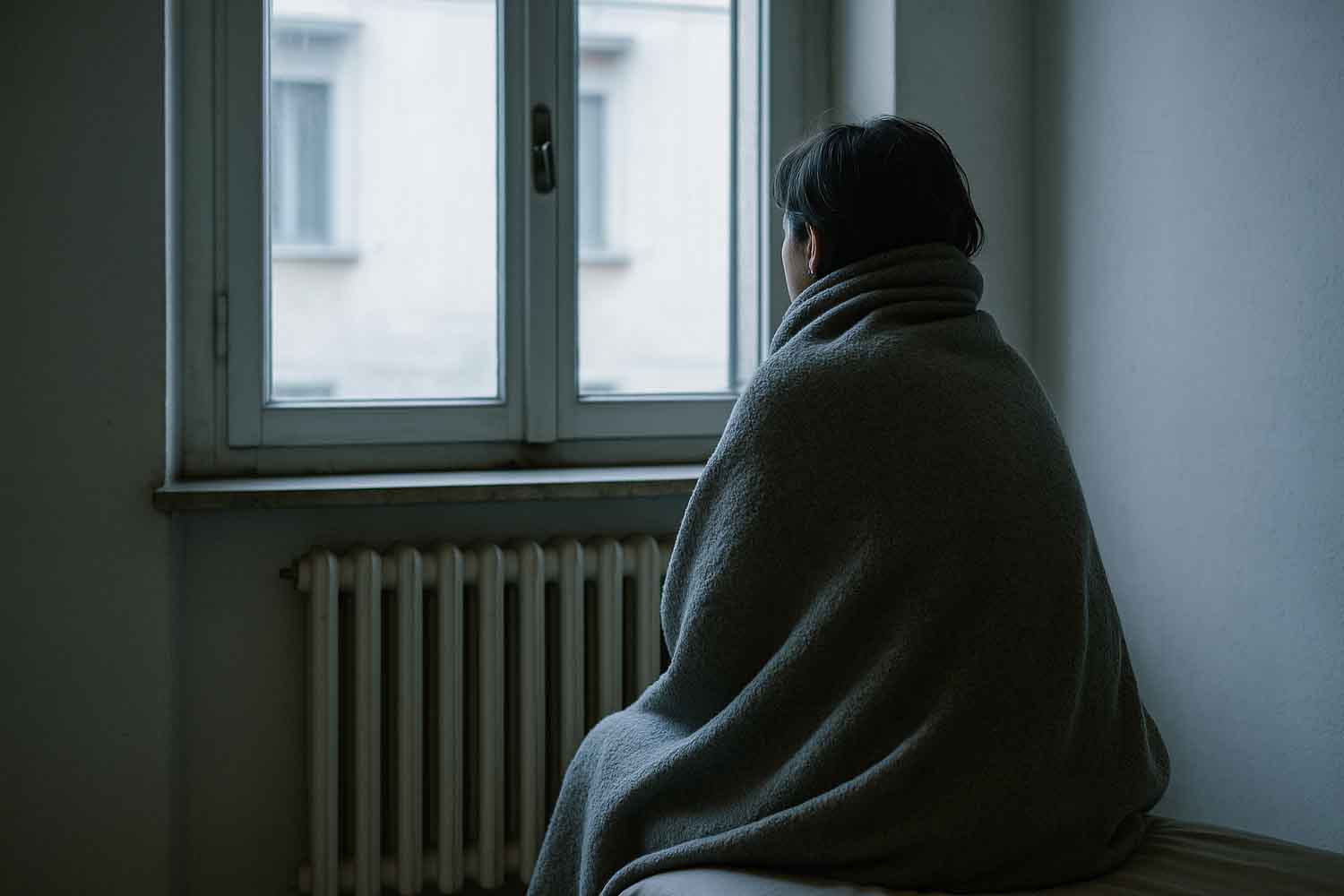
Opening the gas bill today has become a small ritual of collective anxiety. There are those who do the math, those who turn down the heating “a sweatshirt is enough”, those who turn everything off as soon as they leave the house. But there are also those who don’t make these choices out of virtue or environmental concern: they make them because they have no alternatives. This is where energy poverty comes into play, a technical expression that describes a very concrete and very Italian reality.
Energy poverty describes the situation of those who are unable to guarantee essential energy services at home at sustainable costs. Translated: cold homes in winter, too hot in summer, hot water rationed, lights off not out of romanticism but out of necessity. It’s not just a question of low income. Often it involves old, poorly insulated houses with inefficient systems that consume gas and energy.
Many Italian families thus find themselves spending a huge part of their income on bills, giving up other things. Energy poverty doesn’t make any noise, it can’t be seen from pure and simple statistics, but it infiltrates everyday life: in the cold that remains, in closed rooms, in the fear of turning on the heating “too early”.
Expensive gas and inequalities
When the price of gas rises, the impact is not the same for everyone. Those who live in an efficient home are able to contain consumption. Those who live in an old apartment, perhaps rented, without a thermal coat and with an outdated boiler, consume more even if they try to save money. This is where energy poverty becomes a social issue.
The consequences are not abstract. Cold and damp homes affect the health, especially of the elderly and children. The stress of bills weighs on psychological well-being. And the more difficulty you get into, the less chance you have of improving the situation. A vicious circle that affects thousands of families, even those who until recently considered themselves “safe”.
In this context, saving gas is not just a personal or environmental choice. It is also a gesture that has a collective dimension. Reducing consumption means easing the overall demand for energy, contributing – over time – to containing prices. It is not an immediate effect, nor a miraculous one, but it is real.
Using less gas also means avoiding waste in a system where energy is not distributed equally. When those who can afford it consume without thinking, the burden falls especially on those who are already in difficulty. In this sense, energy saving becomes a form of attention towards others, a discreet solidarity that comes from daily habits, not from proclamations.
Energy poverty, environment and future: the same direction
Reducing gas consumption also means reducing emissions and dependence on fossil fuels. But there is a deeper connection. A more efficient energy system, based on better insulated houses and renewable sources, is also a fairer system. Fighting energy poverty means investing in efficiency, not asking endless sacrifices from those who already have little.
In the end, the point is not to live in the cold out of guilt. The point is to understand that every energy choice has an impact that goes beyond the individual apartment. Saving gas today is a concrete way to stay within the ecological transition without forgetting the social dimension. And perhaps it is from here, from normal and conscious gestures, that the idea of truly sustainable energy comes.
You might also be interested in:
