
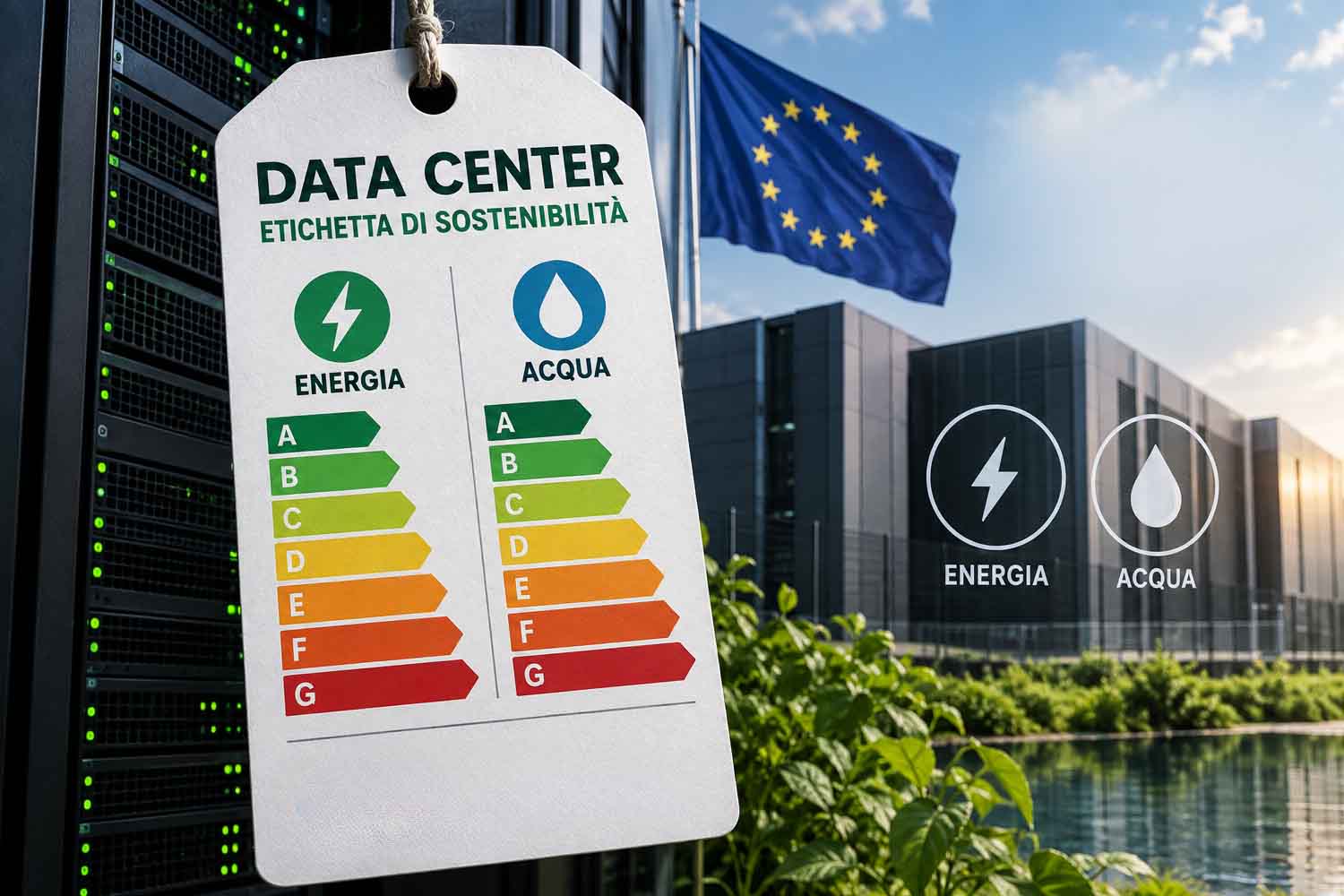
Within August 15, 2027opening the European data center database, next to every large structure we could find two letters. One will tell you how efficient it is at using energy, the other how efficient it is at using water. A, of course, will be the best result. G the one with some more room for improvement. It is the new classification system presented by European Commission on 21 September 2026, together with a package of measures dedicated to the efficiency of these infrastructures. The delegated regulation will now have to pass the normal two-month scrutiny period by Parliament and Council.
The news comes as European data centers are becoming significantly hungrier for electricity. In 2024 they have consumed approximately 68 TWh; according to the estimates cited by the Commission they could reach 114 TWh in 2030exceeding 3% of the Union’s total electricity demand. In the same period Brussels wants to rapidly increase European computing capacity: the declared objective is triple data center capacity over the next five to seven yearsalso driven by the growth of artificial intelligence and cloud services.
The European idea, therefore, is to grow these infrastructures while simultaneously trying to better understand how much they consume and how well they use the resources. At the moment the two movements move forward together.
A letter for energy and one for water
The label will be only one, but with two distinct scales from A to G. The first concerns the Power Usage Effectivenessthe PUE. The name is from a technical manual, the concept much less so: it compares all the electricity consumed by the data center with that which actually reaches the servers and other IT equipment.
Computers, in fact, represent only one part of the machine. You need cooling systems, uninterruptible power supplies, electrical distribution and other equipment that keeps the entire facility running. The closer the PUE is to the theoretical value of 1, the lower the share of energy used for everything surrounding the actual IT work. In the European system, a class A will correspond to the best values, while the less efficient ones will progressively decrease towards G.
The second letter will be assigned through the Water Usage EffectivenessWUE, which relates thefresh water used by the data center with the energy consumed by IT equipment. Here too, a lower value indicates greater efficiency. This is particularly interesting data because water consumption changes a lot based on the cooling technology and the place where the system is located: using the same quantity of water in an area rich in water resources or in an area subjected to water stress evidently tells two different stories. Precisely for this reason the Commission requires that the labels be accompanied by information useful for reading the values in their geographical and climatic context.
Inside the label there will also be renewables, grid and recovered heat
The two letters are the most immediate part, but the label will contain other information. Among these will be the use of renewable sourcesthe ability of the data center to offer services to the electricity grid and the indication of the possibility of recovering the heat generated by the systems. Everything will be collected in the European database and consultable electronically.
Waste heat is one of the most interesting steps. A data center produces heat practically as it works and, where the technical conditions and a sufficiently close network exist, part of that energy can be recovered and used for district heating of homes and buildings. The Commission estimates that recovering around half of the waste heat produced by European data centers would equate to overall heating demand of around four million families. An amount large enough to deserve something better than the outdoors.
The Commission also looks at flexibility. Data centers capable of shifting part of their consumption to the hours most favorable to the grid could help to better manage electricity demand and facilitate the integration of a greater quantity of renewable energy. It is one of the reasons why Brussels also considers these infrastructures as possible resources of the electricity system, as long as they are designed and managed in that direction.
What will be left out of the European report card
An A on energy or water will describe those two aspects well, without automatically turning into an overall sustainability badge. The system, at least in its first version, does not summarize in a single vote the impacts related to the construction of buildings, materials, noise, emergency generators or the new electrical infrastructures necessary to connect very large systems.
These are issues that greatly depend on the project and the territory and will continue to be addressed through other authorization and environmental tools. However, the same regulation provides for the possibility of adding other climate and environmental indicators in the future. The double AG must therefore be read for what it measures: it allows similar structures to be compared more easily and makes differences visible which until now remained mainly within technical documents and reports. A first step towards transparency.
The labels arrive in 2027, the mandatory limits are still in preparation
The system will concern data centers that already fall under the European reporting obligations foreseen by the Energy Efficiency Directive: structures with a installed IT power of at least 500 kW. Operators already communicate information on energy, water and other indicators to the European database; new labels will be automatically generated from this data.
The first issue is expected by August 15, 2027 and will then be updated every year. The labels will be publicly accessible in the European database, in the official languages of the Union. The Commission is working separately on mandatory minimum performance standardsthat is, on any thresholds that in the future could require the less efficient plants to actually intervene. A twelve-week public consultation opened on 21 September and will end on December 14, 2026; the legislative proposal is expected in the second quarter of 2027.
The classification system itself may change. By March 31, 2029 the Commission will have to evaluate its functioning and will be able to add new environmental and climate aspects, modify the scales or even introduce an indicator capable of bringing together multiple sustainability parameters.
Meanwhile, the European calendar puts together two numbers that are difficult to ignore: data center capacity set to grow rapidly and electricity consumption that could exceed 100 TWh by 2030. From 2027 we will at least know with greater precision which facilities are using water and energy best. On land consumption, however, the report card remains blank for now.
