
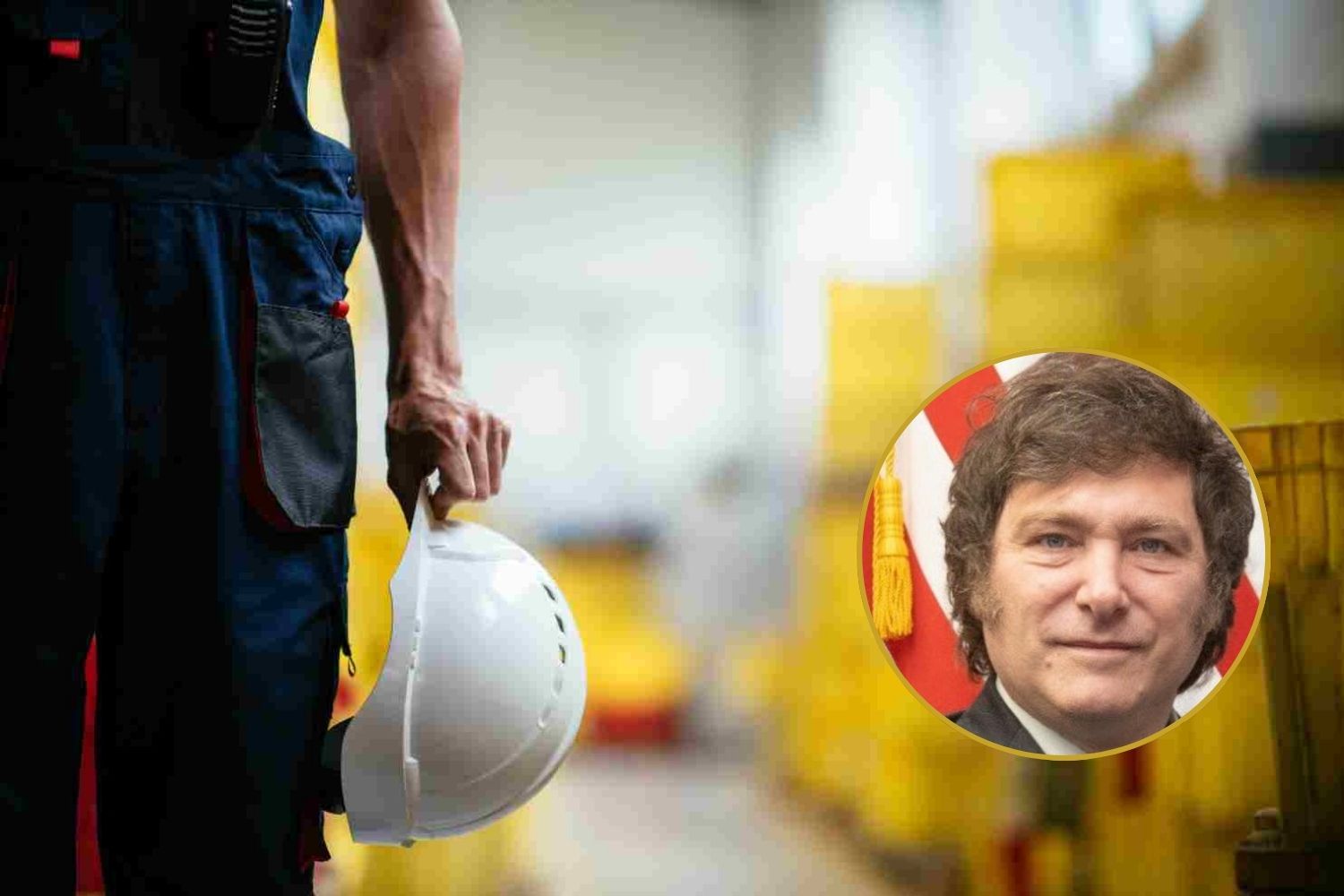
Another political battle in Argentina, this time on the labor front, saw the Chamber of Deputies approve, last night, the labor reform desired by the president Javier Milei. With 135 votes in favor and 115 against, the text, which amends the labor laws in force since 1974, received the green light after a heated debate lasting over ten hours.
Obviously, if we consider that this approval did not go unnoticed: in Buenos Aires, the 24-hour strike called by Confederación General del Trabajo (CGT), the main Argentine trade union, paralyzed the city, blocking numerous strategic sectors and causing huge disruption.
The reason? If this is the fourth strike organized by the CGT since Milei – an anarcho-capitalist, known for his radical ultra-right political positions and a climate change denier – came to power in 2023, the reason is simple: the country has taken to the streets to oppose a reform which, according to critics, represents an attack on workers’ rights and a step backwards on the benefits achieved with decades of trade union struggles.
But what is it about?
Milei’s labor reform
Milei’s government argued that the law was necessary to modernize a system considered obsolete and uncompetitive. The declared objective is to reduce informal employment (which in Argentina exceeds 40%) and encourage companies to hire, arguing that current regulations discourage investments,
View this post on Instagram
However, for trade unions, this reform represents a serious setback, risking increasing workers’ precariousness and reducing collective bargaining power.
At the center of the controversy are some significant changes proposed by the reform, including:
- Increase in working hours: the daily limit of eight working hours may be extended up to twelve hours, increasing the risk of exploitation and work stress
- Overtime and “hour bank”: overtime, which today is paid with a 50% bonus during weekdays and 100% on weekends and holidays, will be compensated with days of rest or reduced hours, but not with an economic bonus. A novelty which, according to critics, could encourage companies to further reduce costs to the detriment of workers
- Less responsibility for companies: the law reduces the obligations for companies regarding the payment of pension contributions, transferring the burden of some severance pay onto the state pension system, in an already difficult moment for the country’s welfare
- Exploitation of unions: The reform drastically limits the power of unions, providing that during strikes minimum service levels of 75% in essential sectors (such as health, transport and education) and 50% in critical sectors are guaranteed. Furthermore, trade union meetings will have to be authorized by employers and workers will not receive any remuneration for the time spent on these activities
- Company agreements vs collective agreements: Another important change concerns the reinforcement of company agreements, which will have priority over national collective agreements, reducing the bargaining power of unions at national level
The economic and social consequences
This reform would coincide with the period in which import liberalization forced many Argentine companies to compete with Chinese products, resulting in the closure of nearly 21,000 companies and the loss of 300,000 formal jobs over the past two years. President Milei is trying to restore the country’s economy with ultra-liberal policies, but the labor reform, together with these economic disasters, has caused strong social discontent.
The historic FATE tire factory, for example, recently announced the cessation of its operations and the dismissal of over 900 employees. These events are the reflection of an economic system which, while aiming for modernisation, risks fueling growing social inequality and job insecurity.
Now the bill must pass to the Senate for final ratification, but for Milei it already represents the first legislative victory of 2026, with the aim of obtaining final approval by March 1, before ordinary sessions of Congress resume.
