
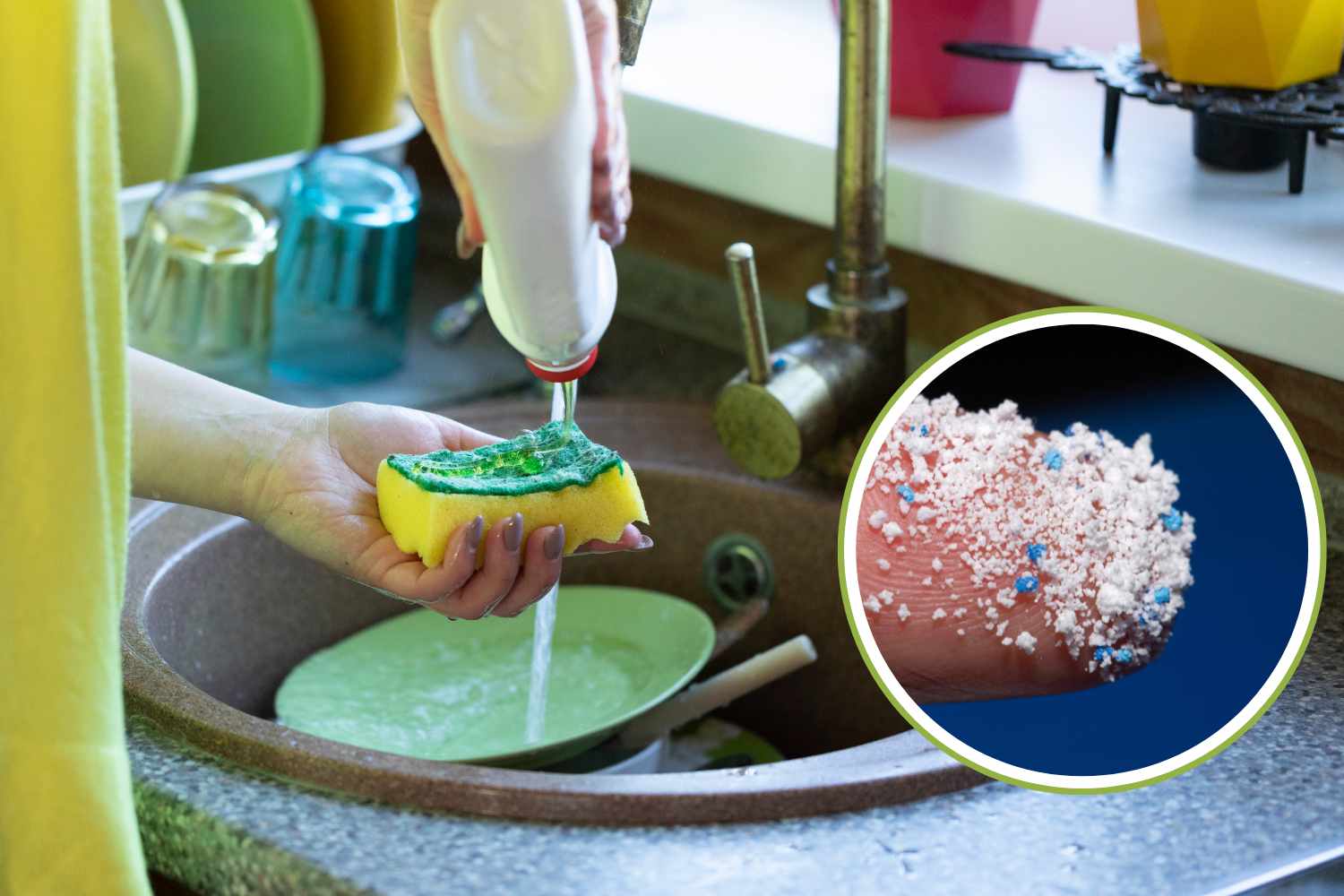
How many times a day do you rub a sponge on dishes without thinking about it? It’s one of those gestures that is so automatic that it seems harmless and yet, according to a new study published in Environmental Advanceseach pass leaves an invisible trace in the environment.
Researchers from the University of Bonn, together with the Fraunhofer UMSICHT Institute and the University of Leiden, investigated this aspect: the result is research that puts an object that we all have next to the sink under the lens.
The title of the research is already eloquent in itself: “From the sink to the sea: release of microplastics from kitchen sponges and potential environmental effects“. The results? All the sponges analyzed – without exception – release microplastics during use. Every time you rub, microscopic fragments of plastic come off and end up in the waste water.
How much? Between 0.68 and 4.21 grams of microplastics per person per year, depending on the type of sponge used. It seems like little, but if you project the data onto the whole of Germany, you get up to 355 tons of microplastics per year, just from this single household object. A significant portion is retained by sewage treatment plants, but several tons still reach rivers, lakes and soil every year.
How the study was conducted
What makes this research particularly interesting is the methodology adopted: a hybrid approach that combines “citizen science” with laboratory tests. Volunteer families in Germany and North America used three different types of sponges in their daily routines, weighing them before and after each use to measure material loss. A simple but effective method to obtain realistic data.
In parallel, the researchers developed an automated device nicknamed “SpongeBot”, capable of simulating the mechanical stress that a sponge undergoes during dishwashing, so as to have an estimate that is much more faithful to reality than previous studies.
The problem is not just microplastics
While the release of microplastics is a real and documented problem, life cycle analysis (LCA) conducted by researchers revealed that between 85% and 97% of the total environmental impact of hand washing dishes is attributable to water consumption, not microplastics. The latter contribute to a much lesser extent to the overall damage to ecosystems.
In other words: the sponge pollutes, but the open tap pollutes more.
However, one point still remains little explored: the study focused exclusively on the environmental impact of the release of microplastics, without evaluating any effects on human health, such as the possibility that these particles deposit on tableware and end up in food.
The solutions
The study does not limit itself to describing the problem, but also indicates concrete solutions within everyone’s reach. The most effective is also the simplest: use less water. Turning off the tap while scrubbing, or filling a basin instead of letting it run, are small gestures that make a real difference.
On the sponge front, however, it is worth choosing those with low plastic content or, better yet, opting for natural alternatives such as cellulose, coconut fiber or loofah, because not all of them release the same quantity of microplastics.
Finally, a piece of advice that applies to almost every object: make it last as long as possible. Each sponge has an environmental cost already in its production, and replacing it less often means consuming fewer resources.
