
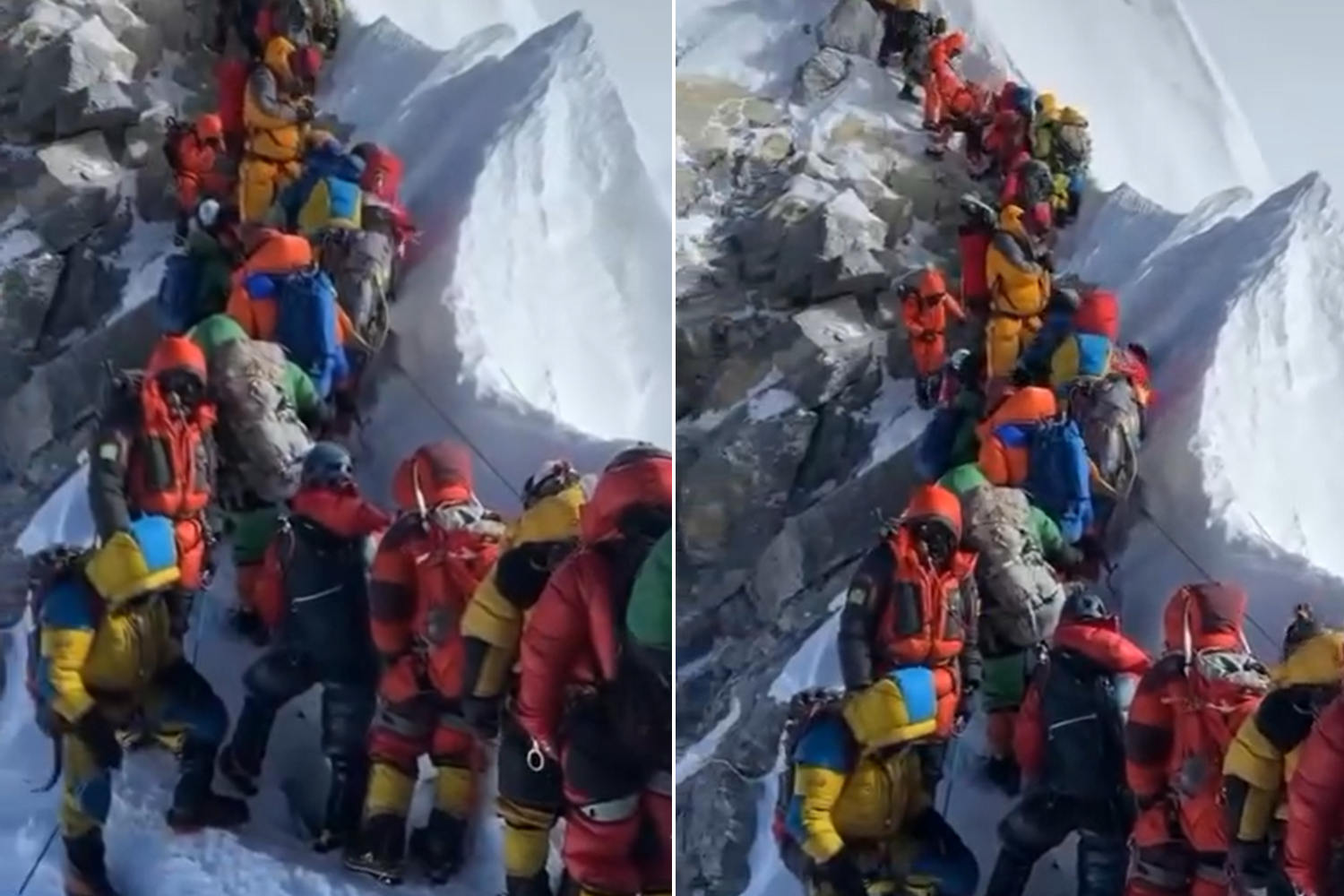
Every year, more and more people they put in line (literally) to conquer theEverestthe highest mountain on the planet, on the border between Nepal and Tibet. The images of long queues beyond 8,800 meters above sea level I am no longer a surprise, but a symptom of a problem that worsens. In the 2025 More than more than 100 Ascensionsand risks related toextreme crowding they are increasingly evident.
A recent video published by the Agency Asiana Nepal Treks showed a dangerous situation: The downhill mountaineers did not give way to those who go upbreaking an unwritten but fundamental rule for the High altitude safety.
The “area of death” and the invisible danger
But to all this is added another great danger. Beyond i 7,600 metersyou enter the so -called death areawhere theoxygen is scarce And the environmental conditions are extreme. Here every second is precious and every mistake can prove fatal.
Staying blocked in line means consume oxygen without advancingendangering the life of climbers. The queue They do not only slow down the climb, but also the descent: whoever is forced to stop too long can suffer hypothermia, pulmonary edema or lethal mountain pain.
Also on the mountains they lie more than 200 frozen corpsesimpossible to recover, which have transformed the Everest into a open -air cemetery. “It seemed to be a slalom between the stuffed bodies“Says an mountaineer.
Extreme tourism out of control that devastates the environment
The real problem? More and more people face Everest as if it were a simple one exotic experiencewithout real preparation. “There are those who stop to take selfies without even knowing where they are”Some guides report. The climb has turned into a phenomenon from mass tourismwith Hundreds of “improvised mountaineers” Ready to line up in the good few days of the year.
In addition to human risks, the overcrowding also damages thefragile ecosystem of Everest. Plastic, waste and even human excrements – that they do not decompose to those altitudes – they contaminate the environment, also putting the health of the local populations. For this reason, the Nepal Supreme Court asked to limit permits To climb Everest, in an attempt to stop a phenomenon that risks becoming unsustainable.
Journey to the Top of the World: Mount Everest
Posted by Asiana Nepal Treks & Expedition Pvt. Ltd. On Tuesday, June 3, 2025
