
The one found in the state of Oaxaca is already defined as the most significant archaeological discovery of the last ten years in Mexiconot only for the exceptional state of conservation, but above all for the quantity of historical, symbolic and ritual information it provides. It’s about a monumental tomb from around 1,400 years agoattributed to the Zapotec civilization, decorated with polychrome murals and perfectly legible sculpturesa very rare event for Mesoamerican archaeology.
The discovery, which occurred on the site of San Pablo Huitzoopens a new window on the vision of death, the afterlife and the social organization of one of Mexico’s oldest pre-Columbian cultures.
According to what was communicated by theInstituto Nacional de Antropología e Historia (INAH)the burial belongs to a high-ranking exponent of Zapotec society and presents wall decorations made with green, white, blue and red pigmentscolors still intense despite the passing of the centuries. The scenes depicted are closely linked to funeral practicesto the conception of the passage between life and death and to the sacredness of the tomb.
What makes the complex even more exceptional is the balance between painting and sculpture, a combination that rarely reaches us in such intact conditions. Precisely for this reason, the tomb is already considered a point of reference for the study of non-Mayan Mesoamerican civilizations.
The owl frieze: symbol of death, night and power in Zapotec culture
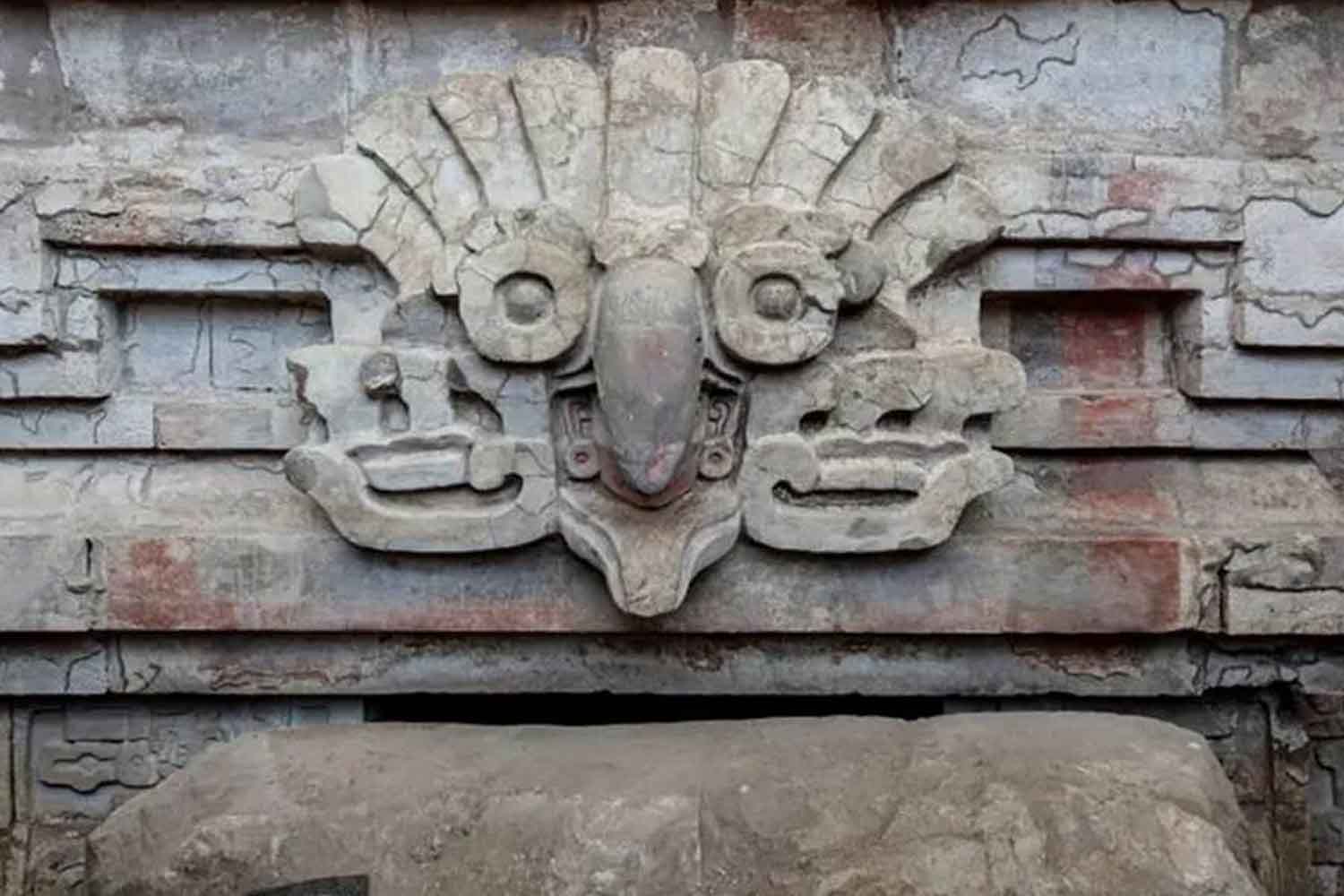
The element that immediately caught the attention of archaeologists is a carved frieze depicting a gigantic owl headlocated in a dominant position within the funerary complex. It is embedded in the animal’s beak a human head in stoneinterpreted by scholars as a possible symbolic representation of the buried individual.
In Zapotec mythology, the owl was not a simple nocturnal animal: he embodied the connection with death, darkness and the otherworldly. Its presence inside a tomb suggests a precise role in the funerary ritual, probably as guardian of the passage between worlds or as an emblem of the spiritual power of the deceased.
Furthermore, they were identified at the entrance to the burial chamber reliefs depicting two human figureseach with ritual objects in their hands. According to the INAH, these sculptures could represent the symbolic guardians of the tombresponsible for protecting the tomb and its sacred contents.
Oaxaca, Zapotec land and crossroads of pre-Columbian civilisations
The Zapotecs inhabited the area of the current state of Oaxaca since the 6th century BC, developing a complex, organized civilization and often in conflict with other great Mesoamerican powers, such as the Aztecs. In fact, the oldest Spanish chronicles tell of a long phase of wars and resistanceconfirmed today also by new archaeological technologies.
Just recently, a study conducted with LiDAR technology made it possible to identify, near Santo Domingo Tehuantepec, a Zapotec fortress with ball courtsdemonstrating how advanced and structured this civilization was. The head of the research, Pedro Guillermo Ramón Celis, underlined how these sites represent a fundamental identity heritage for contemporary Zapotec communities.
The president of Mexico also spoke to confirm the importance of the discovery, Claudia Sheinbaumwho during an official briefing defined the tomb as “the most significant archaeological discovery of the last decade”.
Along the same lines is the Minister of Culture, Claudia Curiel de Icaza, who highlighted how murals, engravings and symbols of the tomb will offer new insights into social organisation, funeral rituals and the Zapotec belief systemelements that today’s indigenous communities await with great interest.
Before any opening to the public, however, a delicate intervention will be necessary preventive conservation. The tomb, in fact, is threatened by insects, tree roots and exposure to the local climate. The absolute priority, according to the INAH, is protect the works before time does what it has failed to do in fourteen centuries.
