
Avian flu continues to hit intensive European and Italian farms hard, but what emerges from the investigation aired last night on Report, signed by Giulia Innocenziraises disturbing questions not only about the management of the health emergency, but also about respect for the rules, animal welfare and the use of hundreds of millions of euros of public funds.
In 2025 alone, over 699 avian flu outbreaks were recorded in Europe, 64 of which were in Italy. The most affected territories remain Lombardy, Veneto, Piedmont and Emilia-Romagna, where the concentration of intensive farming is higher. The consequences were also seen on the shelves: increase in the price of eggs by up to 20% and supply difficulties in several supermarkets.
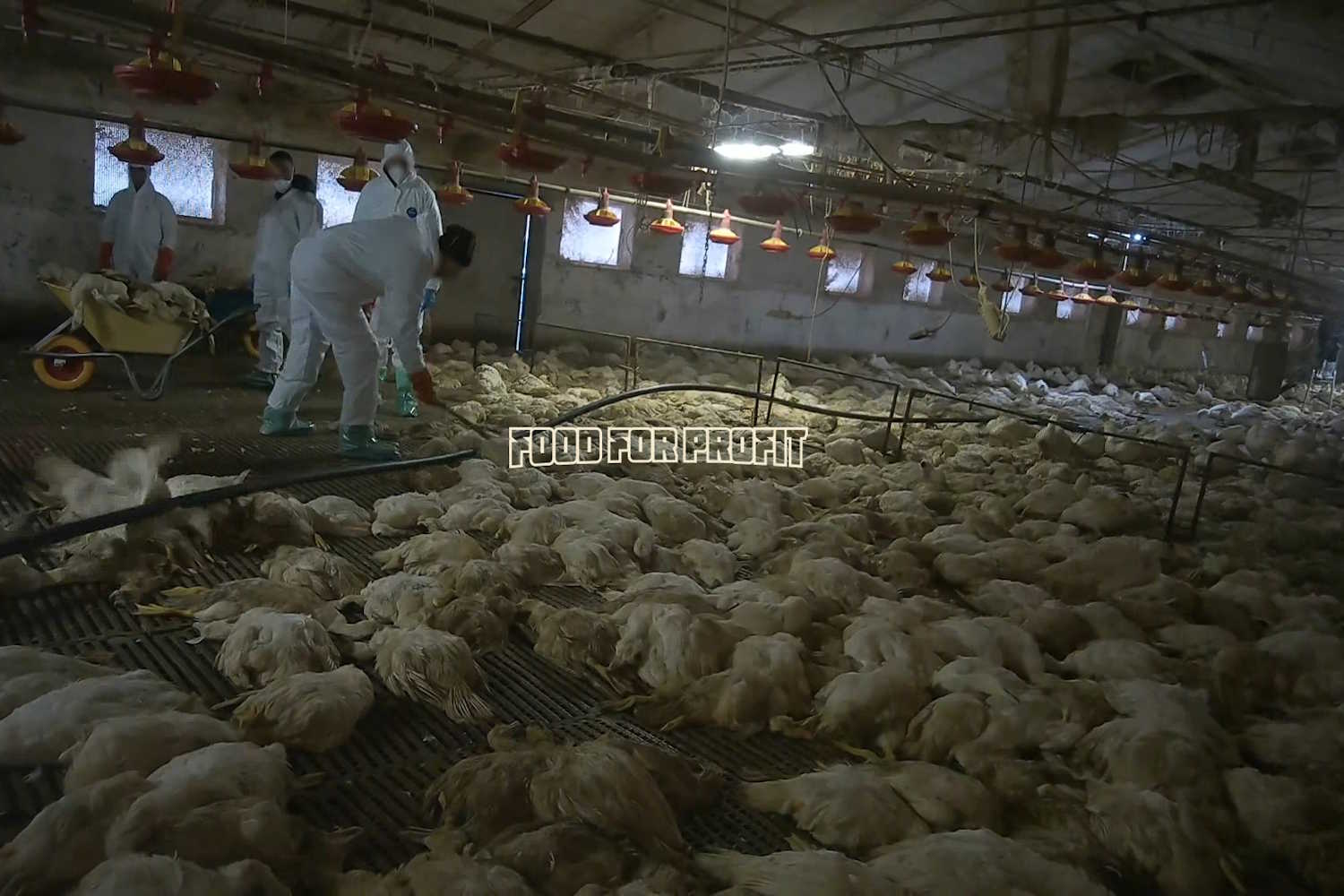
Between September and December 2025, as outbreaks multiplied, the Food for Profit team collected images from inside several farms affected by the virus. The videos, seen by over 1.5 million people during the broadcast, show two levels of criticality: culling carried out irregularly and serious deficiencies in biosecurity protocols, precisely those that should avoid the spread of avian flu.
Failed culls and animals killed illegally
When an outbreak is identified, the legislation provides for it stamping out: the killing of all animals present using gas. The images collected document how this procedure does not always work. On a duck farm in Goito, in the Mantua area, around 400 animals survived after the use of gas.
At that point, according to what the videos show, the animals are killed by beatings, kicked, thrown against the walls or subjected to incorrect neck twisting maneuvers, in violation of animal welfare regulations. Everything happens under the eyes of a veterinarian, who does not intervene and in some cases takes part in the irregular killings himself. Despite this, the farm received around 70 thousand euros in public compensation.
View this post on Instagram
Even more worrying is the picture that emerges on the biosafety front. In a farm of the Bruzzese company, active in the production of eggs, the images show carcasses of chickens killed due to avian flu left outside, covered only by a cloth. A serious violation: infected remains can come into contact with wildlife, aiding the spread of the virus.
The situation also appears critical on a farm owned by Simone Menesello, national president of the Confagricoltura poultry farmers. In the sheds you can see carcasses of chickens and mice, live animals pecking at dead ones, piles of remains abandoned on a tractor and corridors flooded with sewage up to the workers’ ankles. Conditions that represent the opposite of any prevention protocol.
The Cooperativa Agricola Bidente is often physically responsible for culling, having already ended up at the center of another Report investigation into illegal culling methods during the swine fever emergency. From 2020 to today, the cooperative has collected 13 million euros from Emilia-Romagna and Veneto alone for the management of avian flu. Lombardy did not provide complete data, suggesting even higher overall figures.
According to the documents acquired by Food for Profit, from 2020 to 2025 Veneto, Lombardy and Emilia-Romagna have allocated at least 266 million euros to refreshments and reductions. Huge public resources which, in light of the images, do not appear to have guaranteed either biosecurity or respect for animals.
The investigation will be at the center of a parliamentary question announced by the MP Eleonora Eviwho denounced how, in the name of the emergency, savings are made on everything: from disinfectant materials to gas for slaughter, while it is always the animals who pay.
It is not the first time that we have documented serious irregularities linked to avian flu in Northern Italy – explains Giulia Innocenzi. Since 2020, hundreds of millions of euros have been spent to support a system that continues to produce emergencies. If the costs fell on farmers and the livestock industry, as happens in other European countries, would we really see the same irregularities?
The question remains open. But one thing appears increasingly clear: until the intensive farming model is questioned, avian flu will continue to be treated as an inevitable emergency, rather than as the symptom of a system that no longer holds up.
HERE is the complete Report service.
