
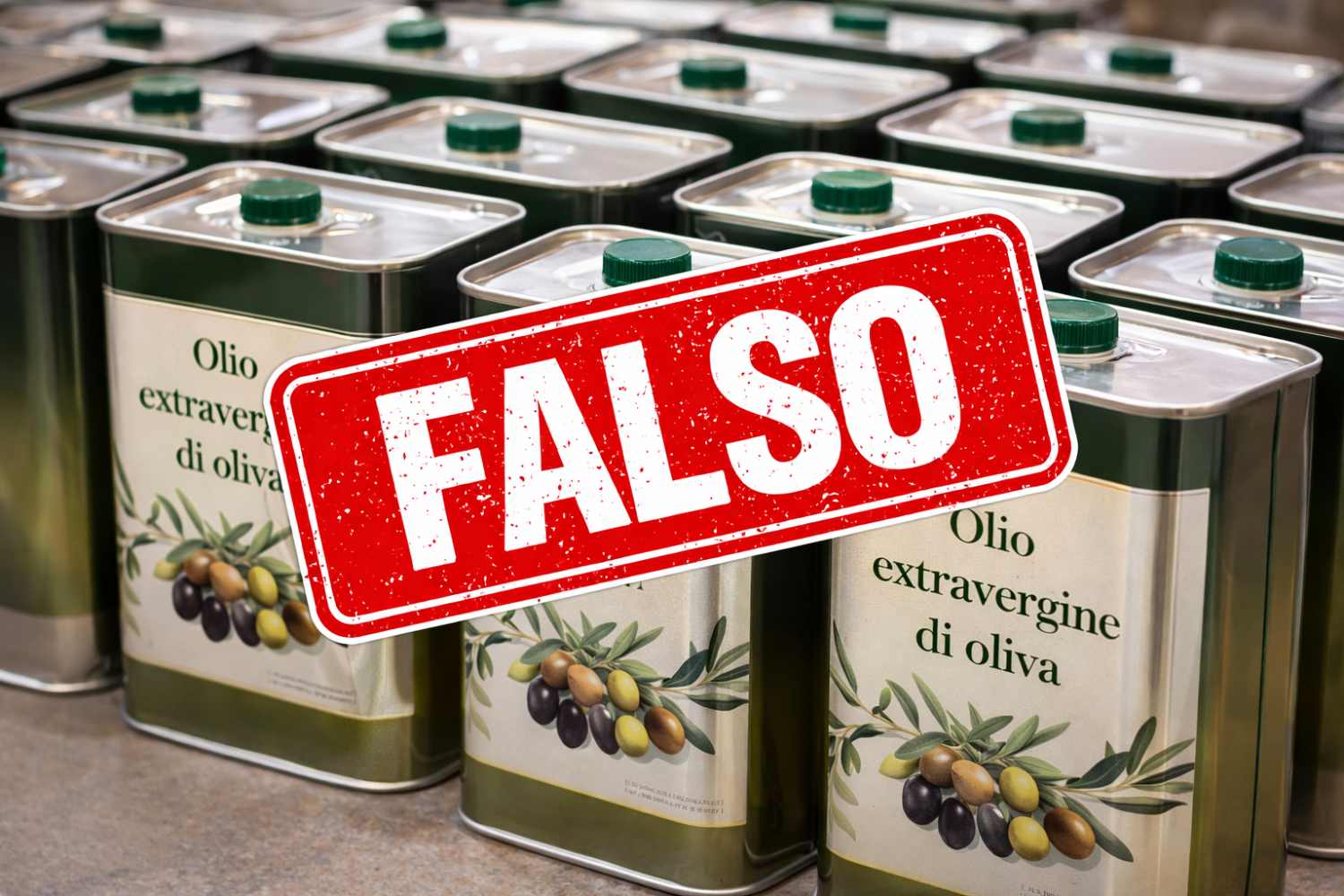
Once again, social networks become the privileged channel for food fraud that targets one of the symbolic products of the Mediterranean diet: extra virgin olive oil. This time the operation took place in the Ravenna area, where the Carabinieri seized over 3,800 liters of product falsely marketed as Apulian extra virgin olive oil.
Behind those captivating ads and particularly competitive prices, however, something completely different was hidden. In fact, it was not extra virgin olive oil but, as the authorities discovered, sunflower seed oil to which food colorings had been added to imitate its appearance.
A couple residing in the province of Ravenna ended up under investigation, now reported for fraud in the exercise of commerce.
A business built online
The investigations, conducted by the Investigative Unit of the Environmental, Agri-Food and Forestry Police (NIPAAF), also started from the monitoring of the contents published on social media. It is there that the product was promoted as “Apulian extra virgin oil”, described as cold extracted and suitable for both restaurateurs and private individuals.
According to investigators, it was not occasional sales, but a well-organised system, with prices modulated based on the quantities purchased. A mechanism that could have attracted especially those looking for large volumes at lower costs than the market.
The arrest and seizure
The raid began during a roadside check, the two suspects were stopped while they were transporting numerous cans in a rented van. The subsequent searches, which also included a garage attributable to the couple, led to the seizure of the entire quantity of product, for a total of approximately four tonnes.
The laboratory analyses, entrusted to the Central Inspectorate for the Protection of Quality and the Repression of Fraud in Agri-Food Products, confirmed the suspicions: the contents of the cans had nothing to do with the declared extra virgin olive oil.
Damage to consumers and the sector
Episodes like this not only represent food and economic fraud, but undermine consumer confidence and profoundly damage honest producers. Extra virgin olive oil is one of the foods most exposed to adulteration and continues to be at the center of fraudulent operations that exploit the difficulty of recognizing an authentic product by sight.
The seized product was placed under bond at the order of the Prosecutor’s Office. As required by law, the responsibility of the suspects can only be ascertained at the end of the judicial process, but the case refocuses attention on the need for controls and greater awareness on the part of consumers, especially when purchasing food through unofficial channels.
