
Reductioning the energy consumption linked to the air conditioning is one of the most urgent challenges to face the climatic crisis. Especially in the city, where the extreme heat becomes every summer more difficult to manage, the use of air conditioners is increasingly widespread. But at what cost? High consumption of electricity, greenhouse gas emissions, and use of polluting refrigerants.
A group of Chinese and Australian researchers developed one biodegradable plastic film capable of cool the surfaces up to 9.2 ° C without the need for electricity. A simple but effective technology, which could offer a concrete alternative to traditional air conditioning.
How it works and where it applies
The film is made with Polylactic acid (Pla)one bioplasty obtained from vegetable sources such as corn and sugar cane. It is completely biodegradable And its production is with low environmental impact. The structure of the material is porous, light and insulating, with one Very low thermal conductivity (0.049 W/m · k), a feature that makes it suitable for preventing the passage of heat.
This film can be applied on Roofs, vehicles, containers, industrial covers and metal surfaces. Once installed, it acts as a thermal barrier that reflects up to 98.7% of sunlightlimiting the heating of the underlying surface.
The principle is that of passive radiative coolinga natural phenomenon that allows a body to disperse heat in the form of infrared radiation directly towards space. In practice, the film does not retain the heat but “pushes it away”, without the need for electricity or active components.
UV -ray resistant and acid rains
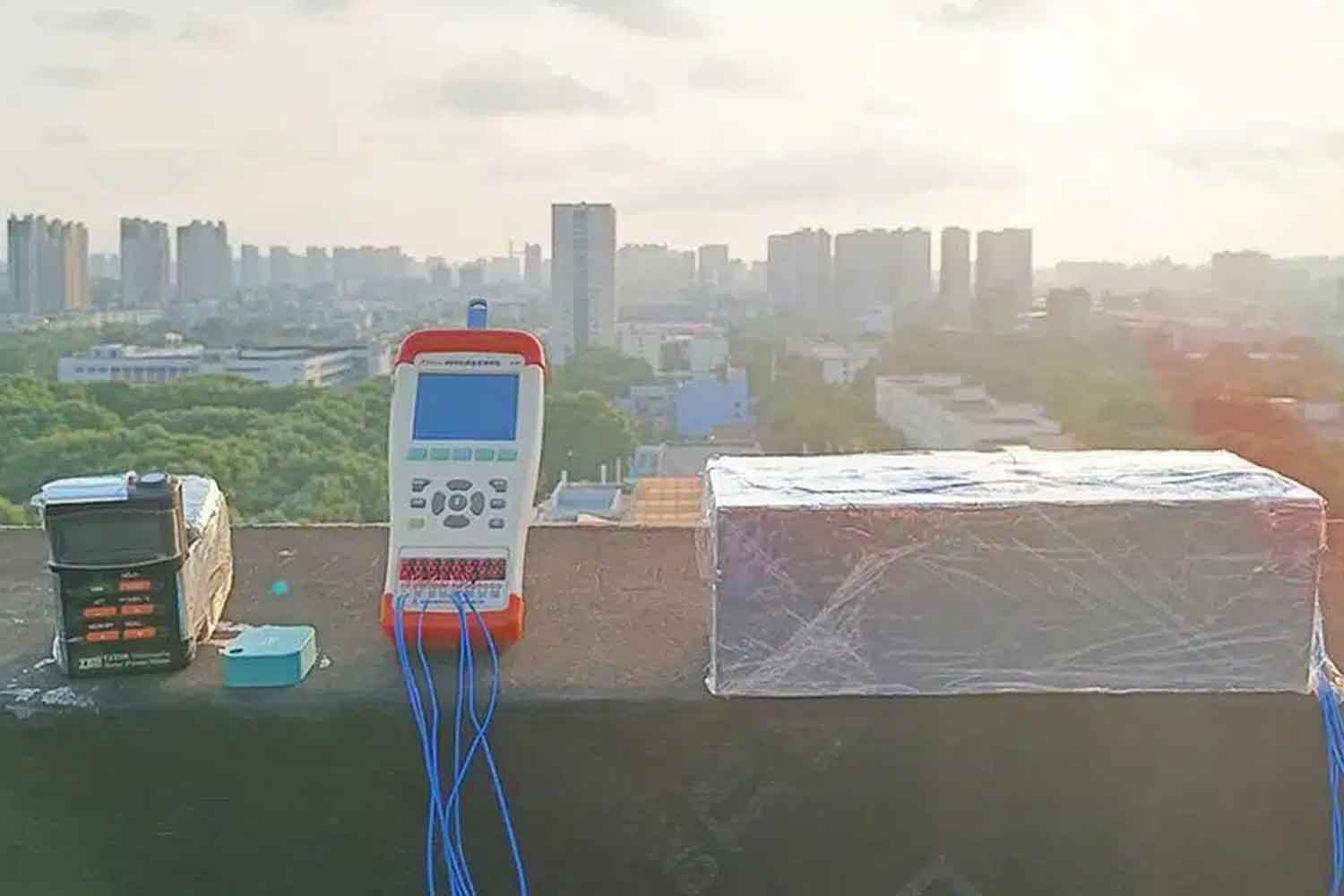
During rehearsals in real conditions, the film has reached a temperature reduction of 9.2 ° C compared to the untreated surfaces. With a cooling power of 136 W/m²the result is comparable to that of an active device, but without energy consumption.
In addition to the thermal performance, the material has proven to be resistant to external agents:, tolerates acid rains And it can also be used in urban or industrial environments, where air pollution is higher.
The production process, based on a cold separation technique at –20 ° C, was developed by a team of University of Zhengzhou (China) and of the University of South Australia (Unisa). The research results were published in the magazine Cell Reports Physical Science.
According to estimates, the World Air conditioning demand could be triple by 2050. An increase that would involve an additional load on electrical networks and an aggravation of climalterant emissions, in particular because of the refrigerant gases used in traditional systems.
This film offers A passive, accessible and replicable solution on a large scale. This is not an abstract experimental technology, but of an already tested material, with promising performance and a real potential for daily application.
Can help reduce the use of air conditionersa Cut energy consumption and contain emissions in the urban and industrial fields. And thanks to his biodegradabilitydoes not possess problems related to disposal.
