
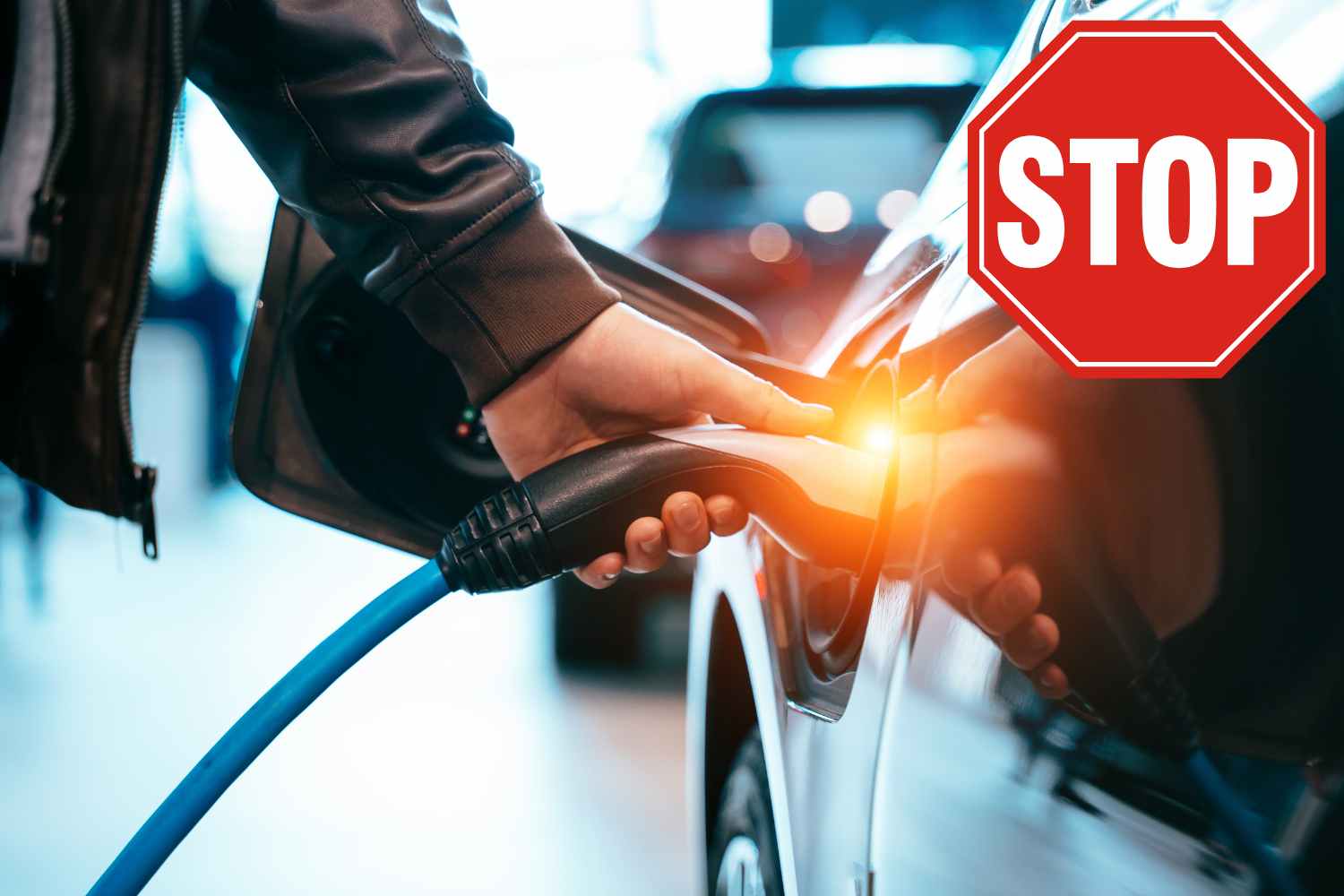
The farewell to petrol and diesel engines in 2035, one of the pillars of the European green transition, could undergo a significant correction of course. The European Commission, faced with the growing pressures of the automotive industry and several Member States, has decided to anticipate the review of the regulation, opening up to scenarios until recently unthinkable. The date to be circled in red is 2026, when you put your hand to one of the most discussed regulations of the “Fit for 55” climate package.
The decision comes after a meeting in Brussels between the President of the Commission, Ursula von der Leyen, and the leaders of the car sector, worried about a transition to the electricity considered no longer sustainable in the scheduled times. The European car manufacturers, close among the US duties, a weak internal demand and the competition of Chinese producers of electric vehicles, have asked for greater flexibility. A request that seems to have found fertile ground.
Technological neutrality: not only electric
The fulcrum of the review will be the principle of “technological neutrality”. If today the road seemed traced only to 100% electric vehicles, the future could also reserve a role for other low -emission technologies. As reported by the Reuters news agency, the revision could include “zero to zero CO2 emissions, such as biocarbulants, which could continue to feed internal combustion engines, plug-in or car hybrids with extended autonomy”.
This factual opening would save hybrid engines and would give space to solutions such as e-Fuels, synthetic fuels strongly desired by Germany, and biocarbudi, strongly supported by Italy. “Transitional provisions, special solutions for production in small series and the role of CO2 -free fuels are part of the next EU revision,” Volkswagen said, the largest European car manufacturer, while confirming his commitment to the goal of zero emissions.
What provides for the current legislation and what will change
The current regulation is very clear: from 1 January 2035 the sale of cars and new vans with thermal engines will be prohibited. An intermediate goal, set for 2030, requires manufacturers to reduce the emissions of new 55% cars and those of the new 50% vans. The early revision on 2026 will not erase these objectives, but it could recalibrate its methods of achievement.
Particular attention will be aimed at vans. A member of the team of the executive vice -president of the Commission, Stéphane Séjourne, mentioned by Reuters, underlined how electric vans represent only 8.5% of new sales in the EU, about half of the market share of electric cars.
Among the novelties to the study, also the establishment of a new regulatory category for small electric cars, which could benefit from tax breaks, and new rules to encourage the production of batteries and components in Europe, limiting dependence on China.
The exceptions already planned and the second -hand market
Some derogations have already been put black on white. The small producers, those who enroll less than 10,000 cars or 22,000 vans per year, will have one more year to adapt, until the end of 2035. An exception desired by Italy to protect the brands of its “Motor Valley”. Those who produce less than a thousand vehicles per year is totally exempted.
It is important to remember that the stop concerns only the sale of new vehicles. Citizens will therefore be able to continue circulating with their petrol or diesel cars purchased before 2035 and the second -hand market will not undergo any restrictions.
Don’t you want to lose our news?
