
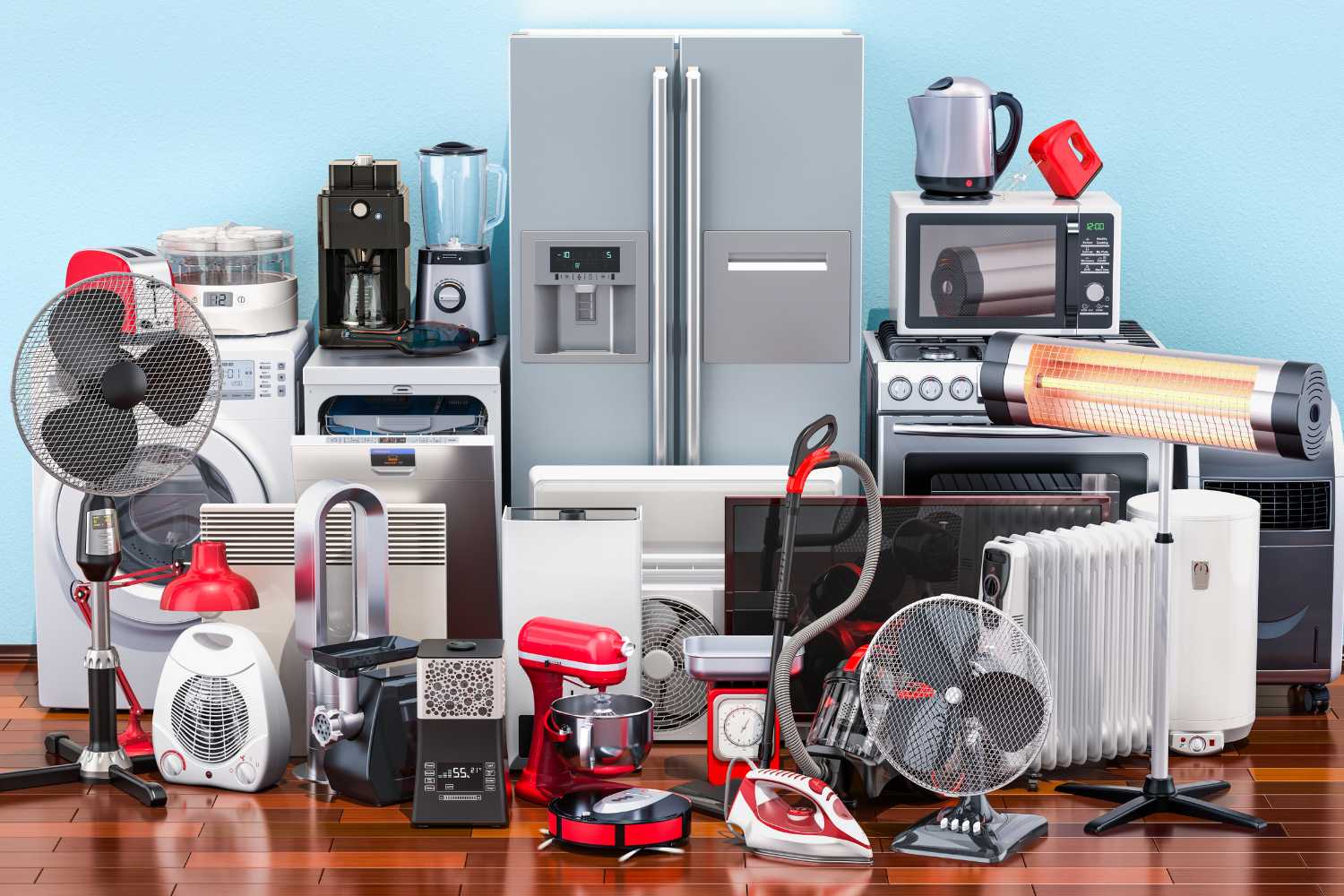
Appliances have changed our way of life. We simplify our days, they save us time and effort, and we could no longer do without it. Yet there is a less pleasant side: some of them, if used without the right attention or connected to old systems, can damage the home network. The risk is not only to blow up the counter, but also to overheat sockets and cables up to fires.
Let’s see what are the most critical appliances and because they can become a problem.
Air conditioner
The air conditioner is one of the first stress responsible for the electrical system. It saves us from the torrid summers, but behind that fresh one there is a compressor that at startup requires high energy peaks. If the system is modern and sized correctly, holds without problems. But in many houses, especially with dated wires or worn out, each ignition is a shock that leaves invisible signs. Over time these continuous efforts consume the home network and can lead to overheating.
Electric oven
The oven is a constant consumption sample. Once turned on, it maintains active resistance for long periods, even over an hour, and this means continuous flow of current. If the cable section is not adequate, the heat accumulates and becomes dangerous. To worsen the situation there are bad habits: connect the oven to low quality extensions or economic slippers. In these cases, the risk of melted plastic or burnt contacts is around the corner.
Washing machine
The washing machine is subtle because it does not consume uniformly. Alternate different stages: heat the water, run the basket and finally starts the centrifuge with sudden peaks. This swing of absorption weighs on the system, especially if the socket is not fixed well or cables already have some signs of wear. Many episodes of burning smell in the house are born precisely from looted sockets behind the washing machines, neglected for years.
Dryer
The dryer is now present in many homes, but it is also among the most risky if neglected appliances. Not only because it requires a lot of energy, but above all because of the hands. During each cycle tiny residues of fabric are deposited in the filters and ducts. If they are not removed regularly, that dust accumulates and is highly flammable. In several countries, domestic fires start from dryers with dirty filters are a serious problem, and cases also begin to emerge. The engine, forced to work more than necessary, overheats and becomes a potential trigger.
You need to clean the strap filter regularly and check the air exit to avoid obstructions.
Refrigerator and freezer
The refrigerator seems harmless, but is an tireless worker who never goes out. Every day leaves and stops tens of times, creating continuous absorption peaks. They are not big alone, but added in years of use lognono and cables. The real problem is that the fridge is always connected and often nobody controls the grip behind, hidden and forgotten. Over time it can warm up to become a real risk. The older freezers, then, consume much more and aggravate the situation.
Microwave
The microwave concentrates very high absorption in a few minutes. It is practical and fast, but it is almost always connected on slippers already clogged by other small kitchen appliances. The result is an overload of the socket that must hold much more than it can bear. The most dated models, then, are even less efficient: transformers who vibrate, dirty current, heat that accumulates. All this puts the domestic network to the test.
Metallic objects in the microwave must not be inserted and it is necessary to replace it if it has signs of wear or damage.
Hairdryer
The hairdryer is perhaps the clearest example of how powerful a small object can be. In a few seconds it absorbs 2000 watts or more and we use it lightly, often in the bathroom, in non -ideal conditions. Economic slippers and multiple adapters worsen the situation. It is common that the light skips when it is in operation together with other devices, but that signal should not be ignored. It means that the plant is at the limit and that the contacts are working to the maximum.
Electric stoves and thermoventilators
Electric stoves are the real hidden enemies. Cheap, practical, capable of heating a room in a short time, but with enormous consumption. They are among the most dangerous appliances because they are often connected to unsuitable extensions or slippers. They let the wires work for hours under excessive loads, with the result that plastic melts and taken them. Many domestic fire starts right from there: a stove left on too long in unsafe conditions.
All these appliances have a common point: they are not dangerous in themselves, they become it when they meet worn outlets, old cables or bad habits of use. The air conditioner stresses the system with its peaks, the oven and the stoves test it with constant consumption, the washing machine and the microwave create wave absorbings, the refrigerator works relentlessly, the dryer hides the danger of the hands, the hairdryer concentrates a lot of energy in a few seconds. Domestic safety depends on awareness and care: check sockets and cables, clean the filters, not overload the slippers. They are small gestures that avoid serious risks and allow us to continue enjoying comfort without transforming our home into a trap.
Don’t you want to lose our news?
