
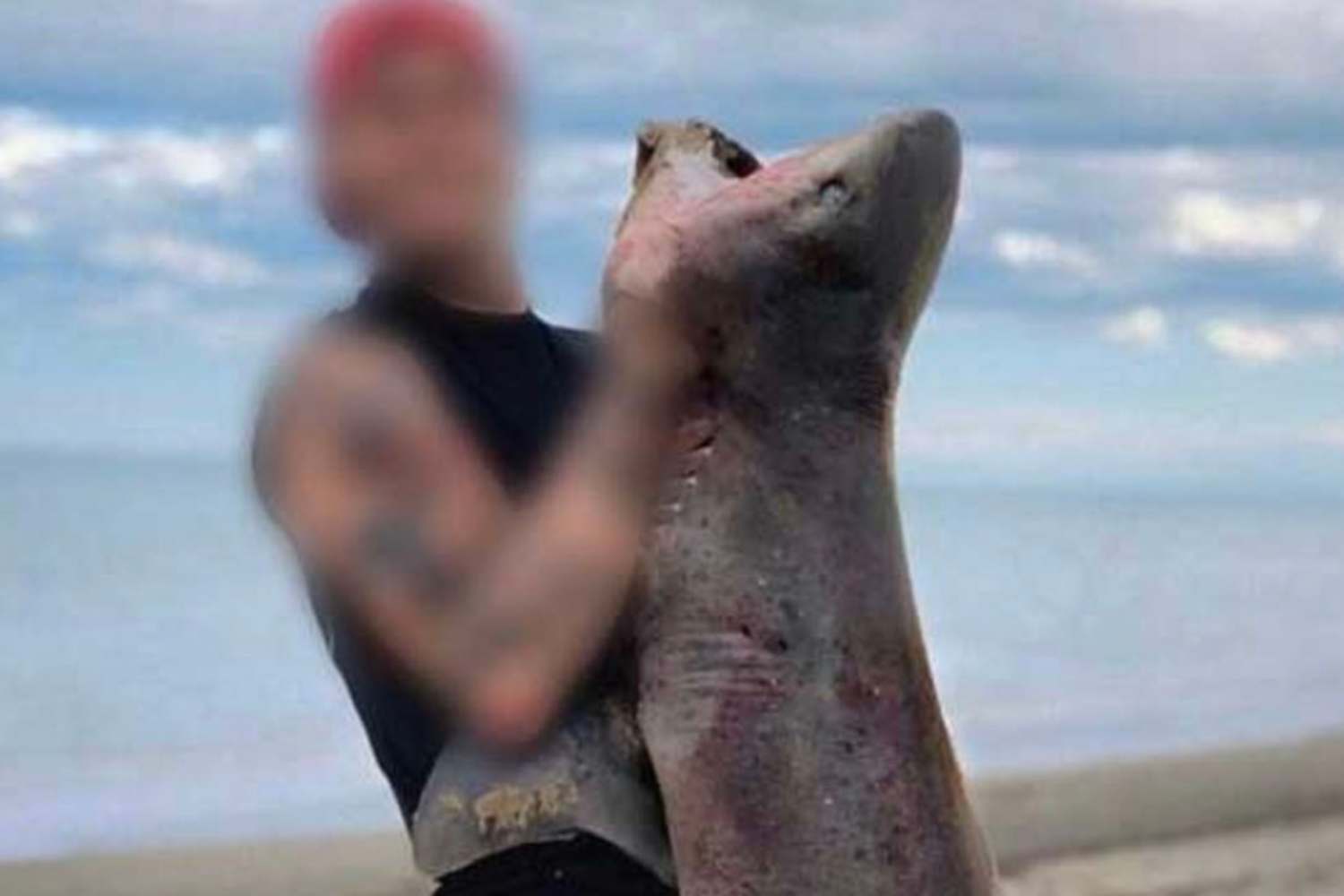
What should have been a simple display on social media turned into an unprecedented case. A fisherman has caught a broadnose shark, a protected species in Argentina’s Chubut province, and displayed it as a trophy. The images quickly sparked outrage online, but this time the outcry didn’t stop at the digital protest.
The Sin Azul No Hay Verde foundation decided to formally intervene, filing a complaint which led to the opening of a criminal investigation. A crucial step that marks a change of pace in the protection of local marine fauna. The “tiburón gatopardo”, as it is called in Spanish, is not just any animal.
In Chubut it is recognized as a Provincial Natural Monument, a protection that explicitly prohibits capture, killing and commercialization. Precisely for this reason, the case has taken on significant institutional weight. According to the head of the Environmental Fiscal Unit, this is the first investigation of this type in the province. A precedent that could redefine how environmental laws are applied.
View this post on Instagram
The detail that framed the person responsible
What made the identification of the suspect rapid was an element as simple as it was decisive: the images published by the author himself. Their diffusion allowed investigators to quickly trace the fisherman, thanks also to the collaboration with Rawson’s Investigations Brigade.
The case is now in a preliminary phase, during which evidence is collected and the facts are reconstructed. A key point will be to establish the exact location of the capture, which is necessary to define jurisdiction between provincial and federal jurisdiction.
Damage that goes beyond the individual animal
At the center of the story there is not only a legal violation, but also an ecological problem. Sharks are apex predators, essential for maintaining the balance of the marine food chain. The loss of an adult specimen has a significant impact, especially for species with slow growth and low reproduction. Experts point out that eliminating even a single individual can compromise the stability of the entire ecosystem. Not surprisingly, these species are considered particularly vulnerable to human activities.
From a single case to a possible precedent
For environmental organizations, this story represents something more than an isolated episode. It is a test bed to verify whether the rules to protect biodiversity will be rigorously applied. At the same time, a significant fact emerges: the report also came from attentive citizens, a sign of growing sensitivity towards the protection of marine fauna. Now the word passes to justice, called to establish a clear boundary between what is tolerated and what is no longer tolerated.
View this post on Instagram
You might also be interested in:
