
A slaughter priest in central London. A publicly humiliated noblewoman for alleged carnal sins. A feud between strong powers – Church and aristocracy – which flows into a mafia -style execution. No, it’s not the incipit of a noir novel. It is a true story, documented, and forgotten for centuries. But today, thanks to the project Medieval Murder Maps of the University of Cambridge, that ancient crime almost 700 years returns to light. The protagonist, indeed the principal according to the researchers, is an extraordinary figure: Ela Fitzpaynerebellious aristocratic, cunning and dangerous.
The public punishment imposed on Ela Fitzpayne for its illegal relationships
It was January 1332 when theArchbishop of CanterburySimon Mepham, wrote a fiery letter to Bishop of Winchester. Subject: the carnal sins of Ela Fitzpayne. In the letter, today digitized for the first time, we speak without turns of words of Liaison with knights, married men, and even with priestsincluding the reverend John Forderector of the church of Okeford Fitzpaine in the Dorset, fiefdom of the Fitzpayne family.
By punishment, Ela had to give up any ornament – no gold, pearls, no precious stones – but above all it was condemned to one Penitential walk barefoot along the entire nave of the Salisbury cathedral, the longest in England. He had to do it every autumn, for seven years, bringing with him one wax candle weighing almost two kilos. A humiliating penance, designed to break noble pride. But Ela rebelled: he took refuge to Rotherhithewas excommunicated, and he swore revenge.
The priest who spoke too much
The suspicion of historians is clear: It was John Forde who denounced Ela to the Churchperhaps to save yourself or by convenience. But Ela did not forget. Before becoming his accuser, Forde was his accomplice: In the 1321he and Ela participated together with her husband, Sir Robert Fitzpayneto a Violent assault on a Benedictine priory in the Somerset. The group hit the doors, looted buildings, cut trees and roughly More than 200 animals – Buoi, sheep and pigs – bringing them to the Castle of Stogursey.
That attack was not accidental: the priory was linked to a French abbey, and England was already in tension with France. The hundred year old war was upon us. According to Professor Eisner, Forde had double ties: He was close to the Fitzpayne family, but he still responded to ecclesiastical authority. When the castle was involved in the looting, it is possible that Forde has dissociated himself, looking for the protection of the clergy. And perhaps, on that occasion, he confessed the relationship with Ela, delivering it to public pillory.
A blade in the throat in front of the crowd
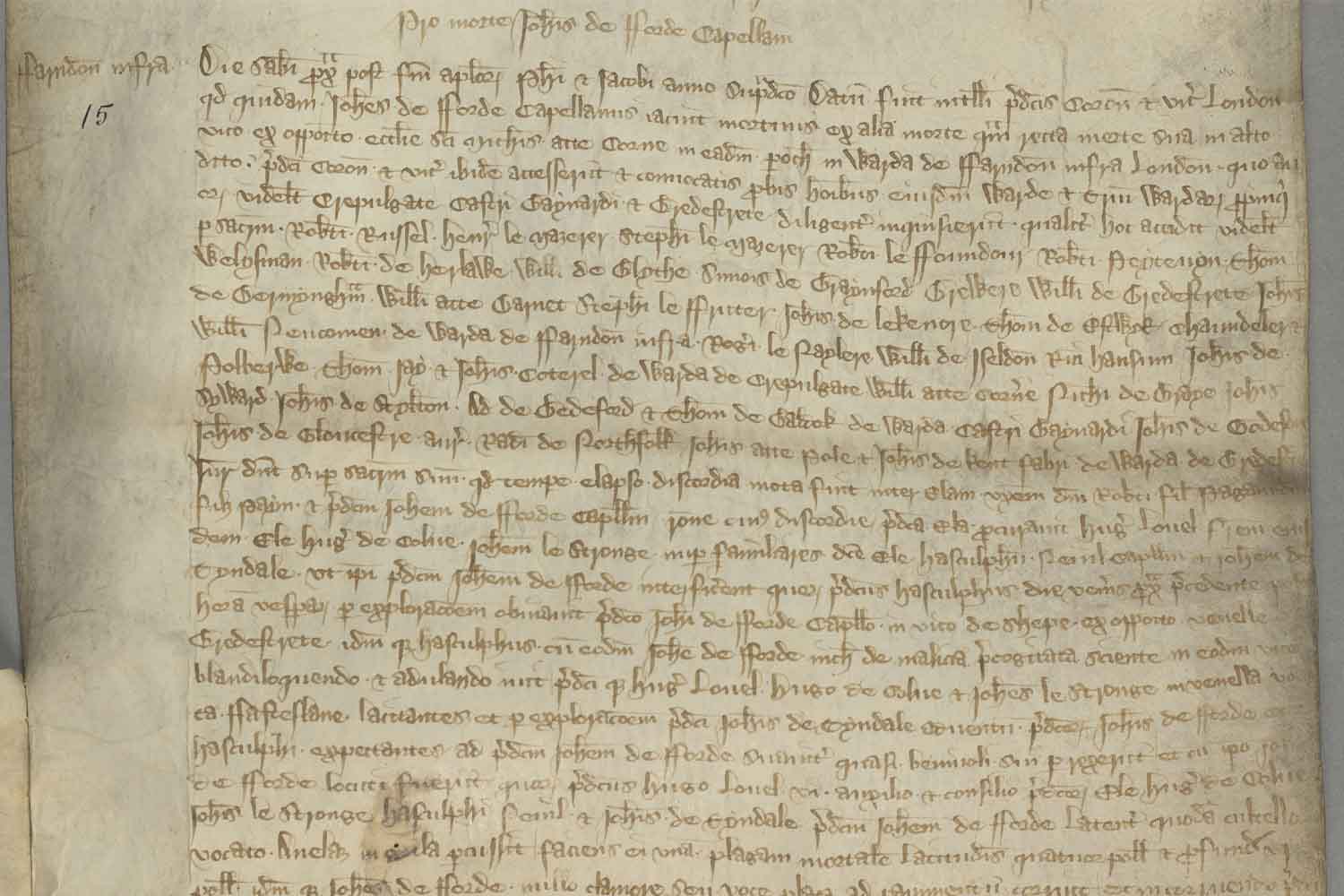
The May 3, 1337after the Vespers but before sunset, John Forde walked long cheapsideone of the busiest streets of medieval London, in the company of another priest, Hasculph Neville. It was almost evening. But while the two approached St. Paul, something brutal and irremediable happened: Four men attacked him in the crowd.
To lead the group was Hugh Lovellbrother of Ela Fitzpayne, that the He cut his throat with a thirty centimeters dagger. Two more – John Strong and Hugh Colneformer servants of the Fitzpayne family – stabbed him to the abdomen. All identified by a jury of 33 men (one of the most numerous ever recorded in Coroner’s Rolls of the time), but no one was delivered to justice. Alone Colne he was arrested five years laterIn the 1342and ended up a Newgatethe notorious London prison. The rest of the group vanished into thin air, protected – according to Eisner – from social status of the principals.
The area where Forde was assassinated, Westcheapit was then the nerve center of the city: an explosive mix of taverns, markets, shops and craft guild locations. An animated place, but also One of the major urban violence hotspots of the English Middle Ages. It was here that public punishments took place – from jogna prisoncome on Duels with beating – And it was here that they were also consumed accounts regulations Like that of Forde.
According to the Cambridge team, The execution was a message. As happens today in certain areas of the world, the murder was orchestrated to be seen, to intimidate, to reiterate those who really command. In a system where The law is weak and the elites feel untouchablethe assassination becomes a tool of power.
Ela Fitzpayne: rebel, lover, principal. A woman out of time
Yet ela. She remained alongside her husband until her death in 1354, inheriting the lands. Was A woman outside the boxcapable of rebelling against the Church, to guide an attack on a monastery and to orchestrate a murder with political lucidity. Professor Eisner concludes as follows:
An extraordinary figure: a fourteenth -century woman who challenged the rules of her time with a ferocious determination. In an era dominated by men and dogmas, Ela Fitzpayne left an indelible mark – for better or for worse.
