
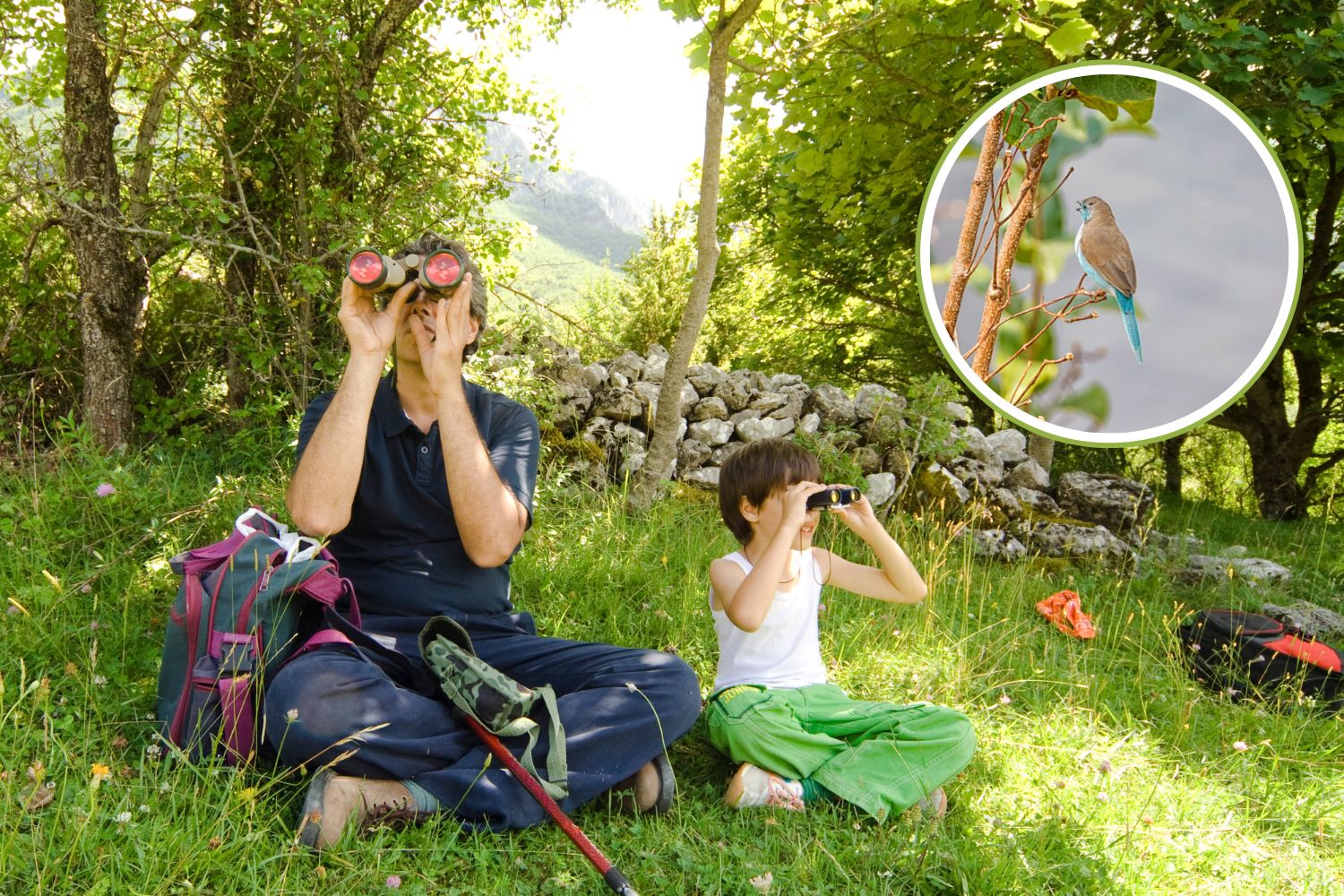
In a rapidly aging country like ours, talking about brain health means talking about quality of life, autonomy, clarity, memory that remains alive over time. Neuroscience in recent years has clarified a fundamental point: the brain is not a static organ, but a dynamic system that transforms based on what we do, what we learn, what we choose to cultivate consistently.
And among the activities that seem to have a surprising impact on neuroplasticity, there is one that smells of the forest, of morning silence and patient attention: birdwatching.
Research published in Journal of Neuroscience showed that experience in bird identification can reshape the cerebral cortex across the lifespan, explaining how brain structure, functional activation and behavioral performance are intertwined when a skill is cultivated over years.
What happens in the brain of those who recognize birds
The research team involved 58 adults between 22 and 79 years old: 29 ornithological identification experts and 29 beginners, matched by age, gender and education level. The structure of the brain was analyzed using diffusion MRI, while brain activity and performance were measured during a delayed recognition task that required distinguishing local and non-local, therefore more or less familiar, species.
The result is fascinating because it shows a convergence between multiple levels of analysis. In experts, lower mean diffusivity – an indicator of greater microstructural complexity – was observed in specific brain areas involved in attention and advanced visual perception, including the superior frontal gyrus, intraparietal sulcus, angular gyrus, precuneus, lateral occipital cortex and fusiform gyrus.
Translated into simpler terms: in the regions that serve to discriminate details, maintain attention and compare what we see with what we know, the brains of experts appear structurally more organized.
And there’s more. In these same areas, lower diffusivity was associated with higher accuracy in species identification. Competence does not remain confined to subjective experience, but is reflected in a precise anatomical correlate.
A cortex “tuned” by experience
The functional analysis added a further piece. When the experts had to recognize non-local species, therefore less familiar and more difficult to distinguish, the frontoparietal areas were selectively more active compared to situations with local species.
The intensity of the brain response in the more complex conditions was directly linked to performance. It is as if the cortex is “tuned” to the object of its experience, ready to come into action when discrimination becomes more subtle.
Perhaps the most interesting data concerns age. As the years pass, the structural complexity of the brain physiologically tends to reduce. In the sample analyzed this decline was present in both groups, but in experts it showed a more gradual trend in specific regions.
The study does not prove that birdwatching prevents neurodegenerative diseases, but suggests that the acquisition of specialized knowledge can attenuate declines in limited areas involved in expert performance.
Birdwatching: a cognitive laboratory immersed in nature
Observing and identifying birds is not just about looking at a robin or distinguishing a kestrel from a kestrel. It means simultaneously training fine perception, working memory, selective attention, spatial awareness and sensory integration.
Every encounter with a species requires a rapid comparison between the image in front of us and the mental models accumulated over the years. Plumage color, beak shape, posture, habitat, season – it all comes into play in seconds.
Furthermore, birdwatching is practiced outdoors, walking, breathing clean air, sharing the experience with other people. It is an activity that combines cognitive stimulation and immersion in the natural environment, two dimensions that scientific literature associates with psychological and cognitive benefits.
Structural changes related to expertise had already been documented in areas such as music, sports or space navigation. This study expands the framework to include a perceptual and conceptual skill such as bird identification. The message that emerges is clear: when we dedicate years to a complex activity involving attention, memory and visual discrimination, the brain adapts in a coherent and measurable way.
It is not the object itself that makes the difference, but the depth of the cognitive commitment. Birdwatching thus becomes a concrete example of how a passion can accompany us throughout our lives, leaving a trace in our cerebral architecture. Perhaps learning to recognize the song of a blackbird or the silhouette of a hawk against the light is not only a personal pleasure, but also an intelligent way of nourishing the mind.
You might also be interested in:
