
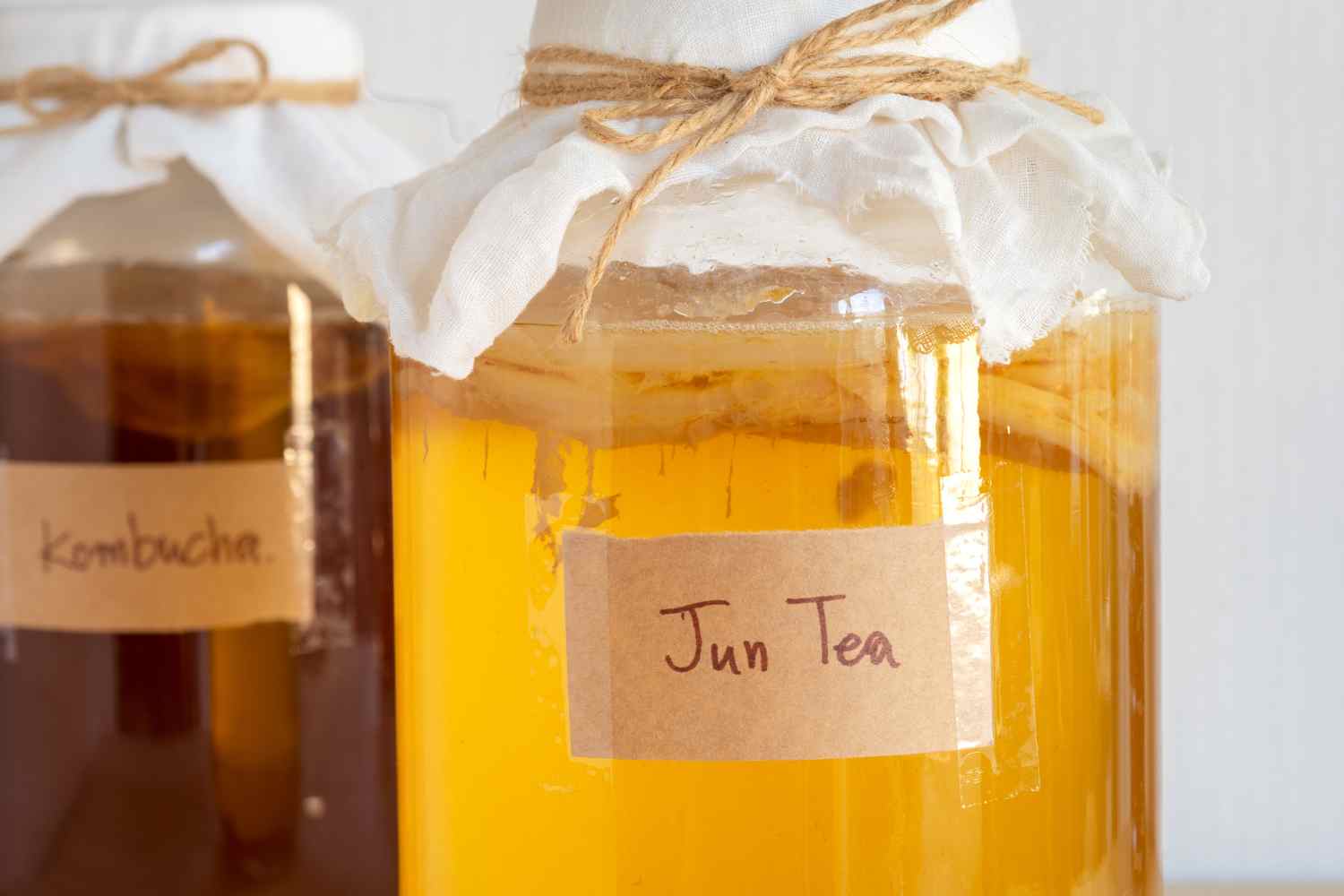
Jun tea is also nicknamed the “Champagne del Kombucha” and it is a fermented, naturally effervescent drink, based on green tea and raw honey, while the Kombucha is with black tea and brown sugar. The jun has a lighter touch of flavor than the Kombucha, which has a strong flavor more similar to vinegar.
In addition to being pleasant to drink, jun tea offers benefits that make it interesting for those looking for a healthier lifestyle. It is known to improve intestinal health thanks to live probiotics, encourage digestion, strengthen the immune system and help in detoxification of the body. Some also consume it to reduce swelling, chronic tiredness and low degree inflammation.
Rich in health benefits thanks to the presence of live bacteria, yeasts, organic and antioxidant acids, this drink is produced by the fermentation of green tea naturally softened with honey, and fermented with a symbiotic crop of bacteria and yeast.
(Read also: Kombucha tea: property, preparation and where to find it)
History of Jun tea
With a rich spiritual history, which dates back to thousands of years ago, it is believed that this probiotic drink sink its roots in the ancient Tibetan culture.
Tradition believes that it was a sacred elixir, which was consumed by the Himalayan monks to obtain spiritual lighting.
Legend has it that this sparkling and fermented drink was born from hereditary cultures handed down from Lao Tzu, an ancient Chinese philosopher and writer of Tao Te Ching, to the monks of Bon in Tibet in order to purify energy.
The absence of a modern influence on the remote Tibet region and the fact that the jun is prepared by the monks even today, strengthens the hypotheses on its ancient roots.
Many experts believe that the history of jun tea is largely modern and partly an advanced derivation of the kombucha adapted to different ingredients. According to some research, the jun may have started to spread really only in the 90s in the United States, among the passionate fermentation communities.
Despite the reports and hypotheses on its history, however, there is few tests in support of the affirmation that it is a sacred drink.
Differences between jun tea and Kombucha
Jun tea and Kombucha seem similar, but in reality they are not the same thing. The main differences between these fermented drinks are:
Another factor involved in the fermentation process is the temperature to which drinks are prepared. While jun tea is grown at a fresh ambient temperature, the Kombucha is prepared at a temperature between 5 and 10 degrees warmer. In the definitive, the choice between jun and Kombucha depends on personal tastes, digestive sensitivity and health objectives. Those who prefer a less acidic and more fragrant drink will choose the jun; Those looking for more aggressive fermentation and greater acidity could opt for classic Kombucha. In any case, it is recommended to start with small quantities and observe how the body reacts.
How to prepare jun tea
The production of jun tea or kombucha is a process that is divided into two phases, consisting of primary and secondary fermentation. The first step is to prepare the drink, and the second is when it is bottled to add flavor.
In the first transformation phase, the drink is slightly acidic, savory and sweet; While, at the end of this phase you will get a tea with a slightly flat flavor, and it is here that the second fermentation cycle comes into play.
In the second part of this process, you should let the drink ferment a little longer in an airtight bottle for 3-7 days; You can also add aromas like Ibisco, rosemary or basil based on what you prefer. This allows the baking powder to naturally bass the drink in an airtight environment.
For this recipe you will only need hermetic jars, gauze and some bottles for fermentation.
Ingredients:
Preparation:
You can consume it immediately, but we recommend a second fermentation cycle for a deeper aromatic profile. You can keep the microbes and the half cup of tea in the refrigerator for a maximum of one week for the next lot.
Second fermentation:
This tea can be kept in the refrigerator for a maximum of 3 months.
To see the preparation of jun tea, watch this video:
You may be interested in:
