
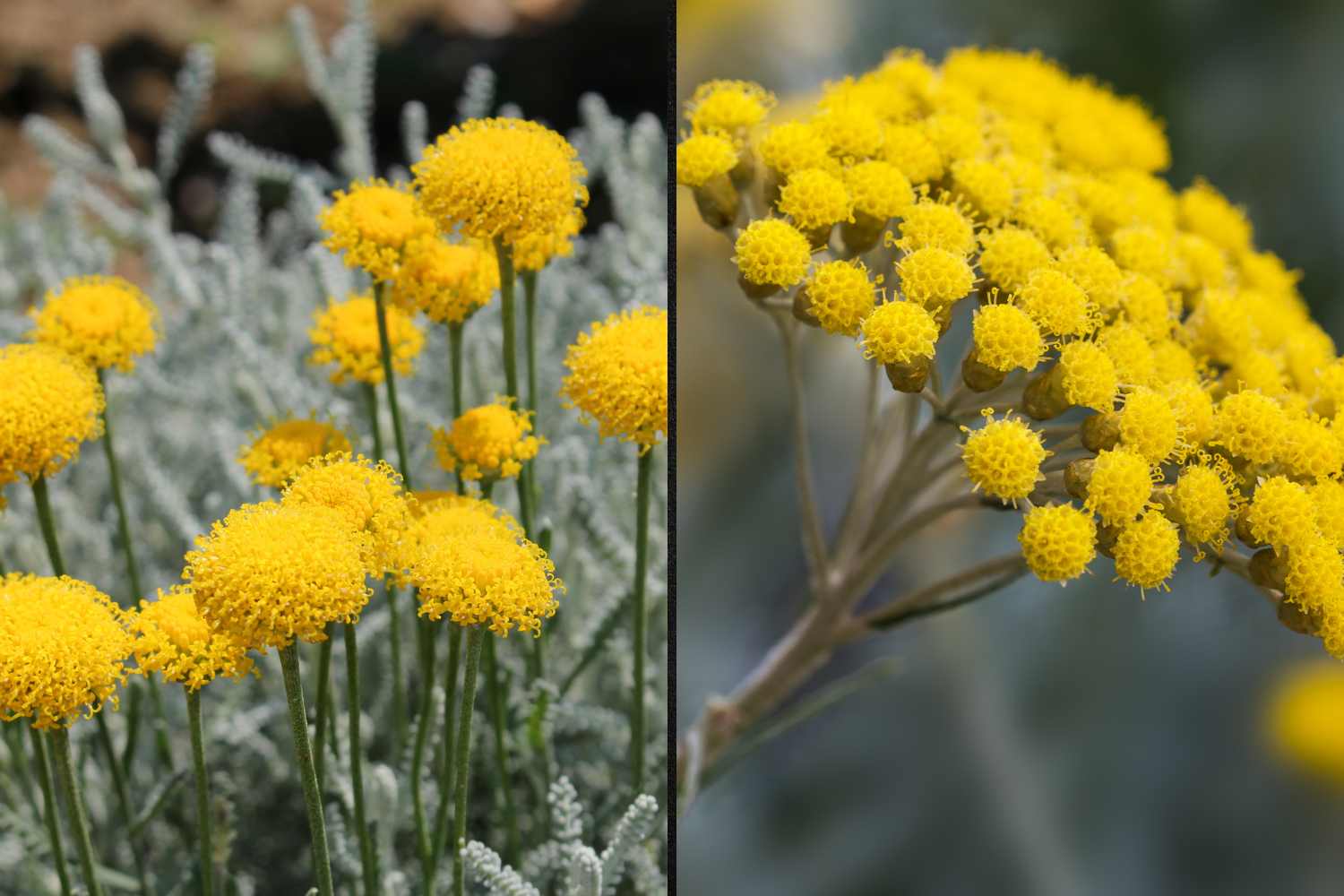
If you think lavender is the only fragrant plant capable of resisting winter penalties, the time has come to change you back. The world of Mediterranean aromatic plants hides still little known treasures that exceed the classic lavender for the intensity of the perfume and resistance to the cold. Two protagonists above all: Santolina and Elicriso.
Santolina
Santolina belongs to the family of Asteraceaethe same, among others, of Gazania, Artemisia and Chrysanthemum. Silver foliage and bright yellow leaders characterize santolina, a real surprise for those who discover it for the first time. This perennial shrub plant, between 10 and 60 centimeters high, emanates an intense and particular aroma that vaguely recalls the rosemary with fresh and camouflaged notes.
The leaves are small and finely jagged, covered with a woolly hair that gives the plant the characteristic gray-argental color and which retains the essential oils that release the perfume: just touch the plant to free a penetrating and persistent fragrance in the air.
Flowering takes place in summer with small spherical chiefs of intense yellow color that look like golden buttons scattered on the foliage. Even the flowers are fragrant and keep their aroma for months after being dried. Holy Santolina prefers limestone and well -drained soils, sunny positions and resists quietly at temperatures that descend below zero.
The helichrysum
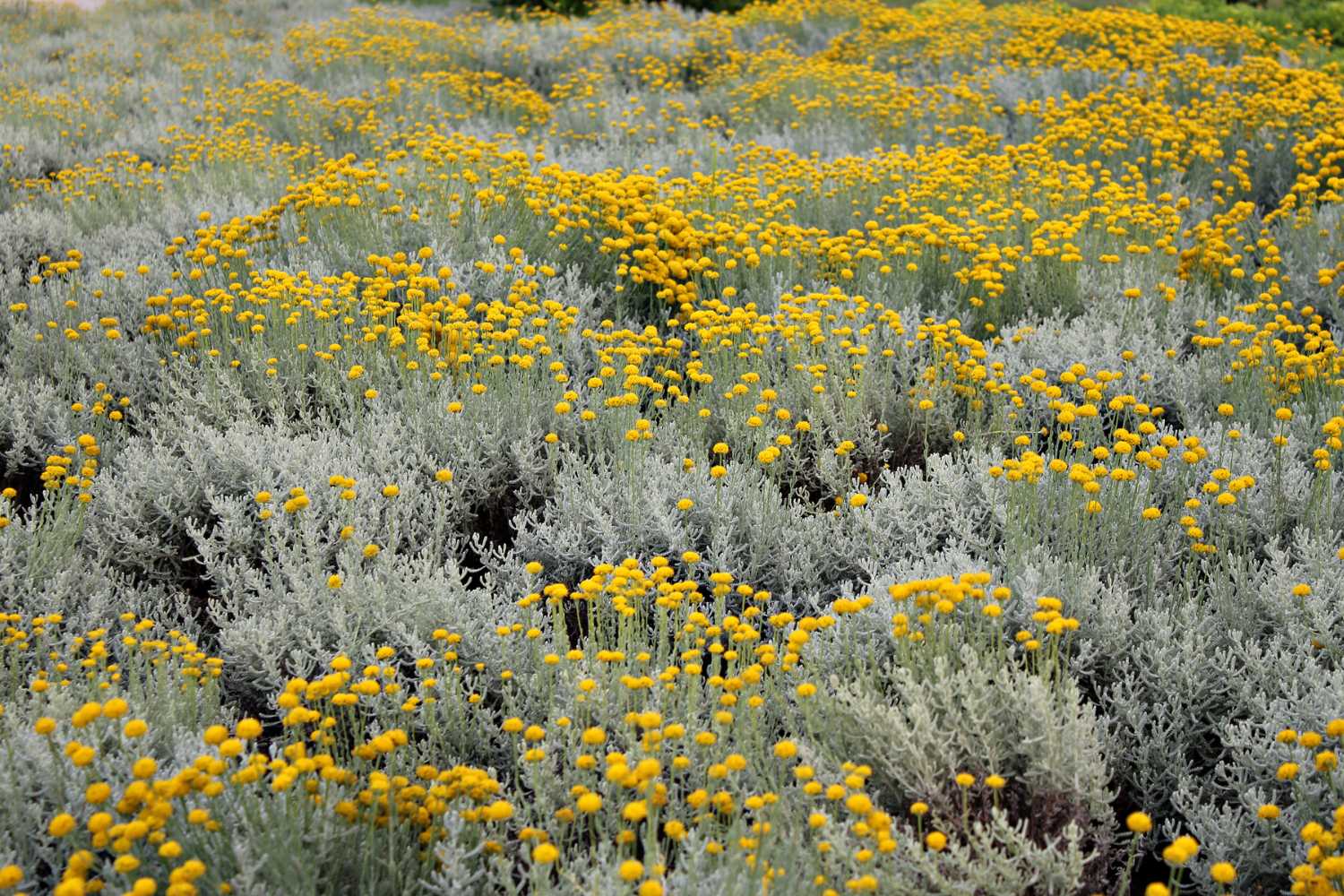
If Santolina hit you, the helichryso – also belonging to the family of Asteraceae – It will definitely conquer you. The name Helichrysum It derives from the Greek “Helios” (sun) and “Chrysos” (gold), and this already says a lot about the beauty of this plant. But it is the perfume that makes it very special: a complex aroma that mixes notes of licorice, curry and honey, so intense that a single plant can perfume a whole garden.
The Italian helichrysum, the most common species in our country, forms compact bushes that reach 40-80 centimeters in height. The linear, green-gray leaves are covered with a dense hair that makes them velvety to the touch, while the flowers, small golden yellow chiefs gathered in Corimbi, bloom from June to September and have the extraordinary feature of maintaining color and perfume even after drying.
The plant grows spontaneously along the coasts and in the rocky areas of the Mediterranean, preferring poor and well drained soils. It resists summer drought and endures winter temperatures up to -10 ° C, making it perfect for gardens throughout Italy.
Why choose them instead of lavender
While lavender loses much of its fragrant foliage during the winter, Santolina and Elicriso maintain their aromatic leaves throughout the year, without forgetting the complexity of the perfume: if lavender has a sweet and relaxing aroma, these two plants have more decisive and original notes, which will be noticed even at a distance.
From an ornamental point of view, the silver foliage of the santolina and the green-gray of the elichriso will be able to create interesting contrasts even in the cold months, given that the yellow flowers will bring a note of sunflower that marries perfectly with other plants of Mediterranean origin.
How to grow them successfully
Both plants require very few care. Planted in full sun, in well -drained soil, do not require frequent watering or particular fertilizers. A light pruning after flowering helps to maintain the compact shape and stimulates the production of new fragrant sprouts.
In winter, no particular protections are needed, if not in mountain areas where temperatures descend a lot below zero. In spring, a slight rejuvenation pruning will eliminate the parts possibly damaged by the cold.
Santolina and Elichriso lend themselves perfectly to the cultivation in pots, ideal for terraces and balconies where their perfume can be appreciated closely. Just guarantee a good drainage and sunny exposure to see them prosper year after year, in order to see perfume and color in every season guaranteed.
Don’t you want to lose our news?
