
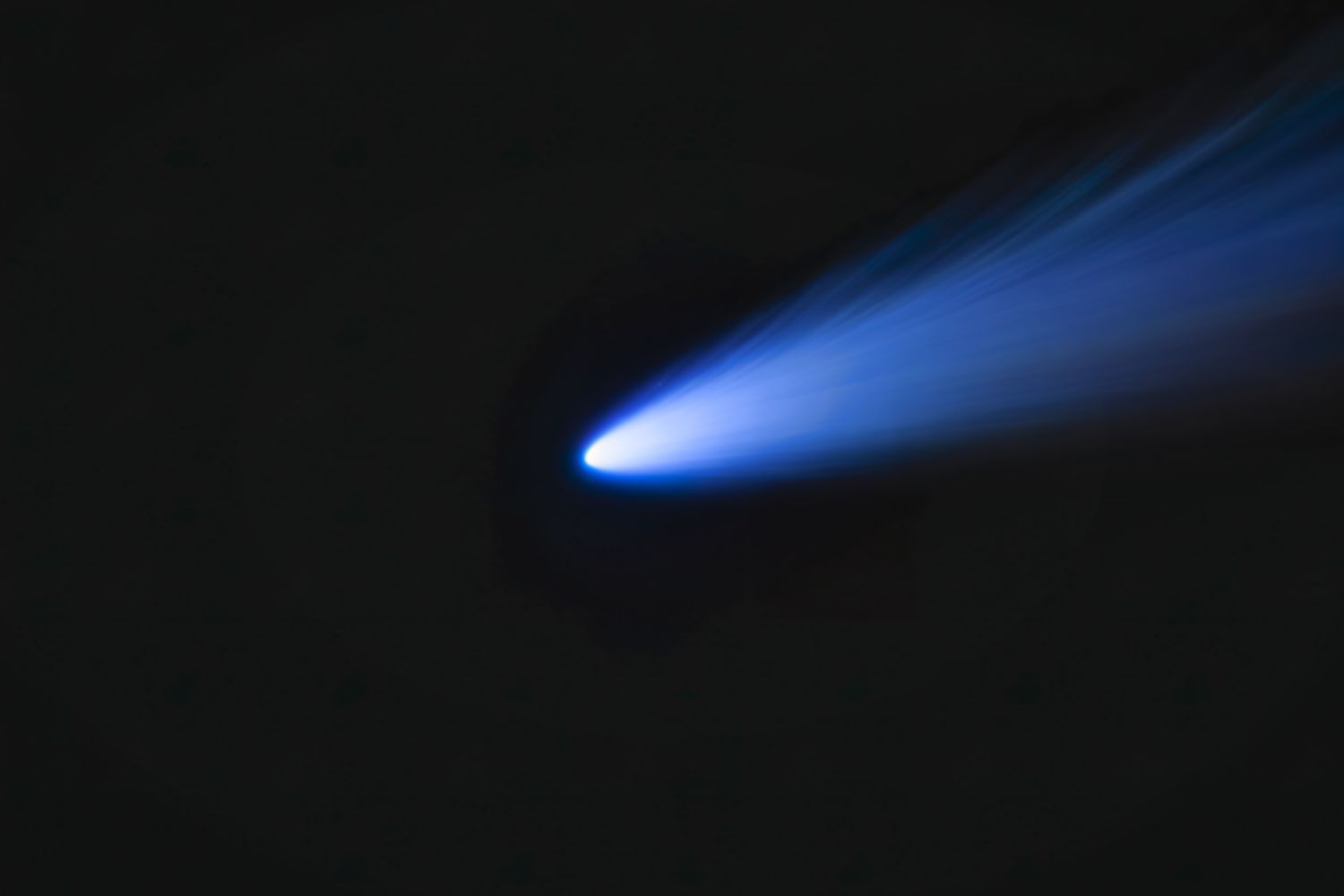
She was called C/2026 A1 (MAPS) and could give us an exciting show starting from April: last January 13, four amateur astronomers warned, using a telescope in the Atacama desert, of a new comet that could be the brightest of 2026. With comets you can never be sure that they are really that bright to be seen with the naked eyebut in this case we can hope well.
As stated on the website of San Pedro de Atacama Celestial Explorationsthe comet is part of a group called ‘Kreutz group‘, which includes Sun-grazing comets whose origin is the dislocation of a giant comet that passed too close to the Sun in 362 BC, and which, over the centuries, has given rise to many very bright comets, such as Comet Ikeya Seki in September 1965, which became visible to the naked eye during the day.
C/2026 A1 was detected at 300 million km from the Sun, 82 days before its perihelion (i.e. the closest approach to our star). And it is the first time that such a comet has been discovered so early: this made it possible to study its development as it approached the Sun and became increasingly active. Finally, last January 20th Minor Planet Center officially designated the comet as C/2026 A1 (MAPS).
However, we always want to specify that the behavior of comets is very difficult to predict, above all, but not only, because it is almost impossible to know a priori what their behavior will be at perihelion: for this too, no one knows if it will be bright enough to be visible to the naked eye or if it will produce a beautiful comet.
However, we know with certainty that the comet is moving in an extremely elongated orbit around the Sun and that it is heading towards a close encounter with our star. At the beginning of April the comet will pass by just 120,000 km from the surface of the Sun.
If the comet survives (the biggest doubt about any comet), it could truly become a spectacle in the evening sky in early April, becoming visible in broad daylight as it approaches the Sun.
We must therefore wait for the infamous “day x”, or perihelion, to make more accurate predictions. But we can hope well.
Sources: The Conversation / Minor Planet Center
