
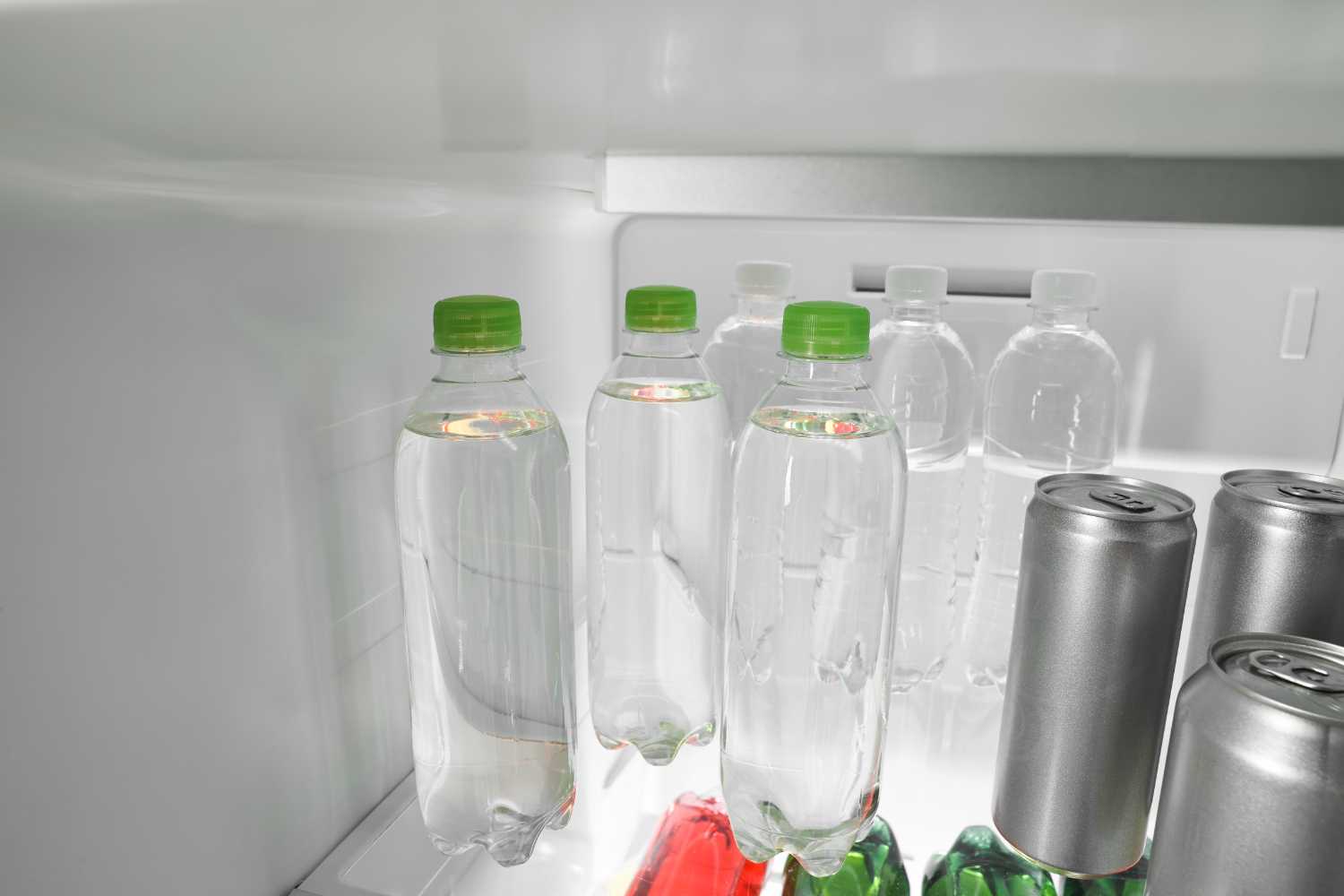
There is a surprisingly simple way to reduce your refrigerator’s electricity consumption, which involves placing a few bottles of water in the freezer. A little-known but absolutely effective trick, capable of transforming normal containers into real cold accumulators that stabilize the internal temperature and reduce the workload of the compressor. The result? A concrete energy saving on the electricity bill.
The principle behind this technique is elementary. Water has a fair thermal capacity, a characteristic that allows it to absorb and release the cold slowly. Once frozen, the bottles work like thermal batteries: they keep the internal temperature of the freezer low and prevent sudden changes when we open the door to take something out. In this way, the compressor does not have to activate continuously to compensate for the loss of cold, with a direct benefit on electricity consumption.
How the bottle trick works
To put this strategy into practice, very little is needed, since it will be enough to fill one or two plastic bottles with tap water, leaving a few centimeters of empty space to allow the expansion of the liquid during freezing. The bottles should be placed in the freezer, preferably in the empty spaces. There is no need to buy anything special: the common half-liter or one-liter bottles that we already have at home are fine.
The fuller the freezer, the less air will need to be heated and cooled, because already frozen foods help retain the cold, creating a sort of thermal mass that stabilizes the temperature. When the freezer is full, the foods themselves act as “cold batteries”, helping to maintain a constant temperature and reducing the workload of the engine. Frozen water bottles perform the same function, as they will take up otherwise empty spaces and transform the freezer into a more efficient system.
The difference between a full freezer and a half-empty one is substantial. An empty refrigerator consumes more energy because in a full refrigerator the on and off cycles of the electric motor are longer but less frequent. Starting the compressor requires more energy than its normal operation, therefore reducing the start-up frequency means lowering overall consumption. Frozen water bottles allow you to get this benefit even when we don’t have enough food to store.
Real energy savings
Data on refrigerator consumption helps to understand the concrete impact of this measure. An average energy class refrigerator consumes between 100 and 400 kWh per year, depending on the model, size and efficiency. Every small reduction in consumption, obtained through measures such as frozen bottles of water, translates into economic savings which, added to other good practices, can significantly reduce the annual electricity bill.
To maximize the effectiveness of this technique, it is best to combine it with other good practices. Maintaining the freezer temperature around -18 degrees, avoiding prolonged door openings and regularly defrosting the freezer are all actions that, combined with frozen water bottles, lead to even more important results. Regular maintenance also makes a certain difference: a freezer with an ice layer thicker than five millimeters works much harder to maintain the correct temperature.
Food safety during blackouts
The most interesting advantage of this system emerges in emergency situations. Cold accumulators not only save energy, but prepare the freezer for any power outages, keeping food safe for longer. During a blackout, a freezer full of frozen food and bottles can maintain the correct temperature for much longer than a half-empty one.
A full and well-insulated freezer can store food for a period ranging from 10 to 48 hours in the event of a power outage, as long as you keep the door closed. The presence of frozen water bottles helps to lengthen this time, as it will provide an additional thermal reserve that will slow the increase in internal temperature. In the summer or during extreme weather events, this extra protection can mean the difference between saving or losing the contents of your freezer.
Experts recommend not opening the freezer door during a blackout unless absolutely necessary. Each opening disperses precious cold and drastically reduces the autonomy of the appliance. Frozen bottles help to partially compensate for these losses, but the golden rule remains to limit openings as much as possible.
Practical advice for daily use
The application of this technique requires only a few small precautions. The bottles should be chosen based on the space available in the freezer: it is better to opt for medium sizes that can easily fit among the foods already present. PET bottles, the ones normally used for mineral water, are fine and can withstand repeated freezing without problems.
Once frozen, these bottles can remain in the freezer permanently. There is no need to change or replace them, unless they are used for other purposes, such as bringing lunch to the office or organizing a picnic. In these cases, the ice accumulated in the bottles can be used as a natural ice bag, to then be frozen again when returning home. This is a versatile resource that doesn’t take up space unnecessarily.
The arrangement of bottles in the freezer deserves attention. They should be positioned in empty spaces, avoiding blocking the air vents or obstructing the circulation of the cold. For those who live in particularly hot climates, placing several “tiles” in the freezer that accumulate the cold serves to extend the autonomy of the appliance. This measure is particularly useful in the Mediterranean regions during the summer months, when external temperatures put refrigeration systems under stress.
