
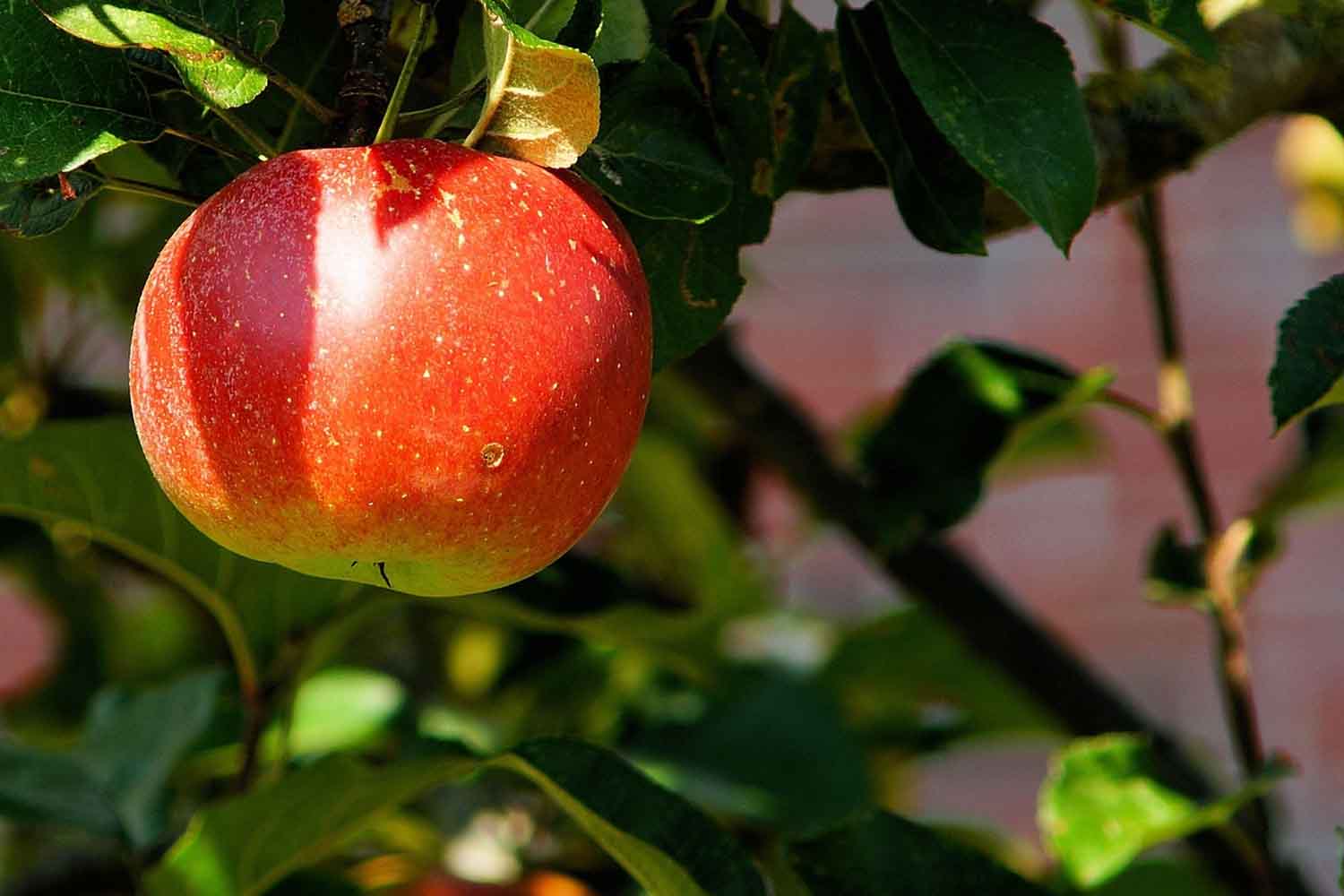
An apple a day doesn’t just keep the doctor away. In France, it could even help him rebuild cartilage. It is not a provocation nor a click-bait title: it is the concrete result of a study published on Journal of Biological Engineeringwhich demonstrates how it is possible to obtain human cartilage starting from decellularized apples.
The work was conducted by a team from the Université de Caen Normandie and represents an important step in the field of tissue engineering, that branch of regenerative medicine that aims to grow biological tissues in the laboratory to repair damaged parts of the body.
How human cartilage is made from apples
The heart of the discovery lies in a process called decellularization. In practice, the apple is deprived of its cells, leaving the natural three-dimensional structure intact, a sort of microscopic scaffold composed mainly of cellulose.
This porous structure is perfect for accommodating human cells. The researchers “seeded” stem cells and cartilage progenitor cells into them, cultivating them in the laboratory under controlled conditions. The cells adhered to the plant matrix, began to proliferate and, even more interestingly, produced cartilaginous extracellular matrix, a sign that they were indeed forming cartilage tissue.
Histological and molecular analyzes confirmed the differentiation into chondrocytes, the typical cells of cartilage. In some cases, in particular with cells derived from the auricular perichondrium, the formation of the cartilage occurred even without particular hypoxic conditions, a technical detail that strengthens the application potential of the technique. In practice, the apple does not become cartilage. It becomes the natural “bridge” that allows human cells to organize themselves and transform into cartilage.
It should be underlined that biomaterials of plant origin have enormous advantages. They are abundant, cheap, easily available and already shown to be compatible with mammalian cells in previous studies. They do not require human donors, do not involve the ethical and logistical problems associated with traditional transplants and can be modeled according to the shape of the tissue to be reconstructed.
Cartilage, we know, is a difficult tissue to regenerate. Joint injuries, arthritis, osteoarthritis, nasal or ear trauma: when it is damaged, the body struggles to repair it spontaneously. And finding healthy tissue for transplants is not easy, both due to the shortage of donors and compatibility problems. In this context, using a simple apple as a biological scaffold is not just ingenious. It’s a small green revolution in regenerative medicine.
Possible applications: joints, nose, ear
The prospects are concrete. The researchers talk about possible applications in the repair of articular cartilage damaged by trauma or degenerative diseases such as osteoarthritis. But not only that.
The technique could also be used for the reconstruction of nasal cartilage after oncological operations or trauma, or for ear cartilage, where the three-dimensional shape is fundamental. The team is already evaluating other plants and other plant parts to understand which natural structures are best suited to reconstructing specific human tissues. Among the candidates there is also celery, which due to its shape could offer new possibilities.
This research is not a laboratory curiosity. It is a concrete example of how nature can inspire advanced technological solutions. In an era where we talk about circular economy, biomaterials and sustainability, seeing an apple transform into a support for tissue regeneration forces us to change perspective. The medicine of the future could be greener than we imagine.
You might also be interested in:
