
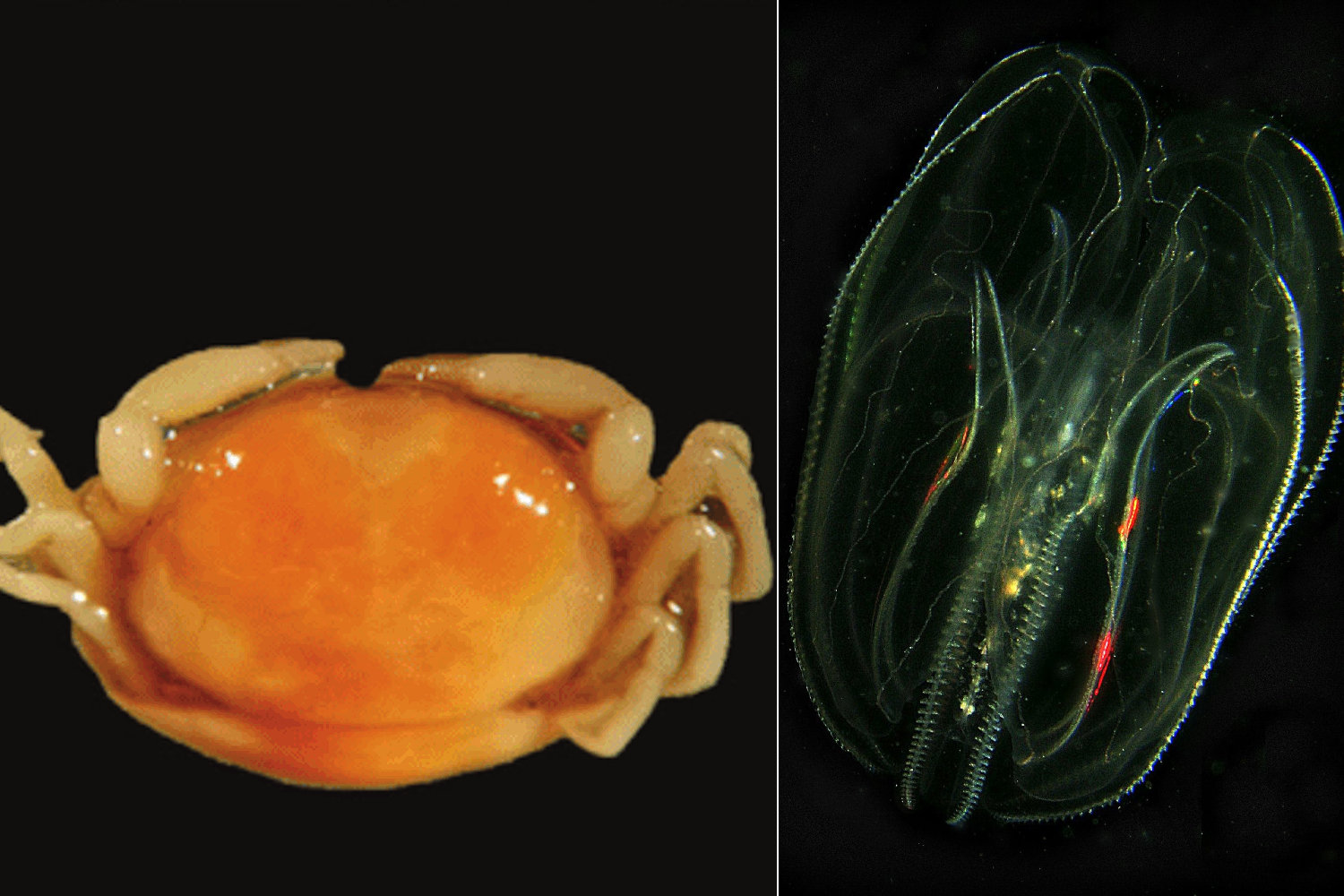
The delicate ecosystem of the Adriatic Sea is facing a profound transformation driven by the arrival of non-indigenous marine organisms, commonly defined as alien species. To defend coastal biodiversity and economic activities linked to fishing, the Aliena cross-border cooperation project was born, included in the Interreg Italy-Croatia program 2021-2027. Launched in March 2024 and with a total budget of more than 2.6 million euros, the intervention saw the synergistic collaboration of 7 leading scientific and institutional partners between the two sides, coordinated by the general director of Arpa FVG Anna Lutman.
View this post on Instagram
The intensive monitoring conducted along 4 pilot areas allowed us to shine the spotlight on 5 target species at high invasive risk, including the microalga Ostreopsis ovata, the ctenophore Mnemiopsis leidyi also known as sea walnut, the macroalga Codium fragile, the copepod Pseudodiaptomus marinus and the fearsome brown alga Rugulopteryx okamurae. With around 1,100 non-indigenous species recorded overall in the Mediterranean Sea, of which 217 are concentrated in the Adriatic basin and around 90 in the Gulf of Trieste alone, the challenge requires the adoption of cutting-edge technological tools to avoid irreversible damage to ecological balances.
The innovation of environmental genetics and discoveries in the seabed
The fundamental contribution offered by Arpa FVG takes the form of the creation of a new Environmental Genetics Unit financed by European funds. By exploiting the potential of environmental DNA (eDNA) extracted directly from water samples and marine sediments, researchers were able to combine traditional microscopic observations with advanced methods such as DNA barcoding, real-time PCR and digital PCR.
This latest generation technology has allowed us to analyze and determine over 250 marine organisms, revealing complex algal bloom phenomena and tracing with millimeter precision the presence of the invasive alga Rugulopteryx okamurae, identifiable even when present in infinitesimal concentrations.
Field investigations have also made it possible to confirm the presence in the Gulf of Trieste of the tiny crustacean Pinnotheres bicristatus, a white, translucent crab called the pea crab a few millimeters long that lives as a commensal inside bivalve molluscs. This discovery, the subject of an international scientific publication in 2025, demonstrates how many species invisible to superficial analysis are colonizing the Adriatic seabed.
Since at least half of the biological introductions are attributable to maritime traffic and ship ballast water, the predictive mathematical models and molecular methods developed during the project now constitute a shared standard between Italy and Croatia to create an increasingly rapid and efficient early warning system to safeguard the entire marine heritage.
@García Raso & Cuesta/Research Gate
@Vidar A/Wikipedia
