

When we buy food for our animals, we often take it for granted that the information reported on the label, such as the nutritional ones, is truthful and that the product is 100%safe, especially as regards the presence of dangerous contaminants (such as listeria for example ). But can we really trust?
To answer this question, Consumer reports has analyzed 58 foods for dogs, including those of many known brands And also sold in Italy, such as Hill’s Science Diet, Purina, Pedigree, Cesar and others.
The goal was to analyze the nutritional composition, the presence of dangerous contaminants and compliance with the guidelines of the Association of American Feed Control Officials (AAFCO). The tests, conducted between December 2023 and May 2024, evaluated several parameters such as proteins, fats, vitamin D, copper and fibers, with a particular focus on food safety.
The results
The results reveal what every owner of pets should know: Some formulas do not fully respect nutritional declarations reported on the label and in some cases (fortunately rare) the food is contaminated. Let’s see in detail what emerged.
As for the nutritional values, the results showed that, although most of the foods for dogs analyzed meet the nutritional guidelines of the AFCO, some foods showed a lower amount of key nutrients, such as proteins and vitamins, Compared to what was promised, which could affect long -term animal health.
Some foods were more suitable for dogs with particular needs, such as elderly puppies or dogs, while others have highlighted shortcomings or excesses in nutrients such as vitamin D.
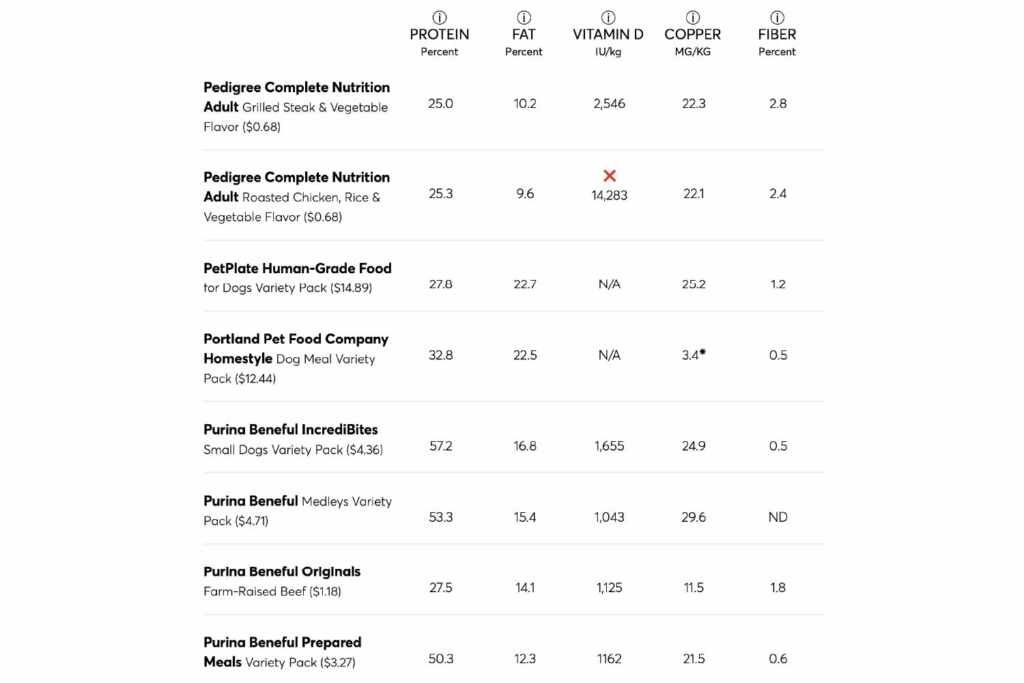
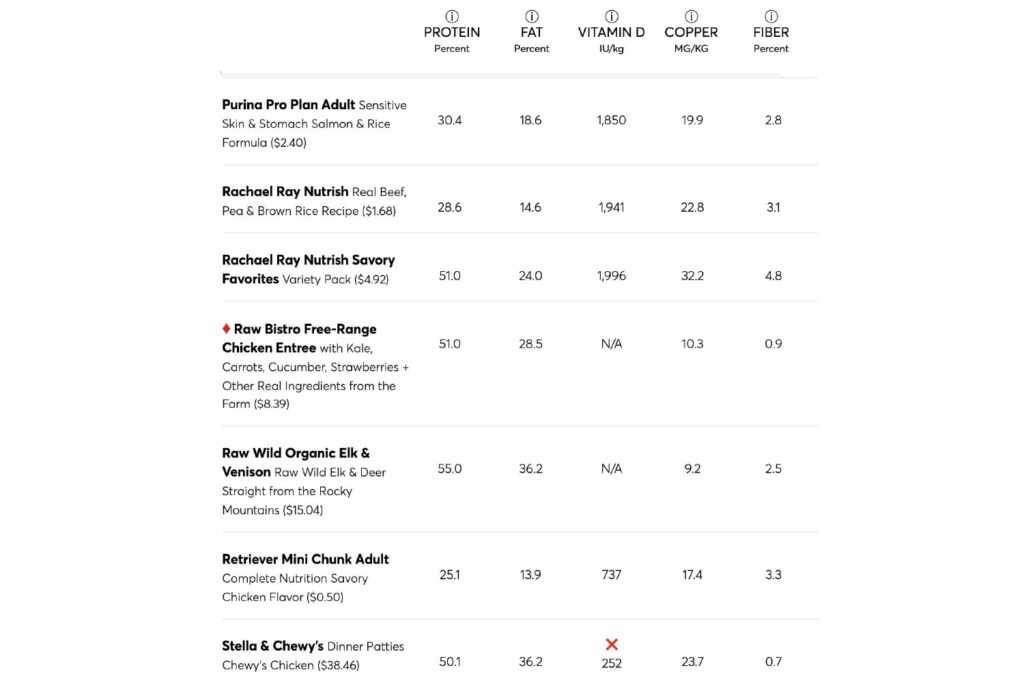
For example, the product Pedigree’s complete nutrition contained levels of vitamin D which widely exceeded the maximum recommended limit, With potential risks to the health of the dog in the long run. On the contrary, Stella & Chewy’s Dinner Patties had too low vitamin D levels, below the recommended range.
Worrying was then to find the presence of contaminants, even if in minimal quantities, in some samples. More specifically it was Listeria, A pathogen bacterium that can cause gastrointestinal infections and, in the most serious cases, damage to the nervous system. On Consumer reports reads:
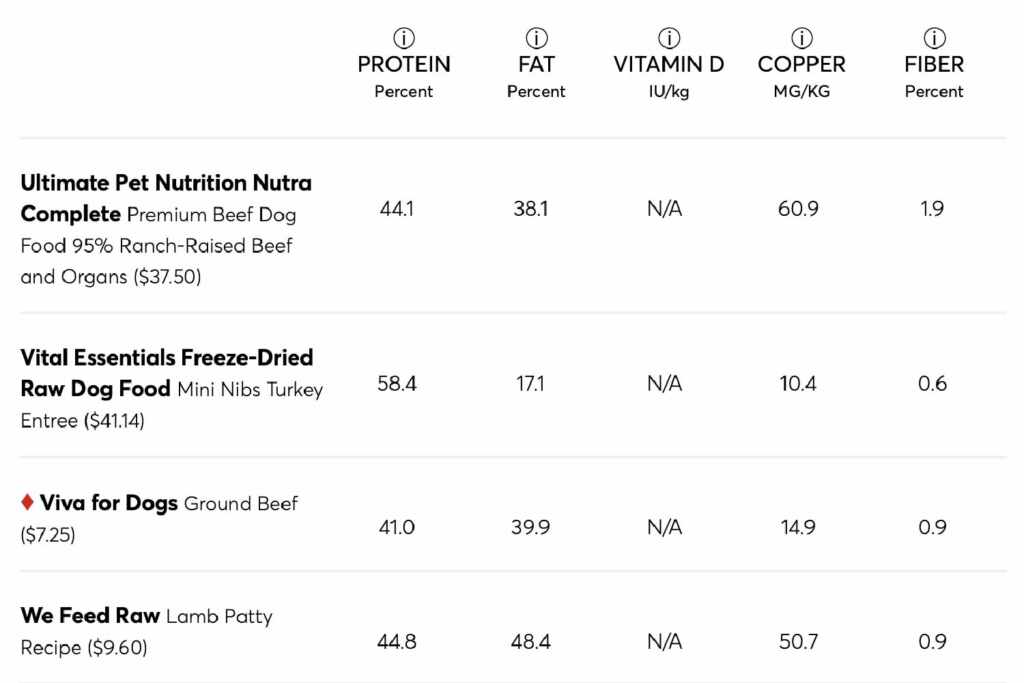
We detected the listeria in four of the 174 samples (they analyzed 3 samples for each product, editor’s note). We found Listeria MonocyTogenes, the type of bacterium of the listeria that is known to cause diseases, in a sample of Raw Bistro’s Free Range Chicken Entrée and in a Viva For Dogs Ground Beef Meal sample, both frozen raw foods for dogs. The other two champions of Viva for Dogs Ground Beef Raw Meal that we tested contained Listeria Innocua, which generally does not cause diseases but sometimes is considered an indicator of the potential presence of harmful bacteria of the Listeria.
Even if the listeria has been found in small quantities, experts express concern about the management and manipulation of the ingredients during the production process of dog food.
Luckily, No sample was positive at Salmonella And Aflatoxins were detected only in a dog food and an average concentration of aflatoxin of 1.8 parts per billion (PPB) in the three samples. This is well below the “level of action” of 20 ppb above which the Food and Drug Administration, the federal agency in charge of supervision of both food for humans and pets, would consider the adoption of measures against a potentially harmful product.
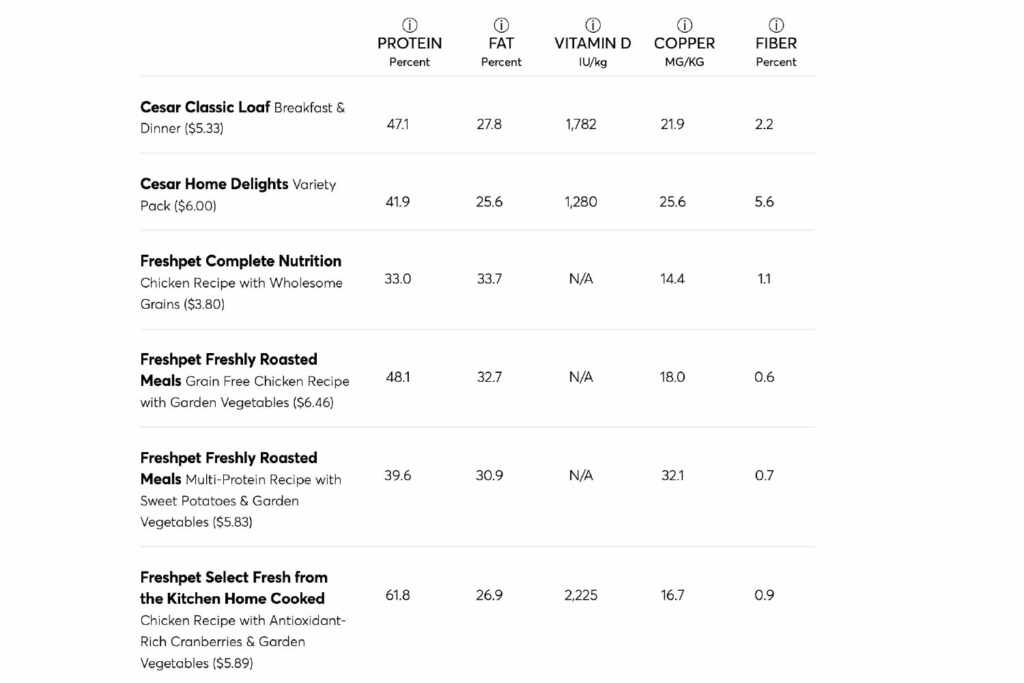
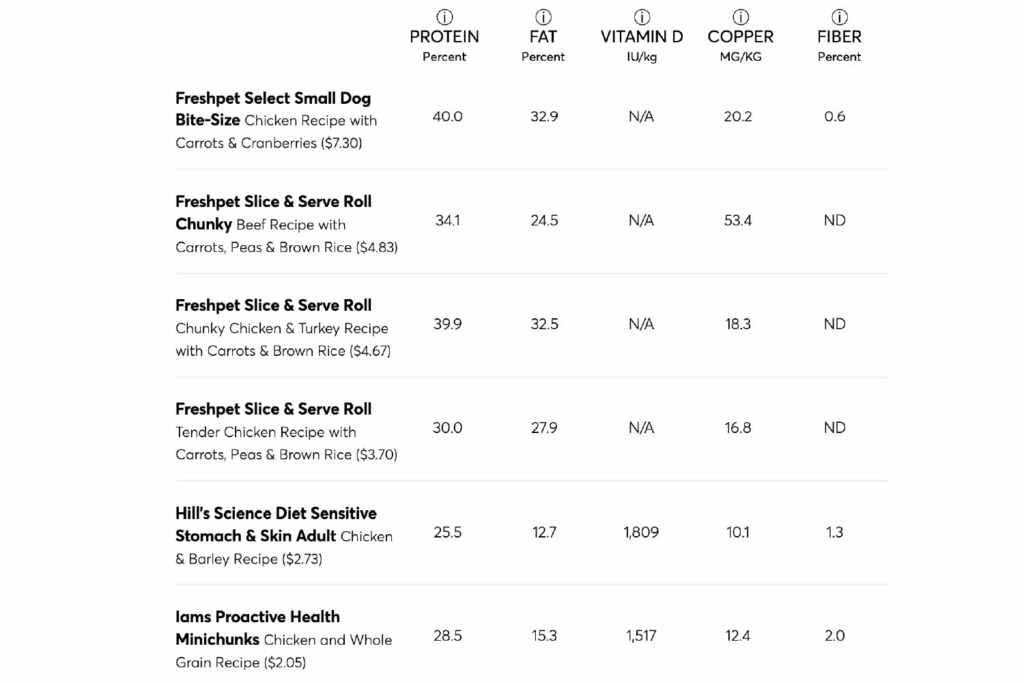
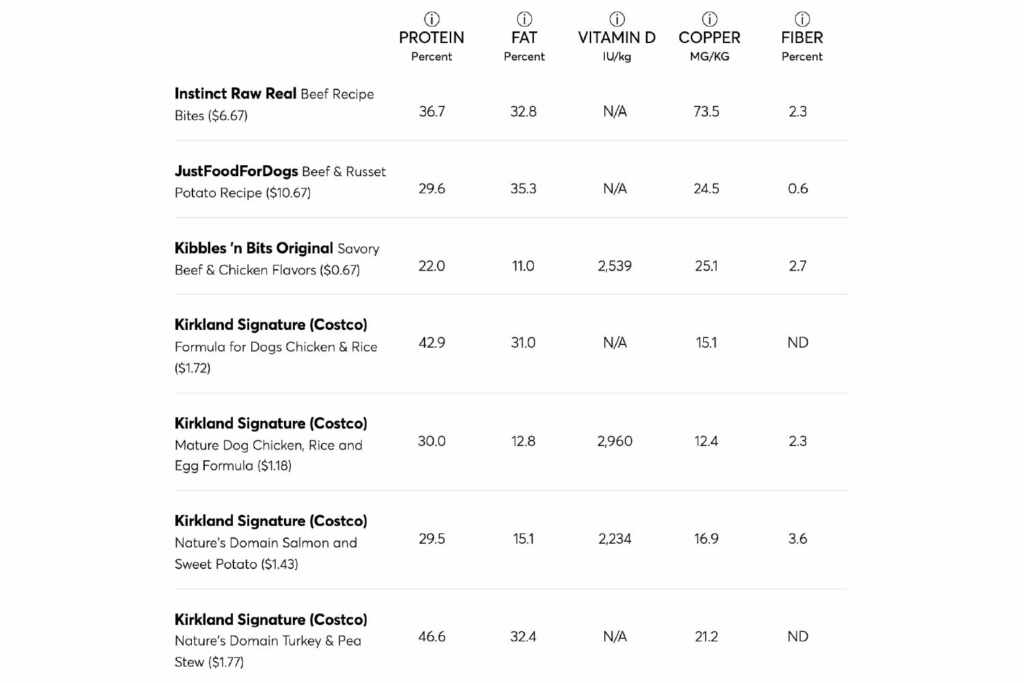
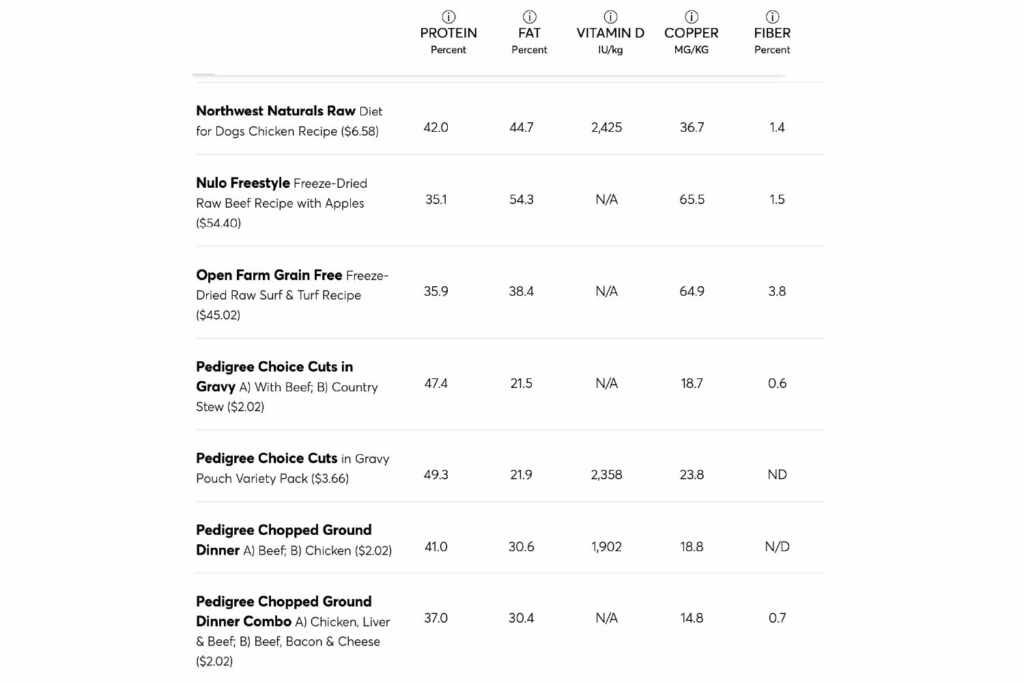
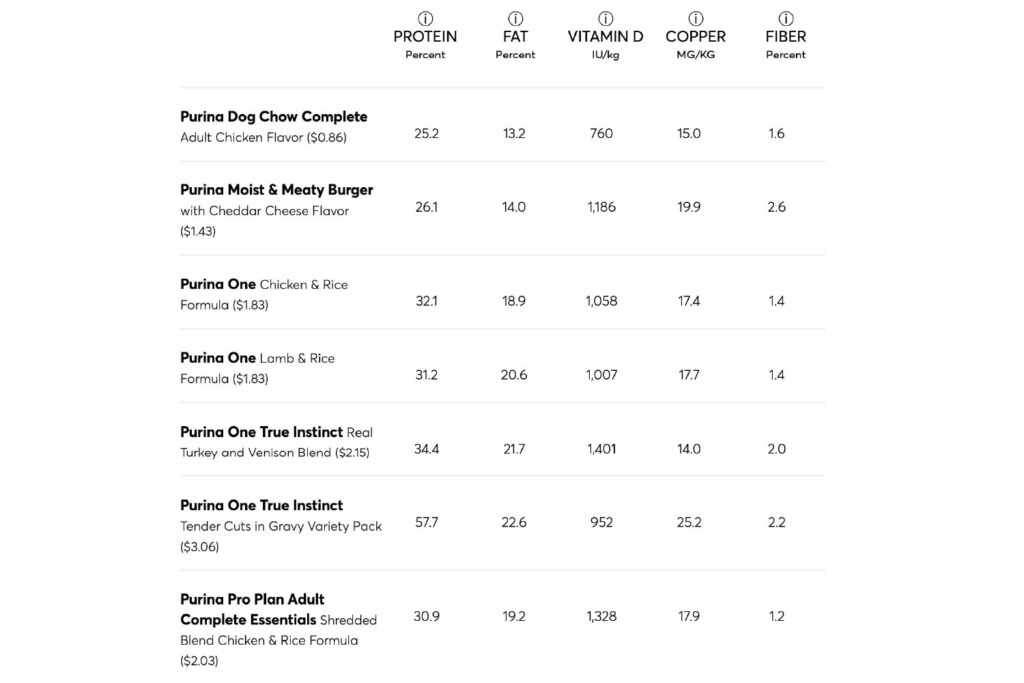
The table below shows the results of the CR tests for proteins, fats, vitamin D and copper. The foods that did not respect the AAFCO nutritional guidelines were marked with a red X. The results for fiber have been included, although there is no recommended level for this nourishing, although listed on dog food labels. The foods were tested for vitamin D only if this nutrient was indicated on the label; Otherwise, the column of vitamin D reports “N/A” (not applicable).
Experts of Consumer reports They specify that this is not a ranking of the best dog foods available, but offers consumers the opportunity to compare the nutritional composition of various products and can prove to be a useful tool when discusing with the vet regarding the most suitable food for your animal domestic.
The foods marked with a red diamond were positive for the listeria.
Essential nutrients for dogs
Experts of Consumer reports They remember what are the essential nutrients for dogs which, just like humans, have specific nutritional needs that must be satisfied through their diet.
CR tests focused on four main nutrients: proteins, fats, vitamin D and copper, fundamental nutrients for the general health of the dog, its growth and well -being:
How to choose the right food for your dog
The choice of the right food for our dog is never easy, given that there are numerous factors to consider, primarily the specific nutritional needs of the animal. Although labels may seem clear, they are often difficult to interpret without a thorough knowledge of the essential nutrients and the needs of dogs.
For this reason, It is essential to consult the vetespecially if our dog has particular dietary needs. In the absence of specific indications, however, the foods that respect the guidelines or those that emerge as best in the tests are generally a good starting point.
