
Christmas as we know it in Italy follows a well-established script, which sees Christmas Eve lunch and dinner spent with relatives, panettone or pandoro – with the guest star represented by nougat -, and whose maximum possibility of choice falls on what to set up, between Tree and nativity scene, often created jointly.
But what if we tried to import some traditions from other cultures? The world is full of original Christmas customs that could enrich our celebrations with a touch of novelty.
On skates towards Christmas mass
In Caracas, Venezuela, on the morning of December 25th many citizens go to mass by skating through the streets of the capital. The authorities close some streets to traffic precisely to encourage this tradition which mixes religious devotion and physical activity. The children, the evening before, tie a rope to their big toe, leaving it to dangle outside the window: the skaters who pass by in the morning give the rope a tug as a wish. A particular custom, which reminds us how much Christmas can also be about movement and open air, not just tables set indoors.
View this post on Instagram
Ukrainian lucky cobwebs
Ukrainian Christmas trees are decorated with spiderweb ornaments, a tradition linked to an ancient legend. There is a story of a very poor widow who had no money to decorate the tree. The house spiders, moved by compassion, wove splendid webs around the tree during the night, which in the morning shone in the sunlight. Adding a decorative spider web to your tree is a simple way to bring a symbol of luck and remember that beauty can also come from simplicity.
View this post on Instagram
The German hidden cucumber
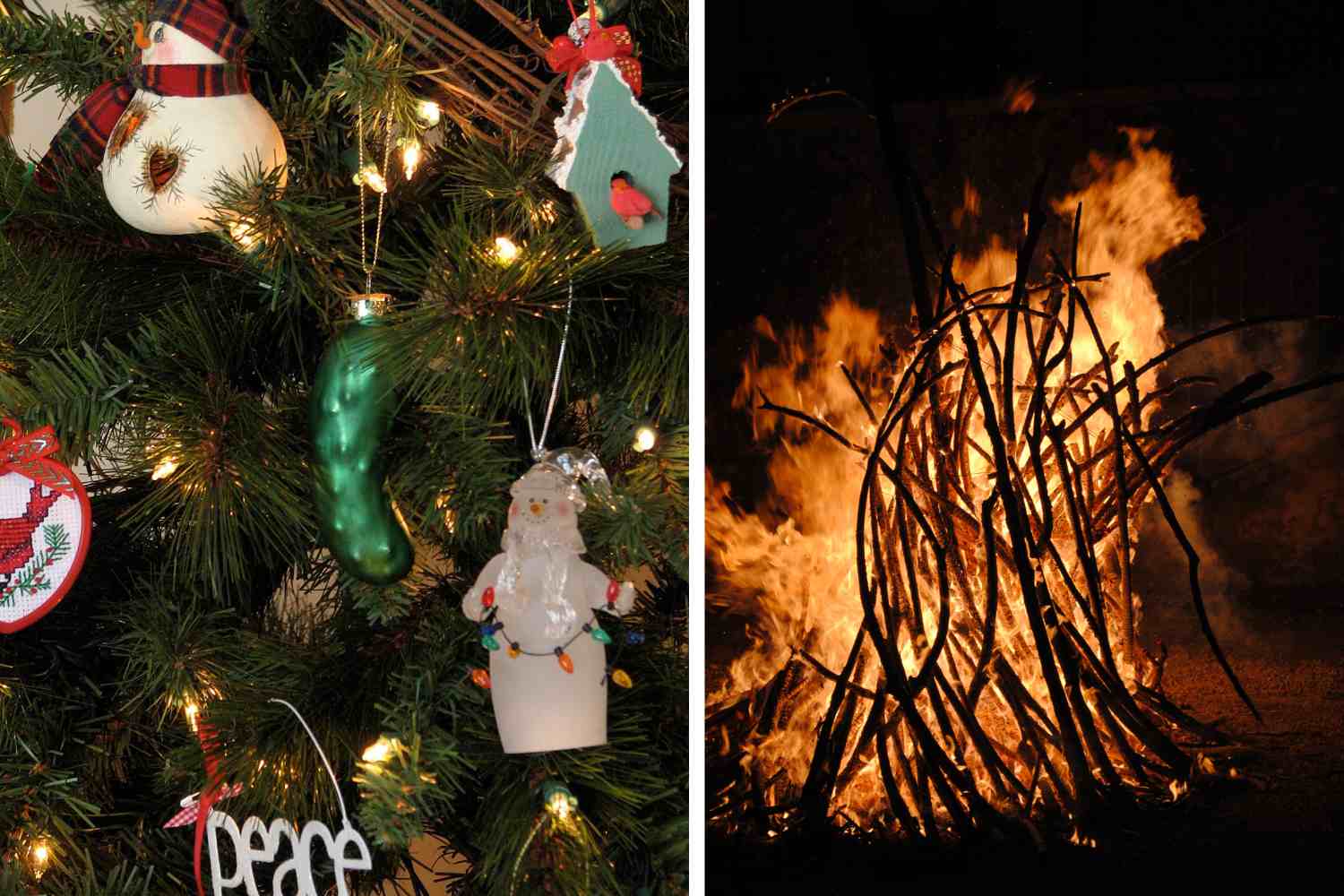
The German tradition of Weihnachtsgurke involves hiding a green cucumber-shaped ornament among the branches of the tree. The first person to find it on Christmas morning receives an extra gift or is considered lucky for the whole year. The origins of this custom are disputed: some link it to Saint Nicholas, others to a Bavarian soldier who was a prisoner of war. Ironically, many modern Germans are unaware of it, and some scholars believe it was invented by American marketing. Whether authentic or not, it turns gift opening into a fun game for the whole family.
View this post on Instagram
The fried chicken that conquered Japan
In Japan, where Christians represent a minority of the population, Christmas has taken on very peculiar connotations. Christmas Eve is celebrated with a meal of KFC’s fried chicken, a tradition born from a 1970s advertising campaign promoting the slogan “Kentucky for Christmas.” The idea was so popular that today millions of Japanese families book their bucket of chicken, cake and champagne months in advance.
Hiding brooms in Norway
Norwegians have developed a curious practice: on Christmas Eve they hide all the brooms in the house. The custom derives from the belief that evil spirits and witches emerge on December 24th to steal brooms and fly away creating havoc. At the same time, they leave a bowl of porridge for the Nisse, a mischievous gnome who, if treated well, will protect the house (like for the Befana, to whom we leave some snacks for the long night journey). A beautiful tradition that embraces folklore, perfect for children.
The Devil’s Burning in Guatemala
On December 6, Guatemala celebrates La Quema del Diablo, a tradition that marks the official start of the Christmas season. Families light bonfires in front of their homes and burn icons attributable to Satan to drive away evil spirits and celebrate the victory of good over evil. In the past, rubbish accumulated during the year was also burned, but out of respect for the environment today many limit themselves to burning devil-shaped piñatas. The event is accompanied by traditional donuts and hot fruit punch.
View this post on Instagram
The Polish star kicking off the party
In Poland, the opening of presents cannot begin until the youngest child in the family has spotted the first star in the evening sky. This tradition recalls the Magi who followed the star of Bethlehem and adds a moment of waiting and reflection, which slows down the modern consumerist frenzy.
View this post on Instagram
Why look elsewhere
Exploring the Christmas traditions of other countries does not mean giving up our roots, but enriching the family repertoire with new ideas. Each custom we have described brings with it completely universal values, in which sharing, fun, spirituality, respect for the environment and sense of community are the great protagonists. Adopting even just one of these alternative practices can transform Christmas into a more personal and less standardized experience, a way like any other to create splendid memories capable of distinguishing your family from others.
