
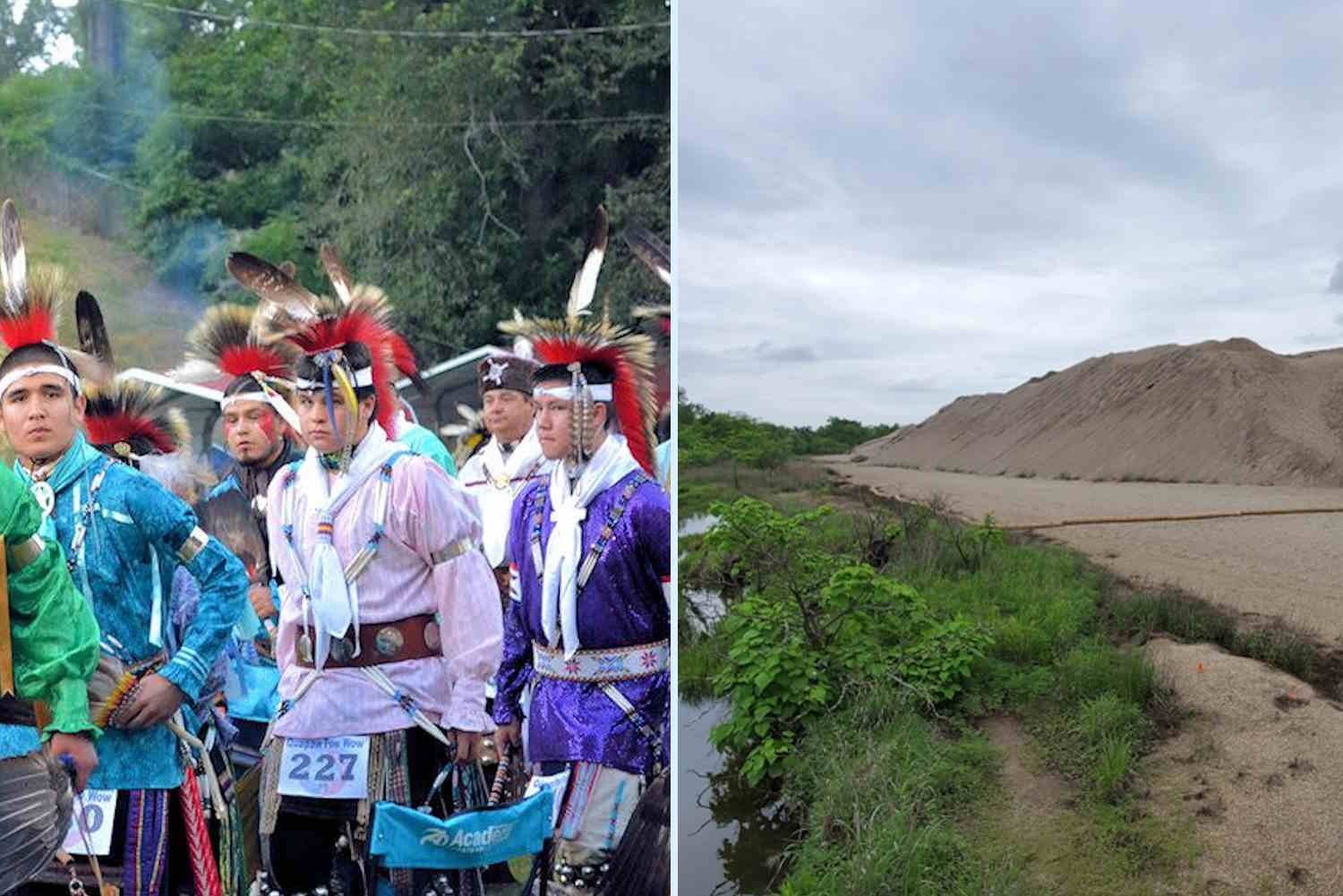
For decades it was one of the hearts of the American mining industry. Today the Tar Creek Superfund Sitein northeastern Oklahoma, is considered one of the most severely contaminated sites in the United States. In this area of approximately 100 square km there still remain over 30 million tonnes of mining waste, loaded with lead, zinc and cadmium, toxic substances that represent a risk for the environment and human health.
Tar Creek is part of the Tri-State Mining Districta large mining district that also includes southeast Kansas and southwest Missouri. Here, between 1900 and the 1960s, lead and zinc were extracted, used mainly by the war industry: lead was used in particular to produce ammunition during the First and Second World Wars. When the mines closed in the 1970s, enormous quantities of waste – locally calledchat“- were left on the ground. The problem is that these materials contain high concentrations of heavy metals that can contaminate soil and water.
Overall, mining activities in the Tri-State Mining District have produced more than 500 million tons of mine waste. A network of approximately 300 miles of underground tunnels also extends beneath the Oklahoma Territory, with more than 1,320 abandoned mine shafts and thousands of exploratory drillings. Over time, many of these structures have collapsed, causing land subsidence. In the meantime, the tunnels filled with water, generating acidic mine water which contaminated the aquifers.
The problem became evident in the late 1970s, when acidic mine waters began flowing into surface waterways, compromising the local water system that includes Tar Creek and the Neosho River and Spring River basins. Contaminants can also seep out of waste piles and into rivers and lakes.
The health consequences were particularly severe for children. Before the cleanup, 43 percent of children living in the mining area had blood lead levels above the standards set by the Centers for Disease Control (CDC). In subsequent years, thanks to residential land reclamation and health information programs, these levels have decreased significantly.
In 1983 Tar Creek was included in the list of priority sites of the “Superfund” program, the US federal system dedicated to the cleanup of the most contaminated areas. Since then, numerous interventions have been launched, but only one indigenous tribe has played a key role.
The decisive role of the Quapaw
After years of incomplete interventions and insufficient funding, it was the Quapaws who took matters into their own hands. At the exact moment in which the federal funds ran out and the cleanup work stopped, leaving the territory half-finished, the tribe was able to remove the contractors and start working independently.
We got a bulldozer, hired tribal workers and started clearing the land,” said Chris Roper. The land was covered again with layers of fertile soil, sown and stabilized.
Thus, since 2013 the reclamation of mining waste hills has been managed directly by the tribe, with its own equipment and workers. The larger stones are sold for roadworks – where the asphalt safely traps the lead – while the rest is transported to controlled depots. The project created approximately 100 jobs, nearly half filled by Quapaw citizens.
At the same time, the tribe aimed to restore productivity to the land. Organic compost and soil recovery techniques have made it possible to restore the fertility of the fields. Once the safety standards established by the EPA have been reached, the land can be used for agricultural crops and pastures.
Today, hundreds of acres of once-contaminated land produce corn, wheat and soybeans within the 2,500 acres cultivated by the Quapaw Nation’s agricultural division. In some areas, cattle are also raised: grazing, with the natural fertilizer produced by the animals, helps to improve the quality of the soil.
The land called Laue has become one of the symbols of this rebirth. After the reclamation, the fields became green again and today host pastures and crops. In spring the prairies are filled with oat fields almost one meter high, while around 400 heads of cattle graze in the area.
For the Quapaw, agriculture is not only an economic activity but also a fundamental part of their identity. Before the arrival of Europeans, the tribe grew large areas of corn, beans, pumpkins, sunflowers, and fruit along the Mississippi.
Today that connection with the land is slowly returning. Not all reclaimed areas are perfect for agriculture: some land remains poor and could be used for grazing, natural grasslands or wildlife habitat. But for the Quapaw nation the most important result is another: having transformed a place devastated by the mining industry into a territory that is alive again.
A land that they had not chosen – after centuries of forced displacement – but which they are now rebuilding, piece by piece, according to their own rules.
Sources: Oklahoma.gov / The Guardian / EPA
