
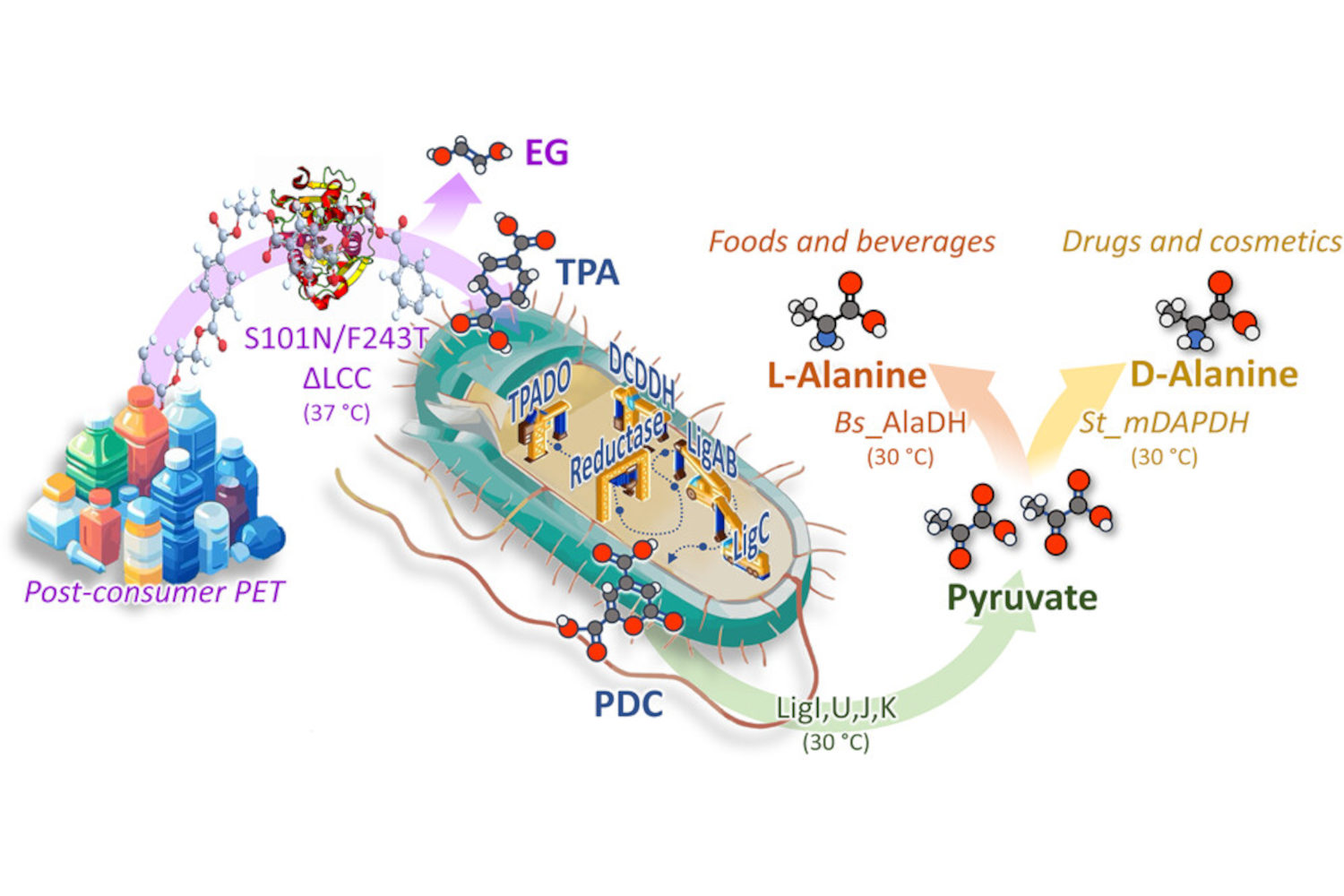
From Varese comes a discovery that could change the way the world deals with plastic pollution. At the University of Insubria, a group of researchers has developed an innovative biotechnological process capable of transforming PET – the polyethylene terephthalate found in common bottles – into pure amino acids, i.e. molecules of great economic and scientific value.
The project was coordinated by Professor Loredano Pollegioni, University Delegate for Research and Technological Innovation, and conducted in The Protein Factory 2.0 laboratory by Professor Elena Rosini, within the ProPla program, financed by the Cariplo Foundation. The result, published in the scientific journal ACS Catalysismarks a historic turning point in the circular bioeconomy, opening new perspectives for the sustainable management of plastic waste.
From the bottle to the amino acid: the enzyme chain
The heart of the discovery lies in an enzymatic chain composed of twelve enzymes, coming from four different microorganisms. This system, developed by the team led by Pollegioni and Rosini, is capable of degrading PET into its basic monomers, and then progressively converting them into L-alanine and D-alanine, two amino acids highly sought after in the pharmaceutical, cosmetic and food sectors.
The global market for these compounds is worth over $300 million and continues to grow. But real innovation is not cheap: the process is completely green, without harmful emissions or use of toxic solvents. This, as Professor Rosini explained, demonstrates that plastic can have a second life and can become a resource, not just waste.
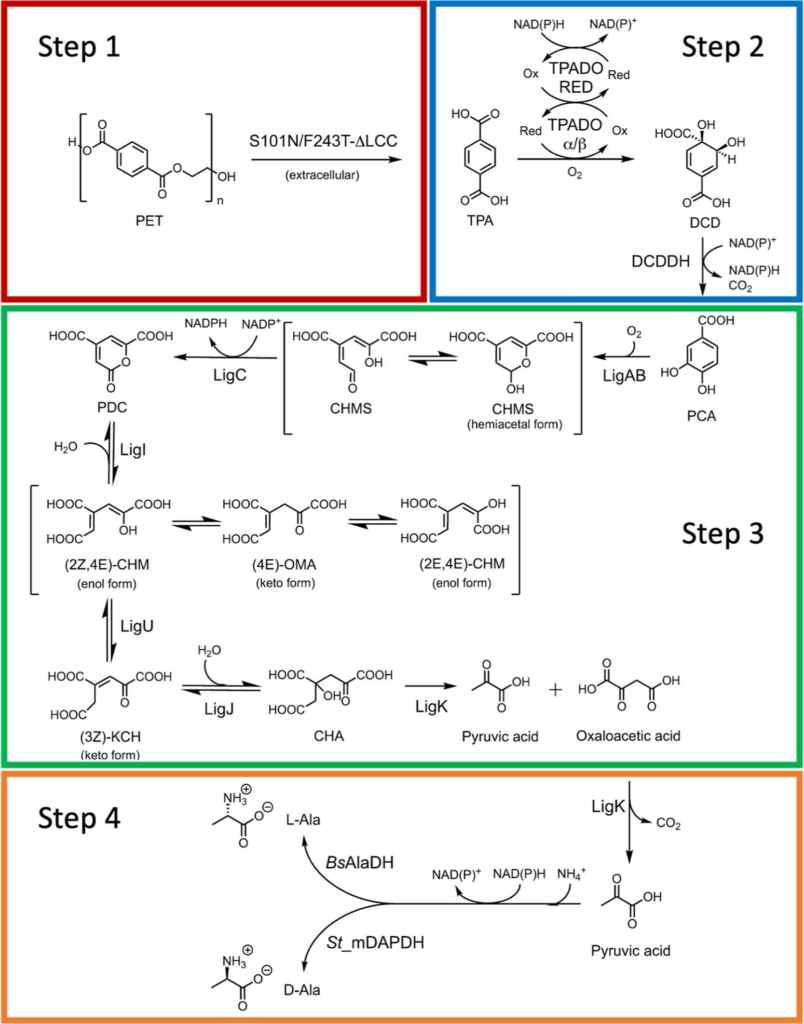
Now we need to understand the scalability of the process
Insubria’s research is part of a worrying global context: global plastic production is set to exceed 33 billion tonnes by 2050, with serious consequences for ecosystems, oceans and human health. Microplastics are now present in food chains and even in the air we breathe.
In this scenario, the possibility of transforming plastic into a raw material represents a paradigm shift. It’s not just about recycling, but about valorising waste, giving life to new materials and compounds useful for industry. The next step will be the scalability of the process, so that the technology can be applied on a large scale in waste treatment plants.
You might also be interested in:
