
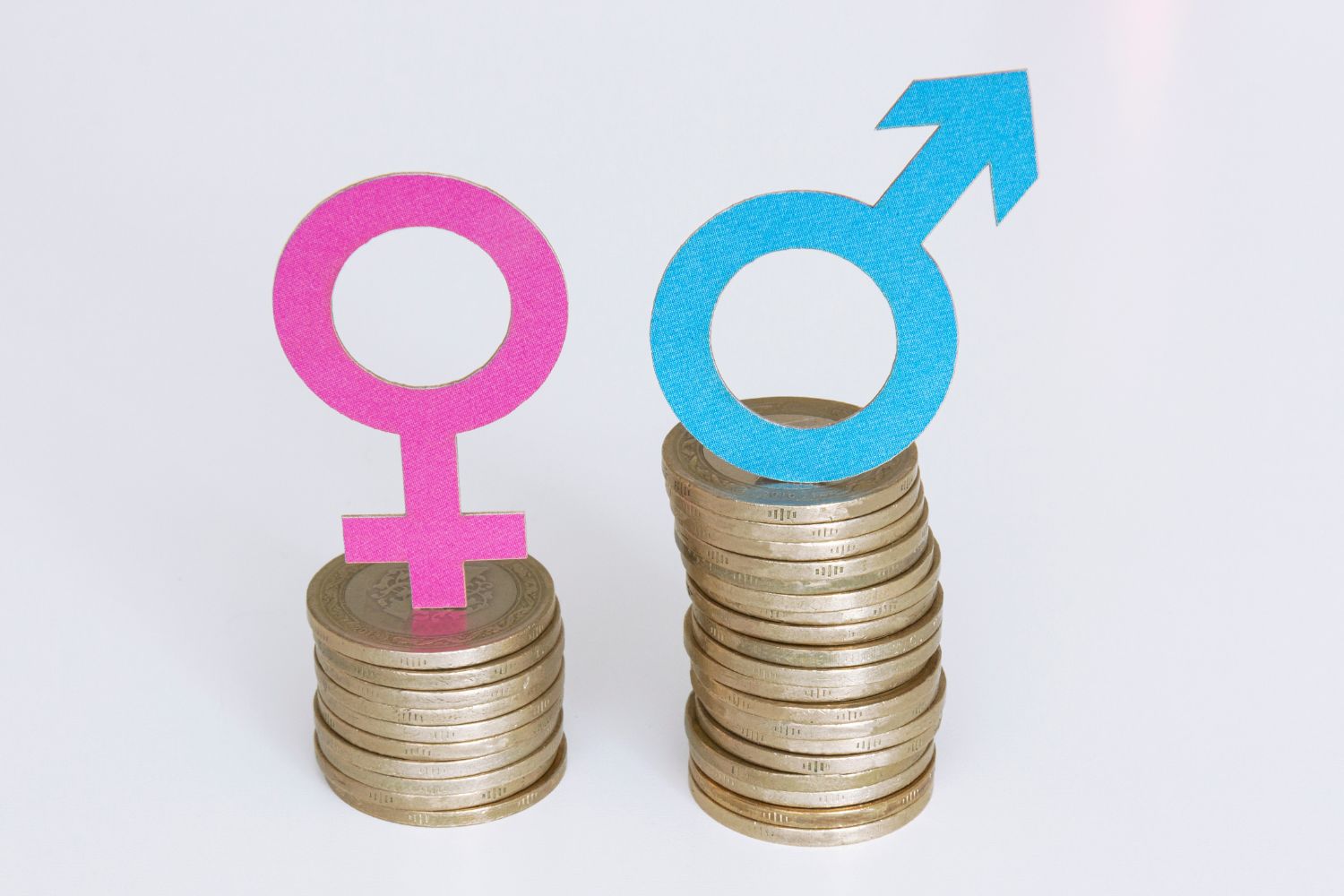
The gap between men and women is narrowing, but too slowly. This is the photograph returned by the Global Gender Gap Report 2026 of the World Economic Forum, now in its twentieth edition: no country in the world has yet achieved full gender equality and, maintaining the current rate of progress, it could take around 120 years to completely close the global gap.
The World Economic Forum report analyzes 145 economies across four main dimensions: economic participation and opportunity, education, health and survival, and political representation.
The objective is not to measure absolute living conditions, but to observe how much each country has reduced the differences between women and men in the areas considered.
View this post on Instagram
The divide in the world
In 2026, the world has closed 69.2% of the overall gender gap, the highest value ever recorded by the index. Compared to 2006, the year of the first edition of the report, the improvement was 5.2 percentage points in the 97 economies monitored continuously for twenty years.
Real progress, but still insufficient: according to the WEF, at the current rate complete parity remains a long way off. In fact, the data shows one of the main critical issues highlighted by the report: in recent years improvements have continued, but at a slower speed than in the initial phase of the analysis.
View this post on Instagram
The sectors where the gap is most difficult to fill
The best results concern education and health, areas in which the global level of equality is now close to completely closing the gap:
However, the gaps linked to economic and decision-making power remain much wider:
Politics therefore remains the sector where the path towards equality is slowest: according to the report, maintaining the current pace it could take 194 years to achieve full political representation.
@WEF
As for Europe, the continent has improved its performance by 7 percentage points since 2006 and, according to the report’s projections, could reach full parity in around 70 years if the current pace continues.
Among the countries at the top of the global ranking we once again find mainly European nations. Iceland confirms its place in first place, with 93% of the gap closed: it is the only country to have exceeded the 90% threshold. Followed by Finland (87.2%) and Norway (85.7%).
The United Kingdom, New Zealand, Sweden, Australia, Germany and Ireland complete the top 10, while Namibia is the sub-Saharan African country with the highest ranking, in fourth place in the world.
And Italy?
We are only 83rd in the global ranking out of 145 countries, with a score of 0.708 on the scale used by the report. Compared to the previous edition, it recorded an improvement of 0.004 points and gained two positions. A figure which in any case confirms a situation still far from full equality, especially in areas linked to economic participation and representation in decision-making roles.
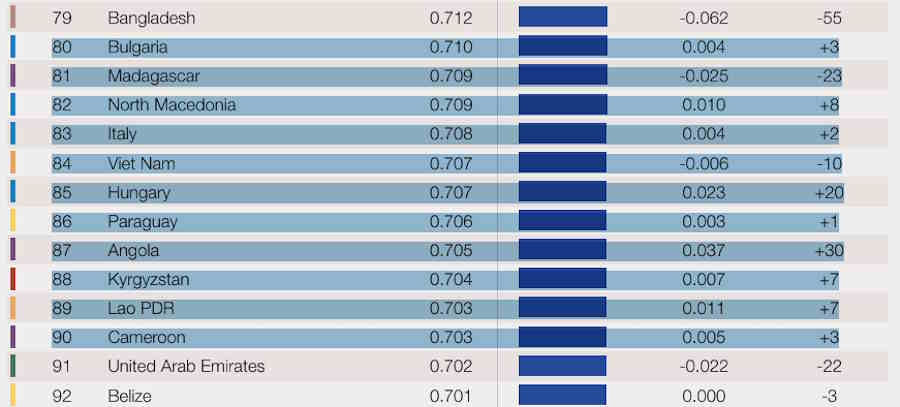
@WEF
The World Economic Forum report highlights, in fact, that, at a global level, precisely the two dimensions – economic opportunities and political representation – are those where the gap remains widest: the first indicator reaches 61.7% equality, while that relating to political empowerment stops at 22.1%.
Specifically in Italy:
The slight improvement recorded by Italy in the global ranking is linked above all to progress on the political representation front. On an economic level, however, the picture remains more complex: the score recovers just after the drop in 2025 and the country loses further positions in the international ranking.
It is precisely here that one of the main open challenges is concentrated: promoting women’s access to work, guaranteeing greater employment continuity, reducing the wage gap and creating real opportunities for professional growth. Italian women reach increasingly higher levels of education, but this capital of skills does not yet fully translate into greater employment, economic autonomy and presence in decision-making roles.
To fill the gap, temporary measures or sporadic interventions are not enough: structural and continuous strategies are needed, capable of affecting the root causes of the problem. Among the priorities indicated by the experts are accessible educational and care services, fairer paternity leave, greater transparency on salaries, the fight against involuntary part-time work and tools that accompany women throughout their career path. When will we be able to implement all this?
HERE you can find the full report.
