
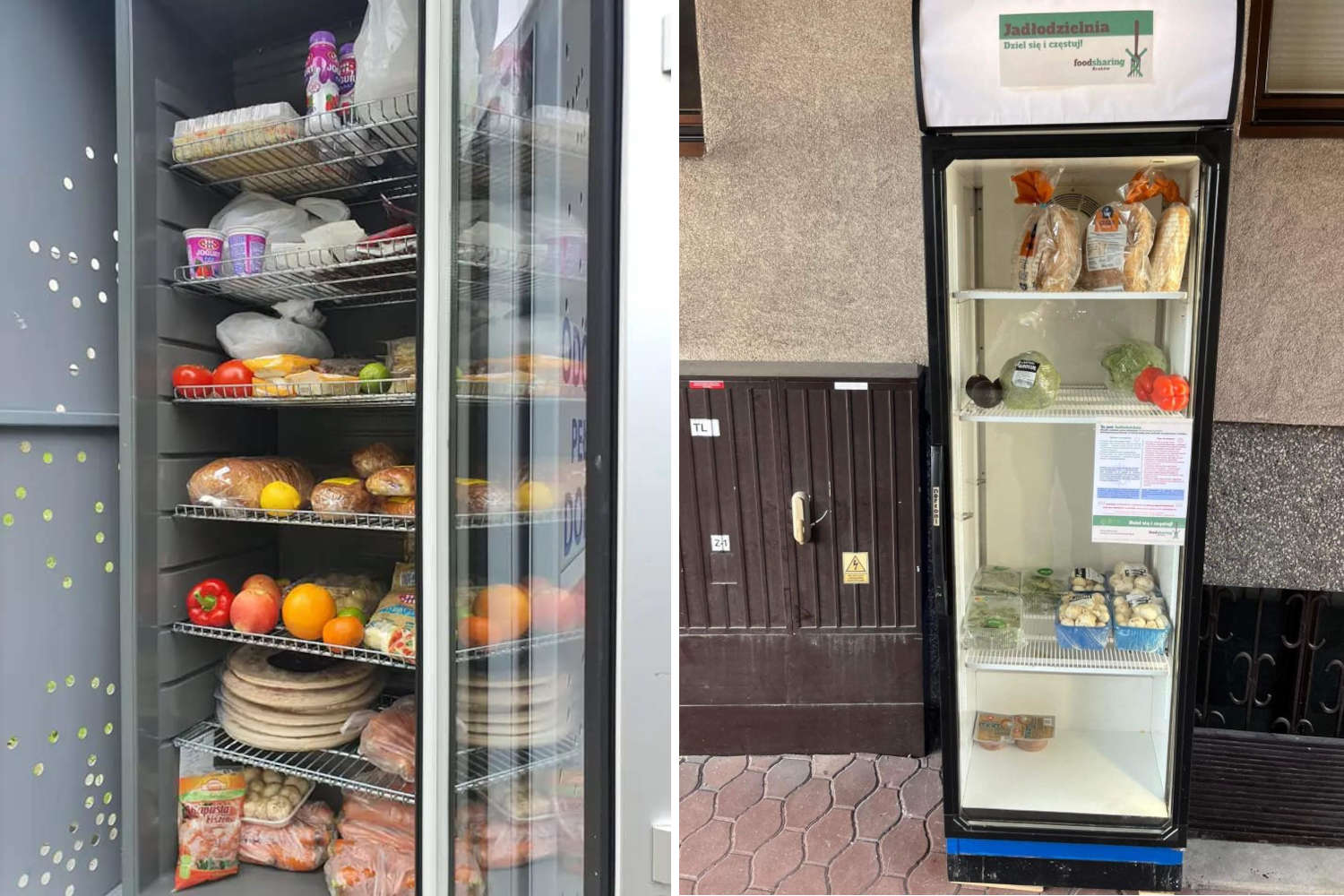
Unusual but increasingly recognizable structures have been appearing in several cities in Poland in recent years. They are called food walls and represent a concrete response to the rising cost of living and growing food insecurity. These are not traditional canteens or food banks, but shelves and refrigerators integrated into city walls, accessible to anyone at any time.
How food walls work
The mechanism is deliberately essential. Food and basic necessities are left on the shelves, such as bread, packaged foods, vegetables, ready meals, water and personal hygiene products. Those in need can freely take what they need, without registration, checks or questions. The guiding principle is often written clearly: “If you need it, get it. If you can, leave it”.
According to local organizers, the food walls are designed to offer immediate support, especially to those who are not included in official assistance programs or avoid traditional channels out of shame or fear of stigma. Continuous access, 24 hours a day, allows you to receive help even when formal services are not available.
Reduce waste, support neighborhoods
A key role is played by bakeries, bars and small shops, which donate unsold but still perfectly consumable products. This model allows us to reduce food waste, a significant problem throughout Europe, by transforming surpluses into useful resources for the community.
Unlike centralized systems, food walls do not have single management. They rely on volunteers and local participation, making the initiative low-cost and adaptable to different contexts. In some cities, municipal authorities have authorized the use of public spaces, limiting themselves to monitoring safety and hygiene, while elsewhere everything works thanks to mutual trust.
Those who live in the neighborhoods involved speak of a strengthening of social ties. Food walls eliminate the distance between those who give and those who receive, promoting a sense of common responsibility. Messages such as “Help yourself” or “You are not alone”, often accompanied by artistic decorations, transform these structures into urban landmarks.
A model also observed by the ESG world
The project is increasingly cited as an example of social innovation in line with ESG principles, showing how decentralized solutions can complement traditional welfare. In a Europe under economic pressure, Polish food walls demonstrate that small collective gestures can produce lasting effects.
You might also be interested in:
