
Who knows if Sushila Karkki, the first woman to take the reins of the executive of Nepal a few weeks ago, symbol of courage and female emancipation, albeit to interim managed to open the way towards the cessation of this ancient ritual.
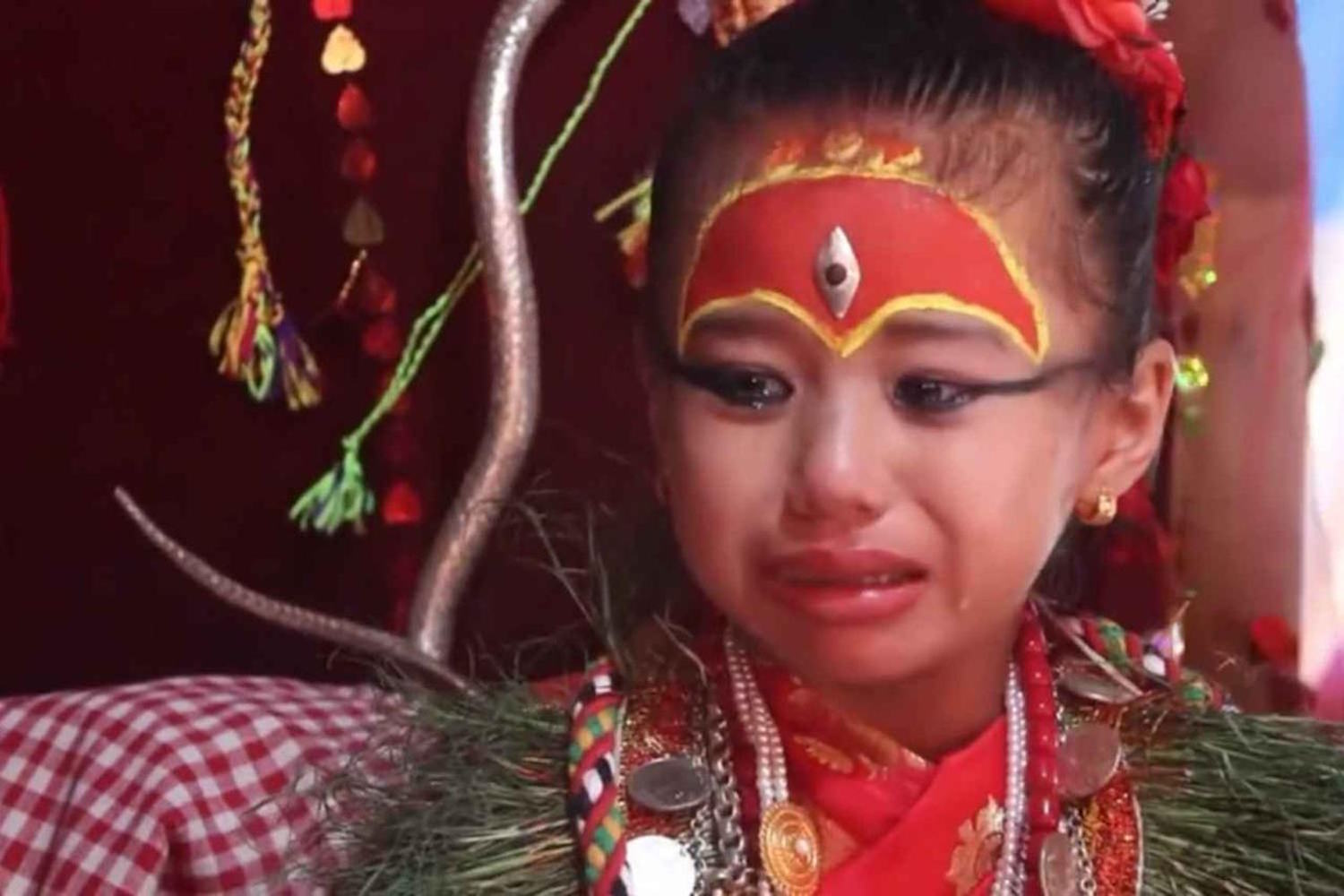
Yes, because it makes a certain effect know that a two -year -old girl, Aryatara Shakya, has just been proclaimed to Kathmandu as the new living goddess of Nepal, very sadly known Kumariwithin the most significant Hindu party in the country. At just two years and eight months, he replaces the previous Kumari, who, according to tradition, becomes mortal to achieve puberty. The family members are happy, because this gives them a lot of prestige, the daughter will now have a golden life and when it abandoned the building will also have a small pension. But then?
The living goddesses are venerated both by the Hindu and Buddhist communities. The girls chosen for this sacred role, generally aged between two and four, must satisfy rigorous physical criteria: skin, hair, eyes and teeth without stains. But, as it is easily intuitive, what glitters is not gold.
View this post on Instagram
The “goddesses” of Nepal trapped in a role that takes their childhood to them
In Nepal they are venerated as living deities, incarnations of the goddess Taleju Bhawani (for Hindus) or Durga (for Buddhists). They are called Kumari, a term that literally means “virgin”, and they are girls chosen according to very rigid criteria to become a cult object in the Kathmandu valley.
Behind the mystical facade, however, a far more bitter reality is hidden: that of isolated girls, subjected to hard rituals and raised in a context that without them without a normal life.
Who can become Kumari
Not all girls can be chosen. The criteria are selective and ferocious: they must have between 2 and 4–5 years of age and satisfy 32 physical and behavioral requirements, considered signs of divine perfection.
They must be impeccable healthy, not having lost milk teeth, have not yet had the menstrual cycle and have precise characteristics: dark eyes, black and straight hair, small tongue, long eyelashes like those of a cow, slender thighs “like those of a deer” and total absence of fear – even in front of the blood.
To demonstrate this superhuman courage, the candidates are closed alone in a dark room, surrounded by severed heads of buffaloes and goats, while men disguised as demons try to terrorize them. Only those who remain impassive “exceed the test” and are considered the true reincarnation of the goddess.
Life in a golden cage
Once chosen, the girl suffers a purification ritual, is dressed in red ceremonial clothes and transferred to Kumari Bahal, the building where she will live until the end of her divine mandate. From there he can only go out a few times a year, always brought to his arms or on a door, never with his feet. Each of its public apparition is rare and highly anticipated.
Each gesture of Kumari is interpreted as an omen for the community:
Venerated and treated like a goddess, Kumari grows isolated from the real world. She is given a private education, she can receive a visit to family members only in established moments and, for years, she lives under the vigilant eye of the priests and custodians of the cult.
In recent times, thanks also to the pressure of humanitarian associations, the conditions have slightly improved: today Kumari can study, have some selected friend, talk more freely with the family and access the Internet. But still remain separated girls from the rest of the company, forced to embody an ideal they have not chosen.
The most awaited moment: the Indra Jatra party
The most important appointment of the year is the Indra Jatra party, dedicated to the god of rain and celebrated in September.
On that occasion, Kumari is brought to procession on the streets of Kathmandu on a ceremonial wagon, dressed in sumptuous clothes and jewels, in front of immense crowds that await its blessing.
Once upon a time, she was the only person in front of which the king of Nepal bowed. Today the monarchy no longer exists, but the cult is still deeply rooted in local culture.
A role that ends soon … but that leaves scars
The “kingdom” of the Kumari ends as soon as the menstrual cycle arrives or an accident occurs with blood loss: according to tradition, at that moment the goddess leaves the girl’s body. And returning to a normal life is far from simple: although they receive a lifestyle pension, many former Kumari struggle to reintegrate themselves into society and to build a future.
To weigh it is also a rooted superstition, according to which men who marry an ex Kumari would be destined to die young. For these girls, the end of the period of veneration often marks the beginning of a difficult period, made of insulation, discrimination and emotional trauma.
The cult of the Kumari continues to be an important part of the Nepalese identity, but raise deep ethical issues. These girls are revited as goddesses but deprived of freedom, forced to embody an ideal of perfect purity that leaves no room for their childhood.
An ancient paradox, which today – in a world more and more attentive to the rights of minors – can no longer be ignored.
