
Since its election in November 2023 with 56% of the consents, Javier Milei – ultra -liberal economist – has practically started a regulatory offensive for deregulation of the Argentine economy. Among the main targets there are precisely, he considered an obstacle to foreign development and investments.
The president has repeatedly defined climate change a “socialist lie“, Placing himself in clear break with global scientific consensus.
Two key areas of environmental protection ended up in the viewfinder:
The Milei government attempted to dismantle these rules within a mega-decrease in market reformwhich included hundreds of measures on economic, social and environmental issues. But the plan collided with one strong popular mobilization: events across the country, an avalanche of petitions and open letters signed by academic, environmentalists and ordinary citizens. The pressure has also grown at an institutional level, pushing some governors and parliamentarians to leave the president’s most extreme positions.
In the end, the government was forced to collect the complete package of reformsaware of not having the numbers to approve it: in the lower chamber, Milei’s party (Libertad advances) counts less than a fifth of the seats, and in the Senate less than a tenth, making it dependent on fragile alliances with independent groups and fragmented oppositions.
But be careful: reverse does not represent an ecological conversion by Milei, but rather a mere political calculation Faced with the growing public and institutional opposition. However, the risks for the environment remain: the president has not completely abandoned the idea of weakening environmental protections, and could try to reintroduce the measures in a more fragmented form or through presidential decrees.
Meanwhile, Argentina is confirmed as a key battlefield for the future of environmental policies in Latin America, where the Conflict between economic development and ecological protection It becomes more and more on.
The petition
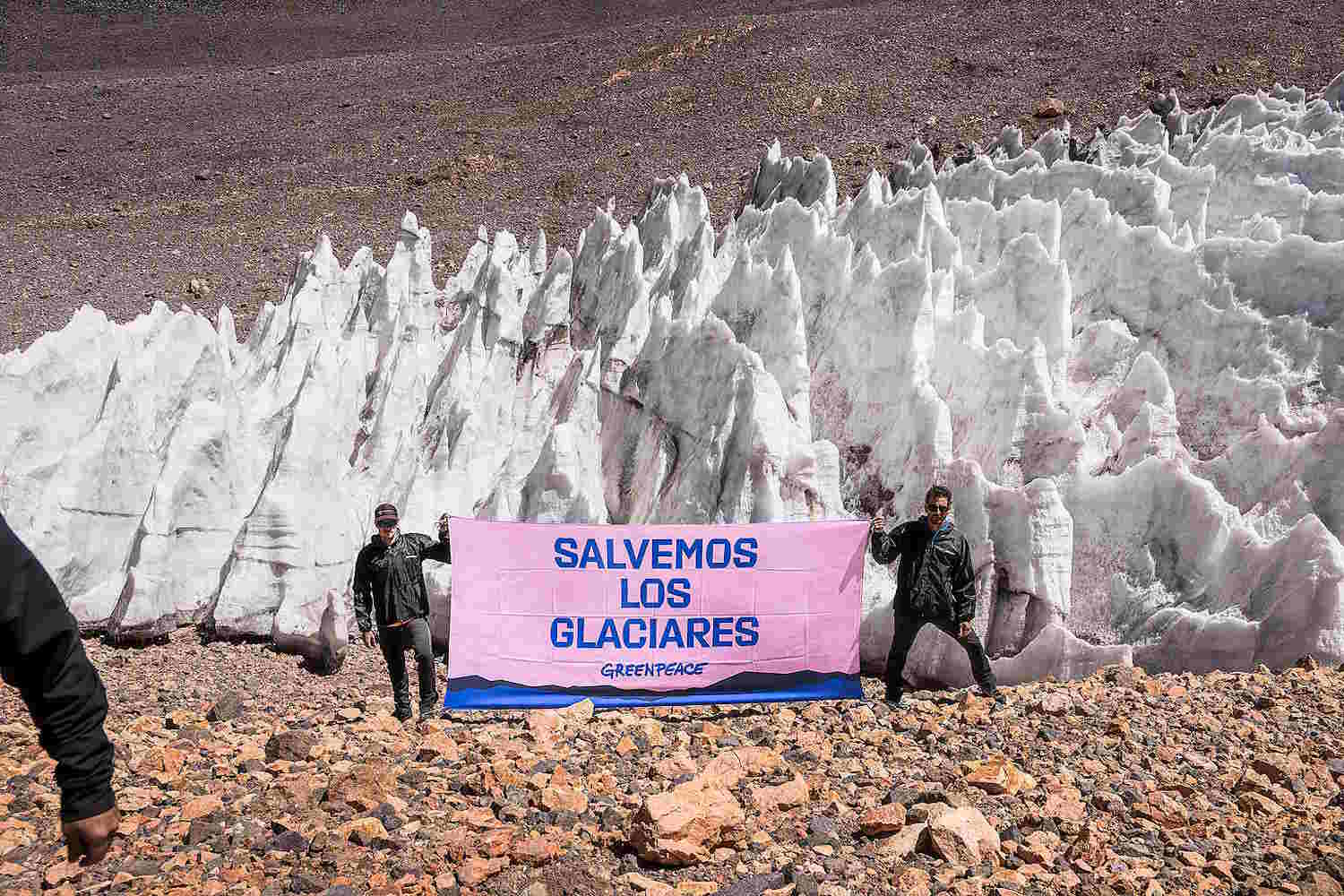
There Glacier lawapproved in 2010, is a historical result of millions of people and hundreds of civil organizations, which have established rigorous safeguards to protect the glaciers and the periglacial environment, critical areas for water storage and climate regulation. The regulation, pioneer in the region, establishes prohibitions on the activities that can damage themlike mining and exploitation of hydrocarbonsrecognizing the importance of these ecosystems in the fight against the climatic crisis and in the supply of water to millions of people.
Greenpeace invites citizens to join the defense of glaciers. “Today more than ever, citizens must make their voices heard to protect the glaciers. Without them, life on the planet is impractical. Going forward with a regulation that reduces the protection of the periglacial environment will only lead to the irreparable deterioration of these majestic ice bodies. Allow it means condemning access to the water and the climatic balance of future generations”, concludes Agostina Rossi Serra, specialist of biodiversity, of Greenpeace Argentina.
Here you can sign the petition to save the glaciers.
