
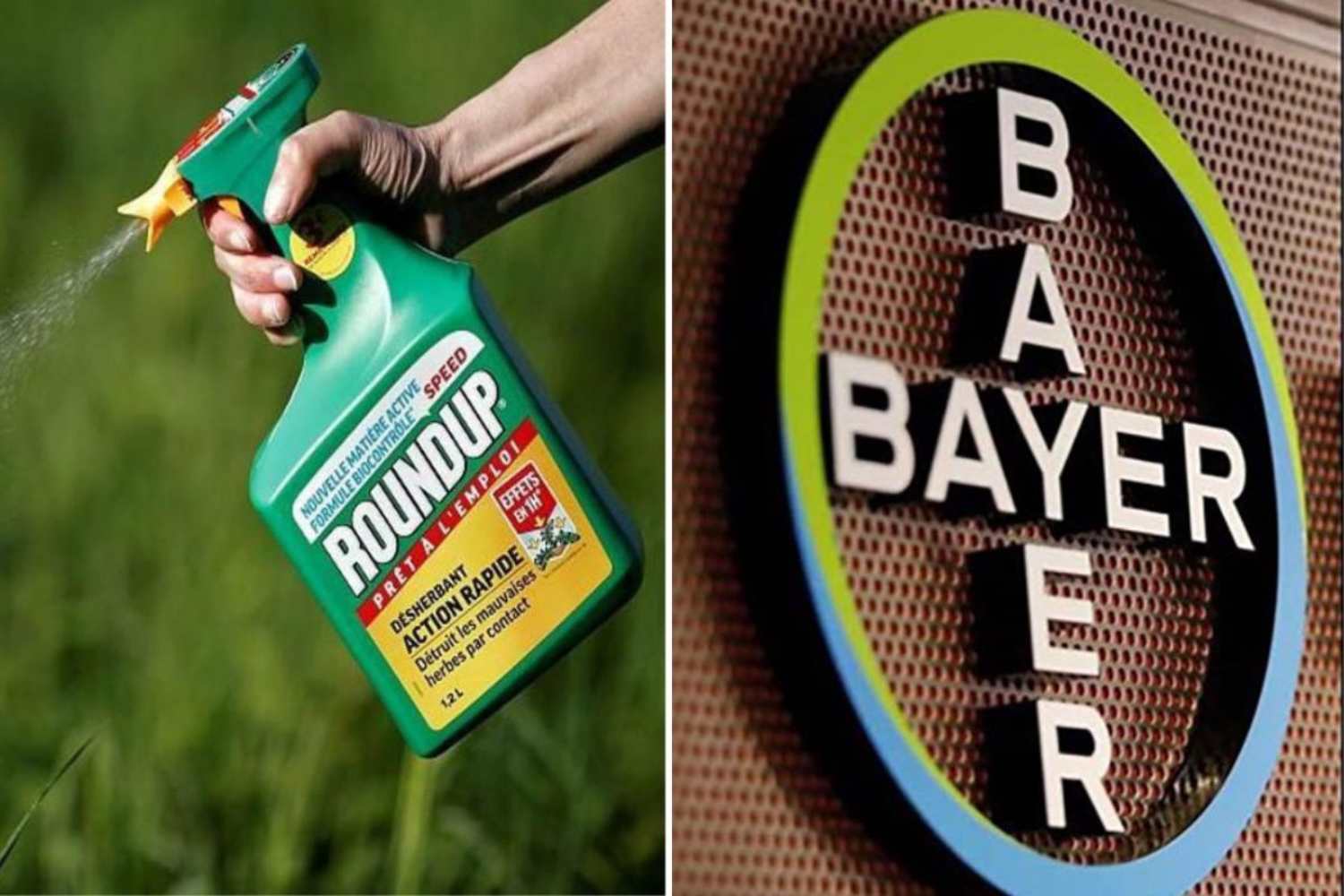
A court in Missouri, US, has approved a class-action settlement that could lead Bayer to pay up to $7.25 billion to handle compensation claims from people who blame exposure to the herbicide glyphosate for developing non-Hodgkin’s lymphoma, a cancer of the lymphatic system. A figure that is impressive, but which also tells how serious the legal case linked to Roundup has become.
The agreement concerns both people who have already received a diagnosis and, under certain conditions, people who could become ill in the coming years after being exposed to the product. It is not, therefore, a simple compensation for a handful of isolated cases, but a program that aims to manage a substantial part of present and future disputes in the United States.
For Bayer, which acquired Monsanto in 2018 along with its most controversial product, this approval represents a strategic step to try to stem an affair that over the years has turned into an enormous financial and reputational cost. But putting an end to the causes does not also mean putting an end to questions about the safety of glyphosate.
How the maxi agreement works and who will be able to receive compensation
The agreement provides for financing of up to $7.25 billion spread over 21 years, through annual payments with limited and progressively decreasing amounts. The program is aimed at people exposed to Roundup before February 17, 2026 who have already received a diagnosis of non-Hodgkin’s lymphoma or who will receive it within the expected 16-year period, meeting the requirements established by the agreement.
Compensation will not be the same for everyone but will vary based on several factors, including age at the time of diagnosis, severity of the disease and how you were exposed to the herbicide.
However, the court’s approval is subject to possible appeals. In the event of an appeal, Bayer explained that payments under the agreement could be suspended until the procedures are concluded.
The company presented the decision as an important achievement in its strategy to reduce litigation-related uncertainty. In the official press release, CEO Bill Anderson defines the approval as a “decisive milestone”, i.e. a decisive step to contain the risks of current and future lawsuits.
But Bayer does not admit responsibility
There is a fundamental aspect to clarify to understand this story. The settlement approved by the judge does not amount to a ruling definitively establishing that glyphosate causes cancer, but nor is it a demonstration that the concerns raised by the plaintiffs are unfounded.
Bayer continues to deny the allegations and maintains that scientific evaluations and regulatory approvals confirm the safety of glyphosate when used as directed. The press release also specifies that the agreement does not involve any admission of liability or wrongdoing.
The choice to join a settlement of this size must also be read in light of the economic and legal weight of thousands of proceedings, the possibility of further unfavorable verdicts and the need for the group to reduce the financial uncertainty linked to Roundup.
The figure, however, remains enormous: billions of dollars destined to manage the requests of people who believe they have suffered damage after exposure to a herbicide used for decades in agriculture and also in the home. In short, it is not an affair that can be dismissed with a company statement claiming the safety of the product.
Glyphosate, carcinogenicity is still at the center of the conflict
The Roundup litigation revolves around glyphosate, the herbicide’s active ingredient. In 2015, the International Agency for Research on Cancer (IARC), a body of the World Health Organization, classified it as probably carcinogenic to humans (Group 2A). The assessment was based on limited evidence in humans, sufficient evidence in laboratory animals and on elements relating to mechanisms of carcinogenicity.
Despite this, in Europe glyphosate was reauthorized in November 2023 for ten years, until 15 December 2033, with conditions and restrictions. The European decision is based on the assessments of the competent agencies, which have not identified a critical area of concern that would prevent the renewal of the authorization.
Furthermore, in the United States, the recent Supreme Court decision has limited some legal action possibilities against Bayer, in particular those based on the failure to include a cancer risk warning on the label, because federal legislation does not provide for such a warning. An element that made the process even more complex for many plaintiffs.
The issue, therefore, does not end with the maxi agreement: the comparison between scientific evidence, regulatory assessments, real exposure and protection of those who use or come into contact with these substances remains.
Coldiretti: “Europe stops Canadian wheat dried with glyphosate”
The American decision also rekindles an issue that directly concerns Italy and the European agri-food market. On the occasion of the green light for the 7.25 billion dollar agreement, Coldiretti once again asks the European Union to intervene on Canadian wheat imports, denouncing a disparity in rules between what is allowed to European farmers and what happens in other countries.
The organization calls in particular to stop Canadian wheat dried with glyphosate, a practice it denounces as banned in Italy and the European Union, and to apply a principle of reciprocity to prevent European producers from being penalized by less restrictive rules adopted elsewhere.
In his comment, Coldiretti claims that «it cannot be accepted (…) that what is prohibited in our fields can be used to produce food destined for Italian tables», simultaneously raising the issue of competition and health protection.
Coldiretti’s request opens up a topic that deserves to be explored in depth even beyond the positions of the agricultural organisation: that of the coherence of the rules, controls on imports and transparency towards consumers.
The maxi American agreement does not resolve the scientific controversy on glyphosate and does not erase the responsibilities that continue to be discussed in court. But it shows how an affair linked to a chemical product can drag on for years, involve thousands of people and end up costing billions.
And while Bayer tries to reduce the weight of this judicial legacy, the question about the safety of the substances used in the fields and which model of agriculture we want to support remains far from closed.
Sources: Bayer / Coldiretti
