
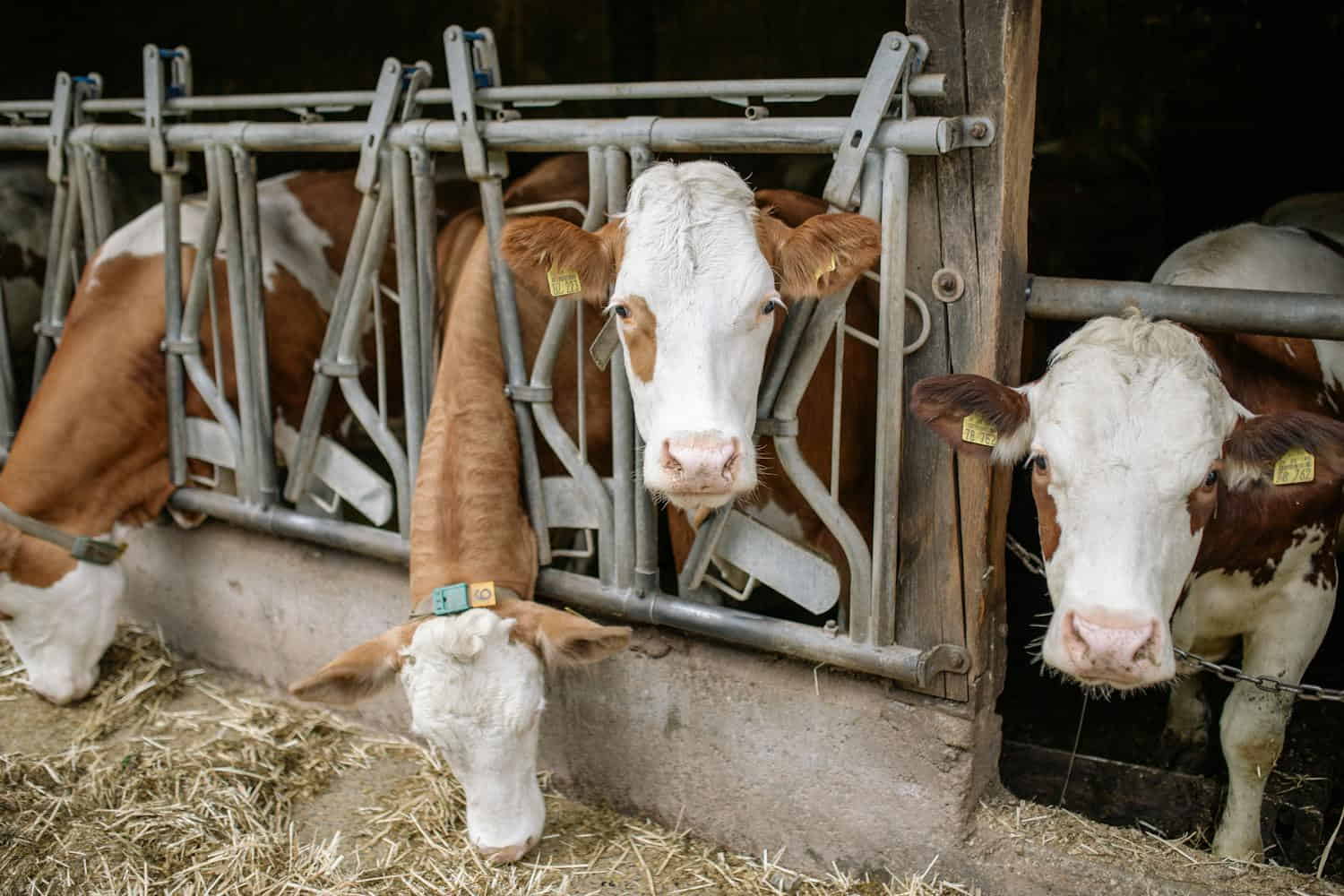
In the heart of the Po Valley, the municipality of Gonzaga – in the province of Mantua – has become the symbol of radical change. In just over fifteen years, the traditional agricultural system made up of family farms has given way to a model dominated by large industrial farms, often linked to multinational groups. The numbers reveal an out-of-scale pressure: around 60,000 animals including cattle and pigs in a municipality of just 8,500 inhabitants, with a density that exceeds 1,200 animals per square kilometre. A concentration that has direct effects on air, water and quality of life, transforming the rural landscape and putting environmental resources under stress.
The municipal regulation prohibits new intensive farming
Faced with this scenario, the administration led by mayor Elisabetta Galeotti decided to intervene with a restrictive regulation. The new municipal regulation introduces stringent limits to the expansion of intensive farming, effectively suspending new authorizations and restricting existing expansions, except those linked to improving animal welfare, with more stringent rules on distances, wastewater management and environmental impact.
This is not just an urban planning act, but a political choice that aims to reduce environmental impact and preserve a more sustainable agricultural model, oriented towards quality rather than quantity. The declared objective is to defend the territory and local productions, preventing the weight of industrial livestock farming from making the area increasingly difficult to live in.
The institutional clash with the Region
A choice that immediately sparked institutional conflict. The regional councilor for Agriculture Alessandro Beduschi challenged the regulation before the Regional Administrative Court of Brescia, arguing that the Municipality had exceeded its competences by entering areas already regulated by national and regional regulations. According to the Region, the risk is to create regulatory uncertainty and penalize a sector which, it is underlined, is investing in innovation, circular economy and emissions reduction. A position also shared by trade organizations such as Coldiretti and Confagricoltura, which see possible technical problems and limits to economic development in the regulation. On the opposite front, environmentalist associations and organizations such as Legambiente,essereanimali andterra! they defend the Municipality’s choice, defining it as a necessary intervention in an area already under great pressure.
Environment under pressure and risk of European sanctions
At the center of the debate is the environmental impact. In fact, the Po Valley records the highest methane concentrations in Europe, and Lombardy represents one of the main livestock hubs on the continent. Intensive livestock farming contributes significantly to climate-changing emissions, with growth that goes against the trend of the rest of the national agricultural sector. A critical issue concerns the sewage produced by pigs and cattle, which risks contaminating the aquifers. Exceeding the limits set by European regulations on water quality exposes Italy to possible sanctions, making the Gonzaga case an issue that goes beyond local borders.
Agricultural economy and structural imbalances
The story also highlights an economic paradox. Large industrial plants benefit from tax breaks and easier access to CAP funds, while small companies are progressively absorbed or pushed to the margins. According to environmental associations and organizations such as Legambiente Lombardia, the current model is erasing the traditional agricultural fabric, replacing it with standardized production disconnected from the territory. The result is a system that maximizes quantity at the expense of quality and sustainability.
A clash that divides institutions and territory
The Gonzaga case has now become an open conflict between opposing visions. On the one hand, the Municipality, which aims to defend the environment, health and local agricultural identity. On the other, the Region and the trade associations, which see the regulation as a risk for regulatory stability and for the livestock sector. In the middle, a territory that seeks balance between economic development and sustainability. The TAR’s decision will be decisive, but the debate is already destined to leave a profound mark on the future of Lombardy agriculture.
You might also be interested in:
