
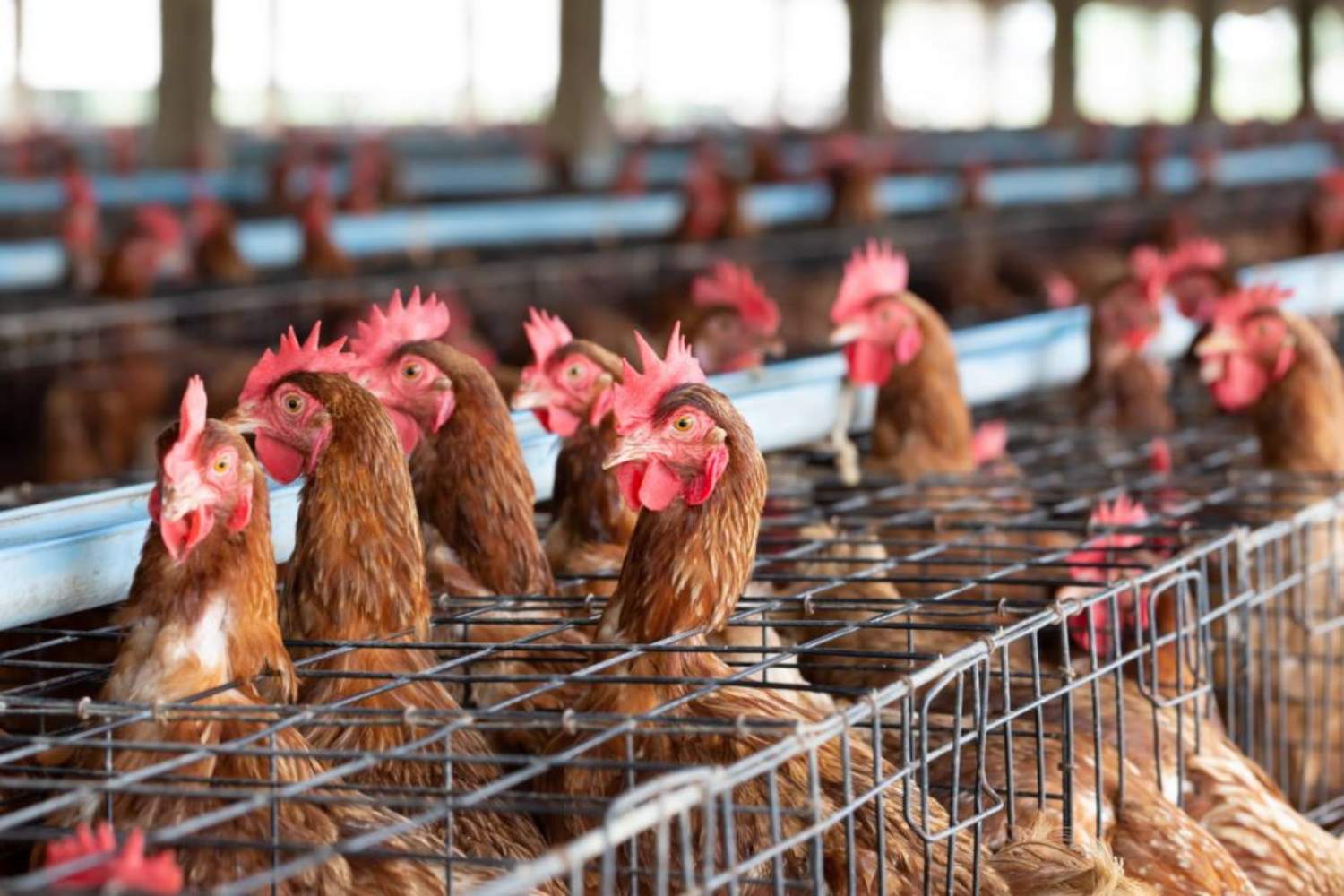
With the final approval of the 2026 Budget Law, the Italian Parliament introduces for the first time a public fund dedicated to the transition towards cage-free farming. The amendment, supported by representatives of various political forces, marks a significant symbolic and political step: the term cage-free officially enters the national regulatory lexicon. The measure provides for an initial allocation of 500,000 euros for 2026 and 1 million euros for 2027, resources intended to support the conversion of livestock farms.
A first step, but with limited resources
The associations united in the Italian End the Cage Age coalition welcome the measure with prudent satisfaction. On the one hand, this is the first Italian public funding explicitly oriented towards the elimination of cages on farms; on the other, the figures are judged to be largely insufficient compared to the scale of the problem.
In Italy, in fact, over 40 million animals are still raised every year in systems that involve the use of cages. According to animal rights organisations, with such a reduced allocation the fund risks having a marginal impact, unable to cover the conversion costs of even a single medium-sized company.
How the Cage-Free Farming Fund will work
Operationally, the fund does not introduce immediate bans or binding deadlines. The measure falls within the field of economic incentives, referring to a subsequent implementing decree of the Ministry of Agriculture, in agreement with the Ministry of Health and subject to an agreement with the State-Regions Conference. This decree will establish access criteria, beneficiaries and types of eligible expenses. Until that moment, the fund remains a budget item, important on a political level but still without concrete effects.
The European context and failed commitment
The Italian choice was not born in a vacuum, but fits into a well-defined European framework. Since 2021, with the European Citizens’ Initiative End the Cage Age, the EU Commission has formally recognized the need to start a phase-out of cages on farms.
The commitment, supported by 1.4 million signatures, included a legislative proposal to gradually overcome these systems, possibly by 2027. However, years later, organic European legislation has not yet arrived, leaving member states in a regulatory waiting phase.
In the absence of a binding EU law, European countries move in no particular order. Some states have already introduced national bans or specific timetables for the elimination of cages, especially in the laying hen sector.
Austria has banned enriched cages from 2020, Germany plans a ban from 2026 with limited exemptions, while the Czech Republic has set 2027 as a turning point. Other countries, however, focus on supply chain agreements or choices made by large-scale retailers, without a general legislative obligation. This fragmentation makes it complex for states like Italy to anticipate costs without a common framework.
Future prospects
Despite the economic limits, the fund represents a political signal in line with a growing sensitivity of citizens. According to Eurobarometer data, 91% of Italians declare themselves against the use of individual cages on farms.
For animal rights associations, the establishment of the fund is just the beginning: the objective is to progressively increase its endowment, perhaps drawing on broader tools such as the Cultiva Italia bill, and combine the incentives with a clearer regulatory strategy. Without greater ambition, they warn, the risk is that the fund will remain a symbol, while millions of animals continue to live in conditions of severe welfare restrictions.
You might also be interested in:
