
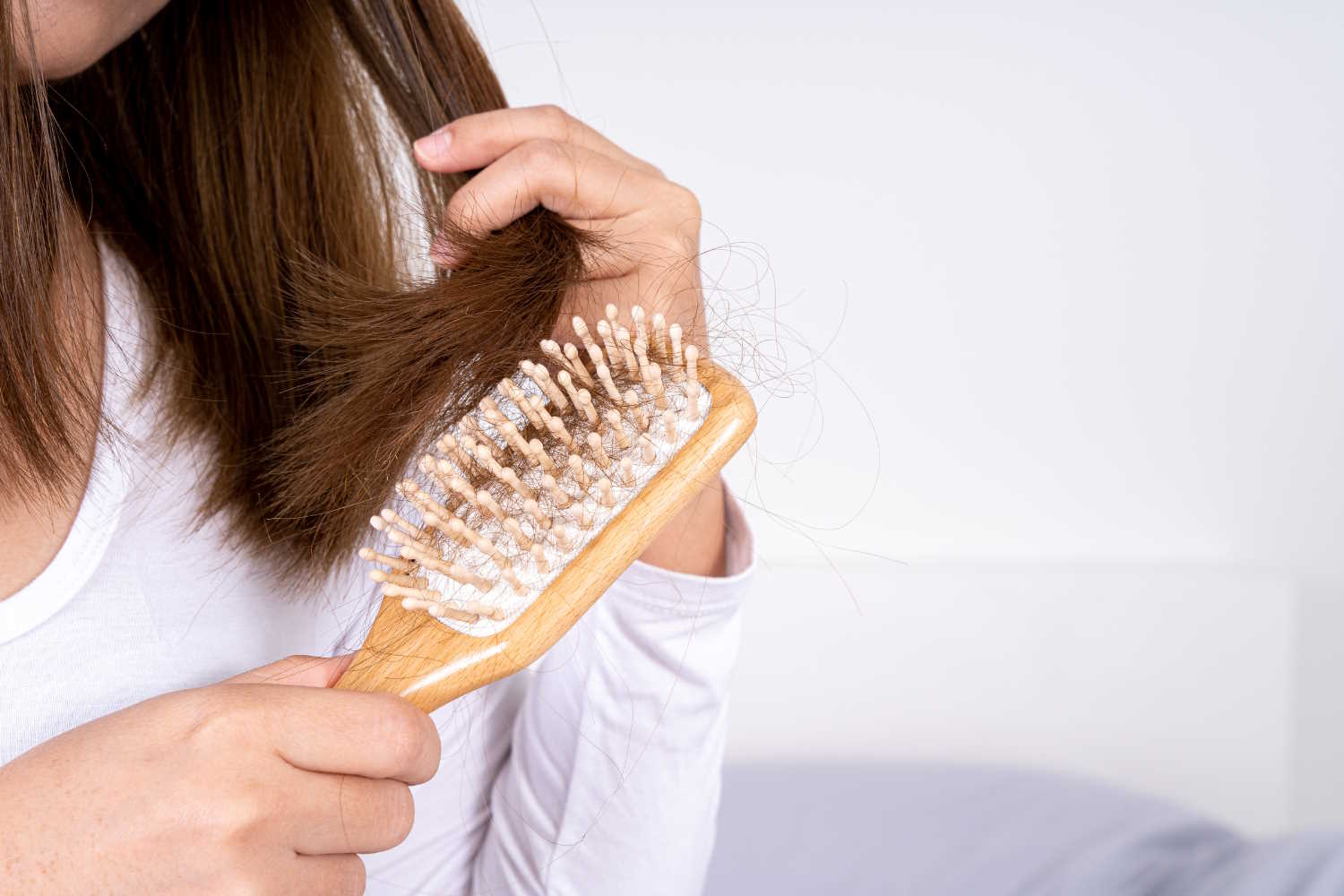
There hair loss it’s always worrying, especially when added to a full agenda, a bit of stress and the desire to consume more responsibly. Is it possible to take care of your hair without forgetting the planet? Yes, but a few more criteria are needed in addition to “it works / it doesn’t work”.
Instead of running after yet another miracle solution, it’s worth understanding what’s happening on the head and on the label.
First of all, understand hair loss
A little drooping is normal. Every day we lose hair which is replaced by others. It becomes a problem when the quantity increases, when the hair becomes visibly thinner or when the scalp it’s annoying.
In these moments many immediately look for a anti-hair loss treatment. It can be useful, sure, but it really only works if placed in a bigger picture: decent nutrition, acceptable sleep, as little stress as possible. No product, no matter how natural, can completely compensate for a pace of life that consumes the body.
And then, let’s face it: not all falls are the same. There is the seasonal one, which arrives punctually in autumn and spring. There is the one linked to hormones, which many women know well after a pregnancy or during certain periods of the cycle. And there is that which has deeper roots, perhaps genetic or linked to specific deficiencies.
Talking about it with your doctor or a specialist is always a good idea when the hair loss is sudden, patchy or accompanied by itching and irritation. Sometimes a blood test is enough to discover that you lack iron, vitamin D or some other element that makes the difference.
How to recognize greener treatment
In the industry haircare the offer is huge. A little green leaf on the package is not enough to talk about sustainability. Those who want to make a more informed choice can look at some concrete aspects.
First thing, the formula. A shorter composition, with many ingredients of plant originit is often easier to read. Vegetable oils, plant extracts, naturally derived active ingredients can support the scalp and fiber without loading them with heavy substances. You don’t need to know Latin, but you can learn to recognize some recurring names and to be wary of promises that are too vague.
Also pay attention to certifications: organic, vegan, cruelty-free. They are not just decorative stickers, but indicate that someone has verified what is inside and how it was produced. Of course, not all certifications have the same weight, but it is still a starting point for orientation.
Then there is the issue of packaging. Refillable bottles, recycled plastic, clear indications on recycling are important signals. A product designed to last a few weeks, but which leaves behind waste that is difficult to manage, is less consistent with a truly responsible routine. Some brands are also experimenting with returnable vacuum or solid formats, which cut out plastic entirely.
Finally, the way the industry communicates. A more honest approach speaks of progressive results, of consistency, of daily habits to change. When a treatment promises to “stop the hair loss in a few days” or make everything grow back, it is useful to activate a minimum of healthy skepticism. Hair has its own time, and no formula can speed it up that much.
Daily routine, where sustainability meets common sense
There hair care it’s not just played in the bathroom. A more sustainable approach is often also simpler and gentler.
Reduce the heat of the hairdryer and straighteners a little, choose soft brushes, avoid hairstyles that constantly pull: these are gestures that cost nothing and lighten the life of the hair. Washing your head calmly, massaging the scalp, also helps microcirculation and makes any product more effective. A few minutes are enough, perhaps in the evening, to make a difference.
THE’diet does its part: various meals, with fruit, vegetables, proteins and good fats, support the natural hair cycle. It’s not a question of a perfect diet, but of minimum balance and attention to what we put on our plates every day. And then there’s hydration: drinking enough water seems trivial, but your skin (and your scalp is skin) needs it to function well.
It’s also worth slowing down with too frequent washing. Washing your hair every day is not necessary for everyone, on the contrary: sometimes you just need to space it out a little to already see an improvement. The scalp needs time to regain its natural balance.
Choose consistently
Choose a hair loss treatment in a sustainable way it doesn’t mean complicating your life. It means asking yourself what’s inside the bottle, how it is produced, what impact it has once finished. In a sector where there are many promises, going back to the facts (ingredients, packaging, habits) is the simplest way to take care of your hair with consistency, respect and a little more clarity.
And then, let’s face it: take better care of your hair green it is also a way to take care of yourself more carefully, without haste, without illusions. Sometimes slowing down is the smartest choice.
