
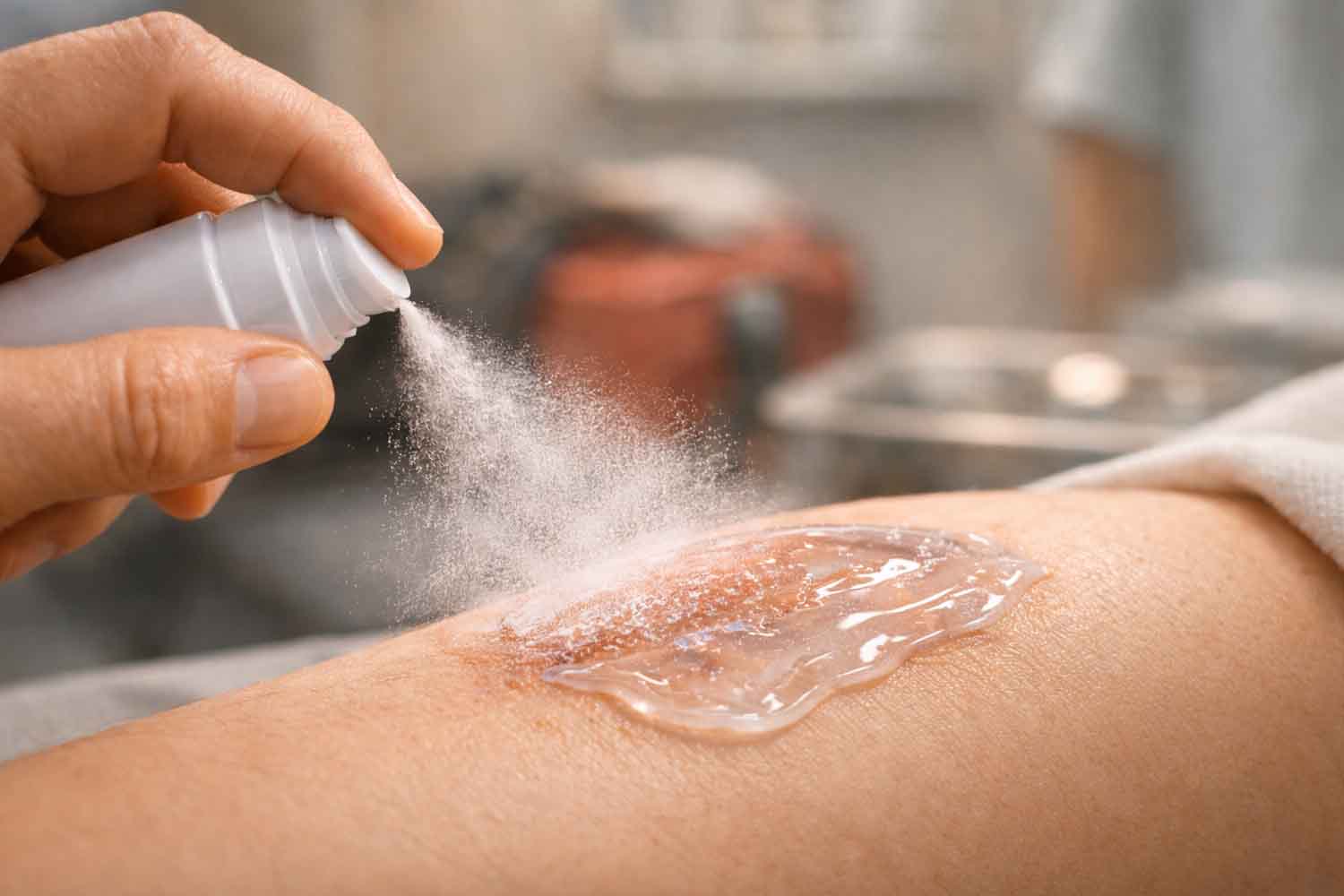
A thin cloud that settles on the wound and in a second creates a solid barrier, capable of stopping potentially fatal bleeding. This is the image that comes from South Korea, where a group of researchers has developed one hemostatic spray designed to intervene in the most extreme situations, from the battlefield to scenarios affected by natural disasters.
When it comes to serious trauma, massive blood loss remains one of the leading causes of death. Reducing the time needed to seal a wound by even a few seconds can mean offering a real chance of survival. This new powder, according to the scientists who developed it, manages to do just that: stop bleeding almost instantly.
The project was born in Korea Advanced Institute of Science and Technology (KAIST) of Daejeon. Also on the team was an army major, Kyusoon Park, a doctoral candidate and co-author of the study. Its presence has oriented research towards real use, between dust, heat, humidity and pressure exerted with the hands in an attempt to stop the blood.
When AGCL powder comes into contact with cations in the blood, such as calcium, it transforms into a hydrogel within a second. Professor Steve Park, who led the research, explains that the internal three-dimensional structure allows it to absorb a quantity of blood greater than seven times the weight of the material. In practice it creates a compact, adherent, pressure-resistant barrier.
Until now, the most used hemostatic agents were plasters or patches, sensitive to temperature and humidity and not very suitable for irregular surfaces such as a gunshot wound. Traditional powders absorb blood and form a surface barrier. Here the mechanism is different: the chemical reaction generates a solid seal, which holds.
How it works
The composition of the powder is based on materials of natural origin with a declared antibacterial effect of 99.9%. The formula unites alginate And gellan gumbiocompatible substances that react rapidly with calcium promoting gelation, together with chitosancapable of binding to blood components and strengthening hemostasis from both a chemical and biological point of view.
In animal model tests, researchers observed faster wound healing, with a stimulation of blood vessel and collagen regeneration. In experiments on surgical liver lesions, the amount of blood lost and the bleeding stop times were significantly reduced compared to currently marketed products.
One striking aspect concerns conservation. The hemostatic spray maintains its performance for two years even at room temperature and in high humidity conditions. A feature that expands its potential use in areas affected by disasters, in humanitarian emergency contexts and in countries with fragile health infrastructures.
Major Park said he started the search with the idea of saving even just one more soldier. Today that same technology faces the civil world as a possible ally of emergency medicine, civil protection and those who work where time is the only real resource.
