
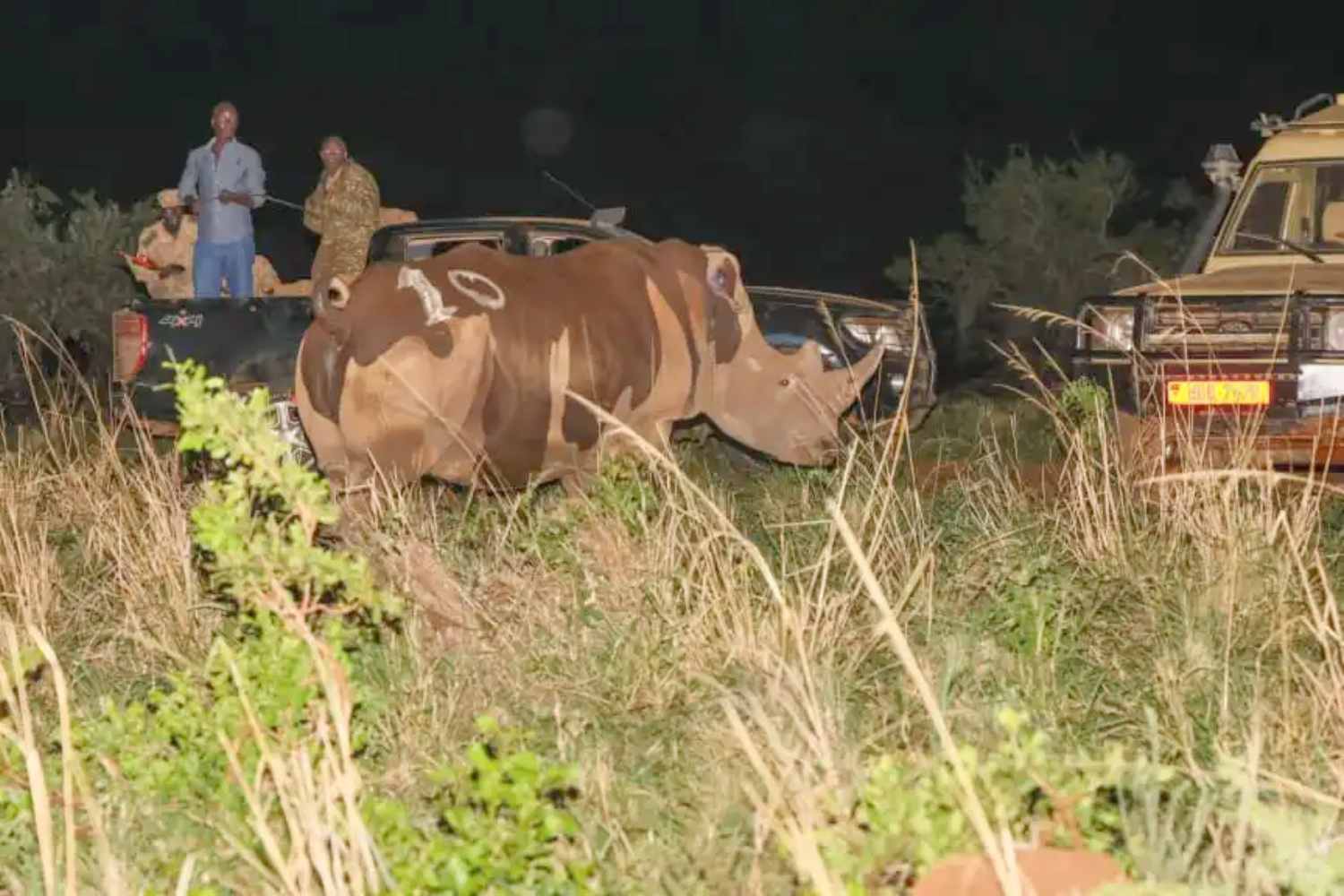
For over forty years not a single rhino had been seen in north-eastern Uganda. Kidepo Valley National Park was left without one of its iconic animals after poaching completely wiped out the species in the early 1980s.
The last specimen was killed in 1983, closing a presence that once numbered hundreds of animals across the country. Today, after decades of absence, the story changes: two southern white rhinos have been transferred to the protected area, the first of a group of eight destined to rebuild a stable population.
A complex and planned operation
The transfer represents the first step in a gradual reintroduction project. The animals come from a ranch specialized in breeding and conservation, where the repopulation program began in 2005 with a few specimens imported from Kenya.
Prior to arrival, the park was prepared with a protected sanctuary, perimeter fencing, monitoring systems, water infrastructure and dedicated ranger teams. The objective is to guarantee safety and adaptation in a vast and remote environment, made up of open savannahs and habitats considered ideal for the species.
A symbol erased by poaching
In the 1970s and 1980s, illegal hunting for horns and meat wiped out rhinos in Uganda. The country, which was home to around 700 specimens, completely lost the species in the wild. The illegal horn trade, still very profitable today, continues to pose a threat. This is why the reintroduction is accompanied by constant surveillance, patrols and tracking technology, designed to prevent history from repeating itself.
Rebuilding a population over time
The project is not limited to the initial transfer. Other rhinos will be progressively introduced to create a breeding group capable of growing independently. The animals will initially be monitored within the protected area to aid adaptation, before possible expansion into the park. The initiative is part of the national conservation strategy, which aims to bring the species back to historical territories and strengthen biodiversity.
A return that changes the ecosystem
The return of rhinos also has an ecological value. These large herbivores help shape the vegetation and maintain the balance of African savannas. Their return makes the park more complete from a natural point of view and increases the tourism potential of the region.
Today there are just over 60 rhinos living in Uganda, while there are just over 10,000 southern white rhinos in the world, classified as a near-threatened species. Kidepo’s new chapter starts from two animals, but represents a concrete sign of rebirth after forty years of silence.
You might also be interested in:
