
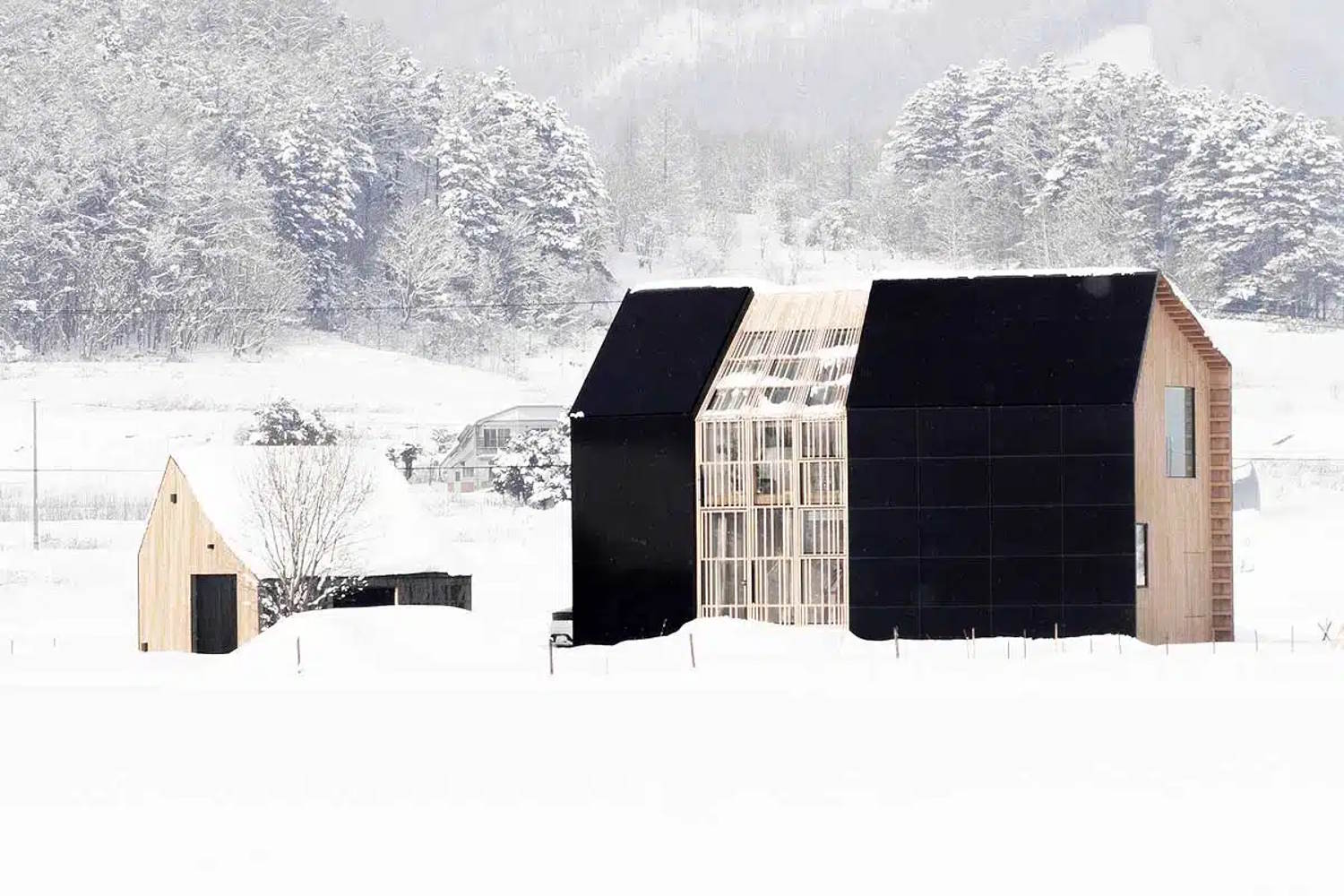
Modular, passive, zero impact and designed for camouflage in the landscape. AND House Wdesigned by the Florian Busch Architects agency, capable of generating almost double the energy it consumes.
We are on the western edge of the Furano plateau, Hokkaido, in Japan known for its cold and snowy winters and myths. The objective of the team was Create a completely independent building from the local electricity grid, reaching a net energy consumption equal to zero.
No sooner said than done. It all started with a young Tokyo family looking for a detached housefar from the hustle and bustle of the capital. Have chosen an agricultural plot a Nakafurano And the experts – rather than design a compact building facing inwards – thought it well to divide the structure and unpacking it for exploit natural resources.
Florian Busch Architects’ House W Integrates Renewable Energy Solutions. https://link.ie.social/bg5oib
Posted by interesting engineering on thursday, febration 27, 2025
The architects of Florian Busch challenges the notion of Le Corbusier of 1923 of a house as a “machine to live”, suggesting instead that “a house is a plant to live with”. Et voilà: inspired by the way the plants work, House W captures the heat from the ground using a geothermal pump And transforms the sun’s rays into electricity through a “sun skin” (The flat ground of the site is also ideal for the collection of solar energy). And, to make matters worse, Take advantage of a source of natural water to power its heating system and hot water.
Like all passive and modular houses, House W takes up the sober aesthetic of a traditional barn, with a modern touch. His initial volume was divided into two oriented blocks to offer a breathtaking view of the Tokachi mountains and the surrounding hills. A “division” that owes nothing to chance, but optimizes air circulation and Naturally regulates the internal temperature.
In summer, the adjustable shutters filter the light and limit overheating, while in winter they let as much heat as possible. And, since the family plans to expand its space, the modular concept of the house facilitates its expansion.
Beyond its intelligent design, House W shows that our homes could become allied rather than enemies for our bills, but also for the environment.
