
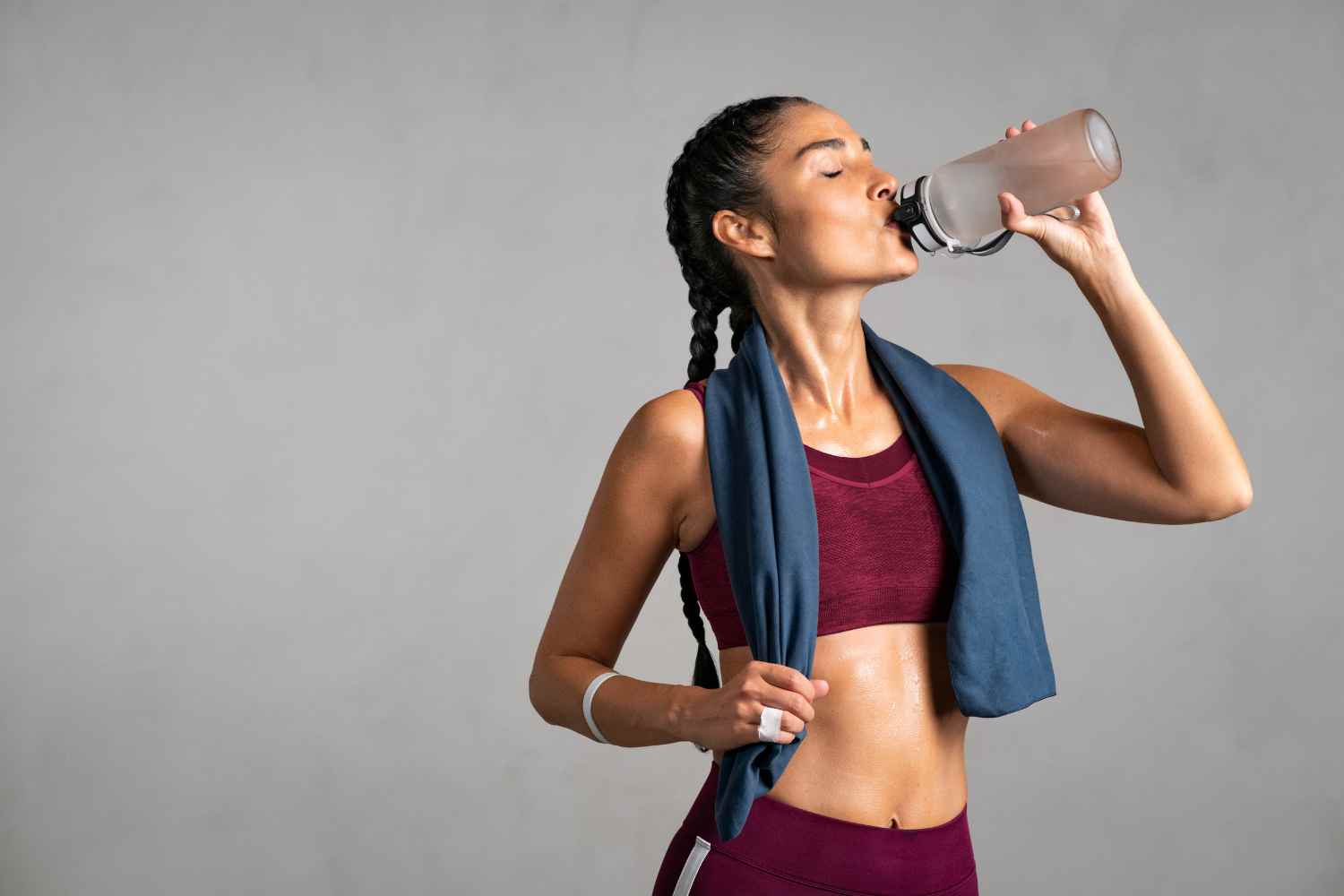
Do you train hard but do you always feel tired or exhausted after training? The problem may not be in your workout … but in what (and how much) drink.
During a training session it is very important to reintegrate lost liquids, in order not to increase the risk of dehydration and consequently feel exhaustion, dizziness and in the most serious nausea cases.
When your body is dehydrated, it is affected by the whole organism, from the muscles to your cells, to your cognitive function, and can also cause fatigue and dampen your motivation.
Signs of poor hydration during training:
In addition, correct hydration can optimize physical performance, helping to make blood pump in the most efficient way and helping to perceive less physical effort.
For this, good hydration is always fundamental, especially during a training. Let’s see together what are the most common errors during exercise.
Don’t drink quite earlier, during and after exercise
For most people it is advisable to drink half a liter of water in the Two hours before the year and another half liter of water about 20-30 minutes before to start training.
During trainingyou should have some water at least Every 10-15 minutes. Subsequently, after training about half a liter of water. Clearly, the more sweated during the training session, the more liquids you will have to reintegrate.
Don’t plan how you hydrate you
Often it happens to forget to hydrate during training, and then drink a lot of water at the end of the exercise session, at that point it is too late.
A tip is to plan hydration during training (as above) and always devise a way to have your water always at hand.
You are not reinstating the lost electrolytes
On average, you can lose up to half a liter of sweat every 30 minutes of training, estimate that it can rise between three and four liters of sweat per hour.
When we sweat, we lose water but also important electrolytes like sodium, chloride, potassium, magnesium and calcium. There are important minerals that are found in body fluids such as blood and urine, which regulate a series of body functions, including the absorption of nutrients, the removal of waste and the distribution of water in the body.
An excessive loss of electrolytes, especially sodium, due to dehydration and any muscle cramps and spasms. This is also why it is very important to remain hydrated, for example consuming a sports drink that helps to reconstitute the electrolytes. But let’s see which one.
Do not choose the right sports drink
There are many sports drinks specifically designed to maintain the electrolytic balance of your body when you sweat a lot.
There are on the market tablets or compounds in electrolytes or tablets, to be mixed in a bottle of water. In addition, coconut water is also excellent for reintegrating the electrolytes lost such as potassium, sodium and manganese.
An important recommendation is to avoid energy drinks with high caffeine and high sugar content, as they can increase blood pressure, irritability, restlessness and a higher risk of dehydration.
DIY Energy Drink
If you want you can also prepare a do -it -yourself energy drink, here is a recipe:
Ingredients
How to prepare and use it
Just mix together all the ingredients and your energy drink will be immediately ready to drink. The only precautions to have are to squeeze the lemon juice (or other chosen citrus fruits) on the moment, to keep all properties intact. If you choose honey as a sweetener, also to speed up the realization you can first melt it in a little hot water and then add it to the rest of the ingredients. Magnesium, on the other hand, is an optional ingredient that you can insert if you need an extra charge, even if the supplement is already rich in mineral salts. Obviously this do -it -yourself saline supplement does not contain any kind of preservatives, therefore it must be consumed quickly enough having taken care to keep it in the refrigerator. We perhaps advise you to divide it into two bottles and add the lemon juice only when you actually have to use it.
Do not intact enough magnesium
Magnesium is the fundamental electrolyte for restoring the state of hydration during physical recovery, but often many people do not integrate it enough.
In these cases, it is advisable to add foods rich in magnesium to your diet, such as i Legumes, walnuts, seeds, whole grains, vegetables, milk and yogurt.
Eventually, you could opt for magnesium supplements, which will also favor benefits for the cramps in the legs or muscle pain. In addition, they could help improve physical performance during training.
However, remember not to exceed the recommended daily dose of 350 mg. For adults and children aged 9 to 18, who if outdated can cause diarrhea, nausea and abdominal cramps, irregular heart beat and even cardiac arrest.
Always consult your doctor when you want to consume magnesium supplements, especially to consider any interaction with other drugs you are taking.
Drink alcohol after a training
Finally, the last mistake and perhaps the most damage is to drink alcohol after exercise, first of all since they are not able to rehydrate the body and because they do not contain the right nutritional profile to act as a recovery drink.
You may also be interested in: because you should never drink alcohol before or after a training. The consequences on your muscles
