
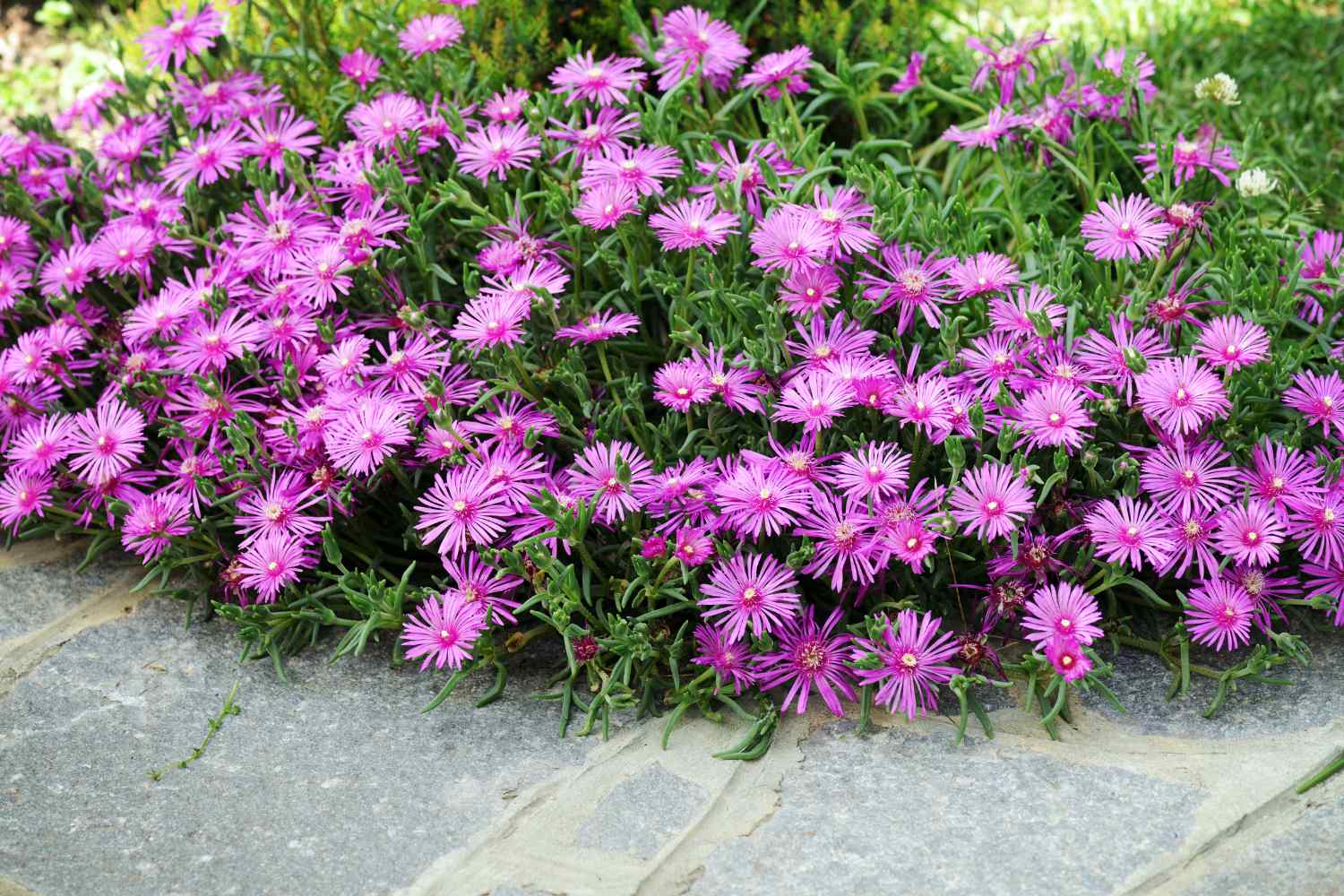
Did you know that a fatty plant can resist -20 ° C and bloom for months? Delosperm does it effortlessly.
Belonging to the family of Aizoaceaeoriginally from South Africa, Delosperma is a succulent plant particularly appreciated for its extraordinary beauty, thanks above all of the splendid flowering, and for its excellent resistance skills.
This very branched dwarf plant is known for its ability to produce enormous flowering, flowers that recall small daisies and that can easily give a touch of color and liveliness to any garden. Delosperma flowers can be of various colors, including viola, red, yellow, white, and have a fascinating feature: they open with the sunlight and close at night. This phenomenon makes delosperma not only aesthetically pleasant, but also intriguing to observe.
Botanical characteristics of Delosperma
Delosperma has fleshy, thin and elongated leaves, typical of succulent plants. These leaves never reach excessive dimensions, which makes the plant ideal for long -flowering borders. The vegetation of the delosperm remains compact and well ordered, a characteristic that makes it particularly suitable for rocky gardens, borders and also to pots in pots. The plant is extremely resistant, capable of surviving adverse climatic conditions such as drought and intense cold.
Variety of delosperm
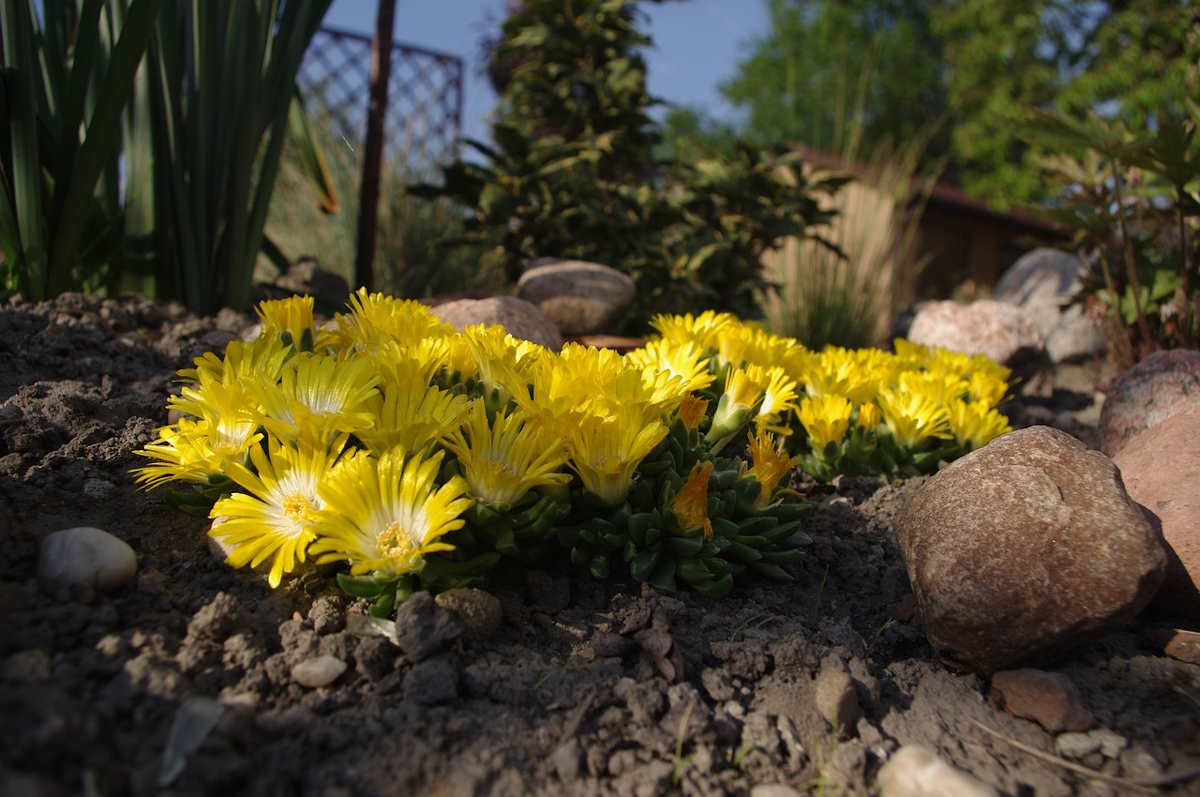
There are different varieties of delosperm, each with its own unique characteristics. The Delosperma Cooperi, for example, is known for its intense purple flowers, while the Delosperma Nubigenum produces bright yellow flowers. The Delosperma Congrestum, on the other hand, stands out for its pale pink flowers. Each variety has its own needs in terms of exposure to the sun, type of soil and irrigation, but all share good resistance and ease of cultivation.
When choosing a variety of delosperm, it is important to consider the climate and conditions of the ground of the place where you intend to plant it. Some varieties are more resistant to cold and can survive temperatures up to -20 ° C, while others are more sensitive and require winter protection. In addition, some varieties can become invasive if planted in too fertile soil, so it is important to choose the variety that best suits your needs.
Where to place the Delosperm
Delosperma requires a clear position to thrive, and sunlight is essential not only for the growth of plants but also for flowering, since flowers open only in the light of the day. During the summer months, remember to protect the plant from the direct rays of the sun, especially in the hottest hours of the day, to avoid burning on the leaves.
What ground to use for Delosperma
The ideal terrain for delosperm must be rich in nutrients and well drained, since the stagnation of water can cause radical rot, therefore a mix of coarse sand and land for cactus often represents the best choice. Also make sure that the vase has holes on the bottom to allow excess water to flow out, always to preserve the integrity of the roots.
How to irrigate the delosperm
Irrigation is a fundamental aspect for the health of the delosperm. During the growth season, from April to September, the land must be maintained slightly humid, avoiding the usual stagnation of water. In winter, irrigation must be drastically reduced, providing only the amount of water needed to prevent the plant from dehydrated.
How to fertilize the Delosperm
During the growth season, it is advisable to provide the plant with a specific fertilizer for cactus and fatty plants, while in winter, however, fertilization is not necessary.
How to prune the Delosperm
Pruning is not strictly necessary, but it can be useful for maintaining the plant compact and to encourage the production of new flowers. In addition, the removal of dried flowers and dry leaves will help the plant to remain ordered and in excellent health.
When to plant the delosperm
Spring is the best time to plant delosperm, so that it has all the time to settle before the arrival of the summer. Remember to plant it in a hole that has double depth compared to the size of the vase in which the plant is located, and to space for at least 30 cm from the other plants allows optimal growth.
Propagation and cultivation of the Delosperm
Delosperm can be easily propagated by division of the asset or by sowing: the division of the tufts consists in separating the roots of an adult plant to create new plants, while sowing, as observed in the previous paragraph. It can be performed in spring or autumn.
Division of the Cesti
The division of the CESPI is particularly effective because it allows to obtain already mature and ready to bloom plants: it is a simple method capable of guaranteeing quick results.
Sowing
Sowing is another effective propagation method. Delosperma seeds can be collected directly from the mother plant or purchased in a specialized shop, and once sown, they must be kept humid and in a warm environment up to germination.
Delosperma in coastal gardens: resist wind and salt
Delosperma is a plant particularly suitable also for the gardens located near the sea. One of its less known, but highly appreciated characteristics, is the high tolerance to the saltiness: this makes it ideal for cultivation in coastal environments, where many other fat or flowery plants struggle to survive.
Furthermore, thanks to its compact structure and low and dense vegetation, delosperma also resists the wind, another critical environmental factor in marine areas. It can be successfully used to cover up exposed flowerbeds, escarpments or stone walls where the sun beats strong and the air is often full of salt.
Diseases and parasites of the Delosperma
Despite its innate resistance, delosperm can meet common problems that can compromise its health and growth.
Radical rot
Radical rot is caused by excessive irrigation or insufficient drainage.
The problem manifests itself with the appearance of soft and dried leaves and can lead to the death of the plant if not treated promptly. To prevent radical rot, it is important to make sure the soil is well drained and that the plant is not watered too frequently. In case of radical rot, immediately reduce irrigation and improve the drainage of the soil.
Parasites
Delosperm can be attacked by parasites such as aphids or ladybugs, insects that feed on the sap of the plant, weakening it and making it more susceptible to diseases. To combat aphids and ladybugs, it is possible to use specific insecticides or natural remedies such as Neem oil or Marseille soap diluted in the water. Acting promptly is crucial to prevent the infestation from spreading to other plants.
Fungal diseases
Delosperm can also be affected by fungal diseases such as gray mold or rust. These diseases occur with dark spots on the leaves or with the presence of a whitish or orange powder. To prevent fungal diseases, avoid wetting leaves during irrigation and making sure the plant receives good ventilation. In case of fungal diseases, use specific fungicides.
Nutritional deficiencies
Delosperm can suffer from nutritional deficiencies, especially if cultivated in poor soils or if it is not regularly fertilized. The symptoms of a nutritional deficiency include symptoms such as yellow or deformed leaves, stunted growth or poor flowering. To prevent nutritional deficiencies, regularly feed the plant with a specific fertilizer for succulent plants.
Delosperma: is it toxic to animals or children?
One of the most frequent questions concerns the toxicity of the delosperm, especially for those with pets or small children. The good news is that delosperm is considered non -toxic to both dogs and cats, according to the main botanical and veterinary sources.
As with any plant, it is always better to prevent animals or children from ingesting parts in large quantities: even if not poisonous, it could still cause slight gastrointestinal disorders, such as vomiting or diarrhea, if ingested in abundance.
Delosperma: the ideal plant for uninterrupted flowering
If you are looking for a plant that guarantees prolonged flowering, delosperm is exactly what is for you! This extraordinary succulent plant is famous for its ability to flourish continuously for months: its flowering season begins in May and can last until winter, illuminating the garden with its bright colors practically until the sun shines.
Delosperma produces flowers that vary from purple to red, from yellow to white, offering a color show that can transform any outdoor space into a corner of paradise. These flowers, similar to small daisies, open up to the light of the sun and close at the fall of the night, adding a touch of dynamism to the garden, giving beauty for many months of the year.
Grasse plants: the species of cactus and succulent plants easier to cultivate
Our guides for the cultivation of succulent plants:
