
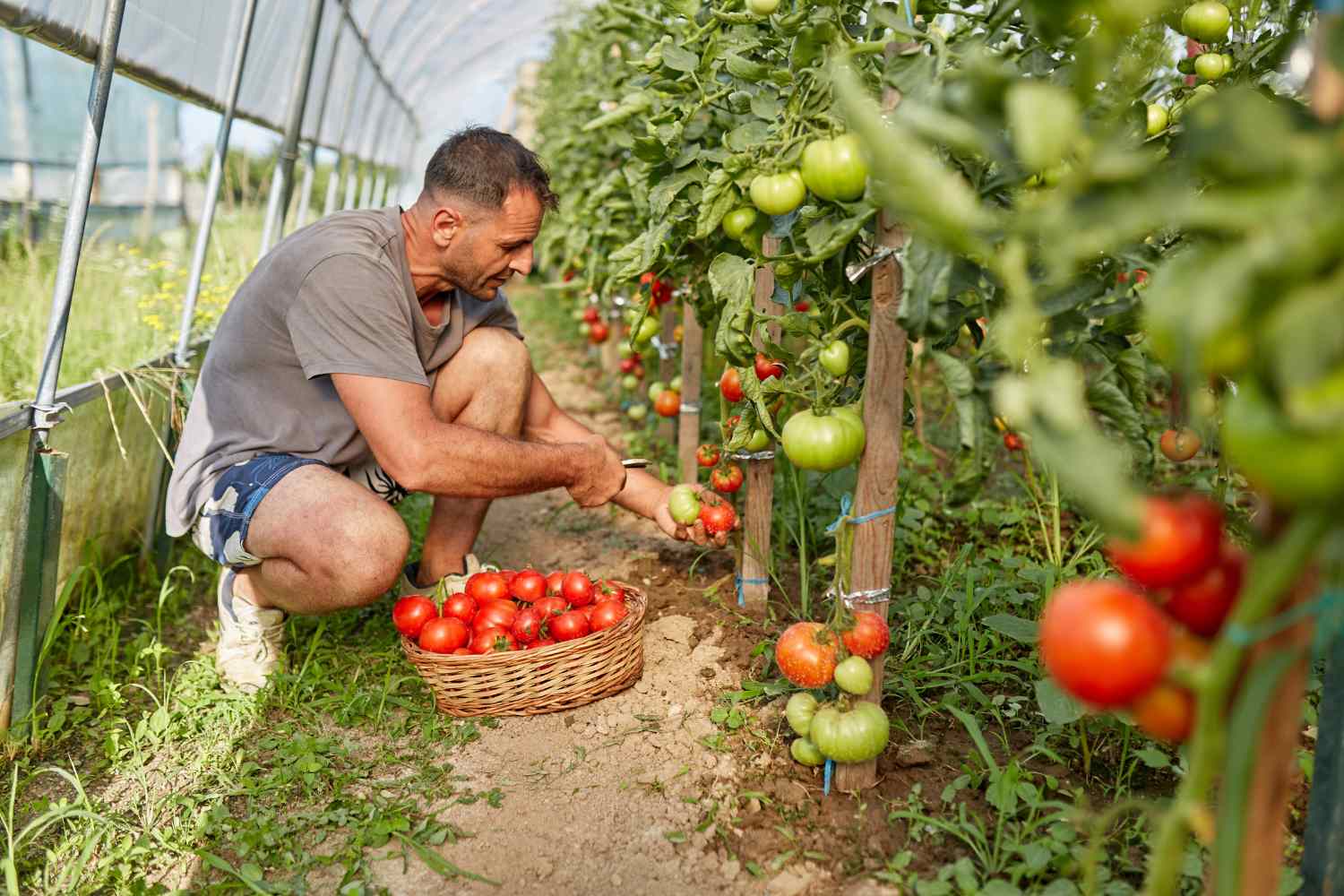
Cultivating the tomatoes alone which are then used to make the past or eat raw inside salads or other recipes is the best system to have always fresh vegetables available. In addition, we will be sure to produce healthy and genuine tomatoes not using chemical pesticides.
But how to get a good harvest, even if we are beginners?
The cultivation of tomatoes may seem very complex and intimidate in particular the less experienced in terms of vegetable garden. However, there are some useful tips to keep well in mind to ensure that tomato plants grow strong and healthy so as to produce tasty fruits.
Here is what to pay attention to:
Start with a pot in the pot
Some vegetables grow better if planted starting from the seeds directly in the outdoor soil. However, the tomatoes are not among these. The best option for beginners is to buy tomato plants in pots from a nursery or a local trusted farmer.
But how to choose the best seedling? We had given you some tips in the following article:
Choose a tomato with a delicious taste
The best tips for the cultivation of tomatoes do not count much if the variety we choose to plant does not have a tasty flavor. Since the cultivation of tomatoes requires some care, it is worth dedicating some time to search for one of the best varieties in terms of flavor.
For those who are beginner, among the most suitable there is the Sungold, it is cherry tomatoes yellow-orange with a very characteristic flavor but you can also choose other types of small tomatoes such as i cherries. If, on the other hand, you prefer bigger tomatoes you can opt for the Heart of ox or the San Marzano (excellent for the preparation of tomato puree and sauces).
To get to know many other varieties of tomatoes. Read also:
Attention to transplantation times
Tomatoes love heat and seedlings can be permanently damaged by the too cold climate. We must therefore win the temptation to transplant the outdoor tomatoes too early. A good rule suggests keeping tomato plants at home until the temperatures are lower than 10 ° C, otherwise the growth of plants would be drastically slowed down.
Tomatoes grow better in raised flower beds
One of the best tips for the cultivation of tomato is to grow high quality soil plants within a large raised container. In fact, the tomatoes planted directly in the ground could be affected existing soil conditions, the raised cultivation helps the earth helps to warm up quickly in spring and prevents those who take care of the garden to trample on the plants while growing.
The raised flower beds then have the advantage of allowing the cultivation of tomatoes almost everywhere.
Use a slow -release organic fertilizer
Tomato plants require a large supply of nutrients to feed their growth and the production of fruit. Although many mixes for vases already contain compost or organic fertilizers, the soil is not actively supplied with nutrients. For this reason, it is worth applying an organic fertilizer to plants while growing.
The best advice for beginners is to nourish tomato plants with a slow sale granular fertilizer that is simply placed above the soil and watered for a couple of months. It does not require rewarding with water or weekly / biseptimanal application such as many fertilizers water -soluble liquids.
How to recognize the right degree of maturation
The right time to collect tomatoes is recognized by observing some key signals. The color is the main indicator: the tomato begins to change from the base upwards, showing a pink or orange shade that extends from the bottom of the fruit in the red varieties. The consistency is equally important: a mature tomato gives slightly to the pressure but remains firm, while it should be avoided if it has soft or too soft parts.
The peel gradually loses the shiny and cerious appearance typical of immature tomatoes, becoming more opaque. Another unequivocal signal is the ease of detachment: ripe tomatoes detach themselves from the peduncle with a slight rotation, without forcing.
The optimal degree of maturation depends on the use you will do. For immediate consumption it is better to collect when the tomato is completely colorful but still firm. If you have to transport or keep them, it is preferable to collect them when they start just to turn color, in the so -called “Breaker” stage. For cooked preparations, even slightly immature tomatoes are fine, as they will develop flavor during cooking.
The timing of the collection is crucial: The best time is in the early hours of the morning when the fruits are fresh and turgid. Avoid collecting after the rain or when there is dew to prevent rot. Before the first autumn frosts collect all the tomatoes, even the green ones.
Conservation and use of the harvest
Tomato conservation requires different attention according to the desired duration. For short -term storage, one or two weeks, ripe tomatoes must be kept at room temperature, far from the direct sunlight.
Never in the refrigerator: low temperatures completely ruin flavor and consistency. It is important not to massive them but leave them detached to prevent each other from each other, preferably put them with the picciolo down to slow down the softening.
For longer conservation, up to 2-4 weeks, you need a fresh environment such as a cellar or garage with a temperature of 10-13 ° C. Daily control becomes essential to immediately remove those who begin to deteriorate, avoiding too humid environments that favor mold and rot.
For long -term storage there are different effective techniques. Freezing is the simplest: the whole tomatoes washed and dried are freezed in bags, resulting perfect for sauces and past. You can also cut them into cubes, place them on trays to freeze them separately and then transfer them to containers, or blend them directly in fresh past to freeze.
Drying is another traditional method: cut the tomatoes in half, lightly salals and let them dry on the sun or in the oven at 60 ° C with a tinged door for 8-12 hours. Once dried, they are preserved in olive oil or vacuum oil.
The transformation into preserves represents the most classic method: from the traditional past obtained by cooking and passing through the sieve and then bottling by sterilizing, to the prepared peeled peeled, peeling, peeling and preserving in sterilized jars, up to the concentrate obtained by cooking for a long time.
Each degree of maturation has its specific uses.
Green tomatoes are ideal for pickles and sweet and sour preserves, excellent breaded and fried foods, perfect for chutney and surprising savory jams. Maturous tomatoes are lent for salads, bruschetta, caprese, fresh and centrifuged sauces. The very ripe ones, with their concentrated flavor, are ideal for past, long sauces such as ragù and elaborate preparations, as well as for concentrates that give intense flavor to the dishes.
To maximize the rendering of the harvest, collect regularly to stimulate the plant to produce new fruits, do not waste anything since even imperfect tomatoes are excellent for past, planning the use by organizing the collection based on your culinary needs and considers that fresh tomatoes are always welcome by friends and neighbors.
Beware of the signals of deterioration: dark spots indicate bacterial or fungal rot, soft parts report surcharges or damage, unpleasant smells indicate processes of decomposition in progress, while the curly peel reveals excessive dehydration. With these precautions you can enjoy your homemade tomatoes for many months after collection.
At this point you just have to enjoy the collection of tomatoes!
Many other useful tips to cultivate tomatoes you can find them in the following article:
On how to grow tomatoes it may also be interested in:
