
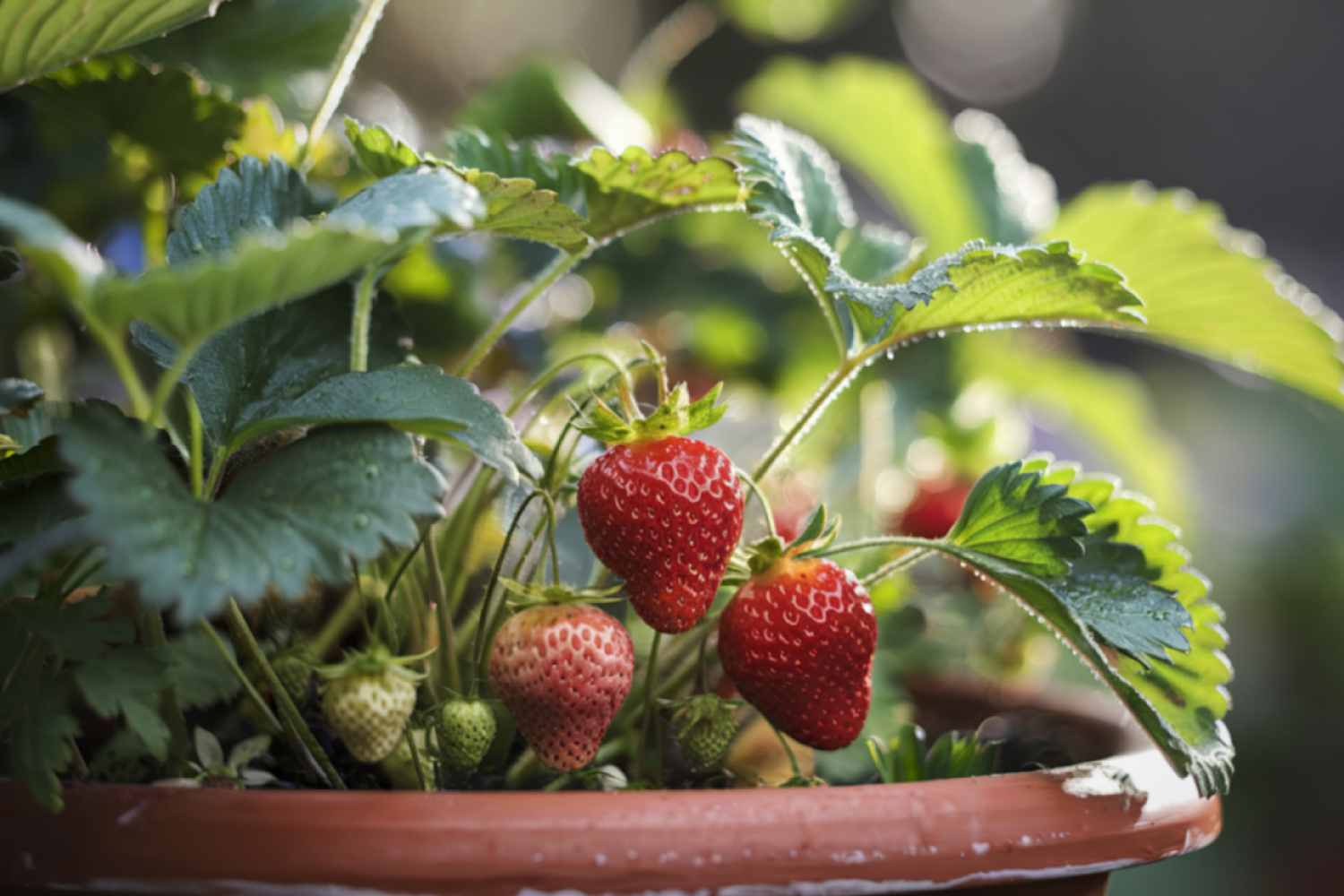
Growing strawberries in pots may seem complicated, but if you pay attention to a few small precautions you will be able to enjoy delicious zero-mile fruits.
Potted plants often produce less fruit than plants grown in a raised bed or directly in the ground, however, by following this little guide you can have an abundant harvest even by growing your strawberries in pots.
Here are 7 things to pay attention to when growing strawberry plants in pots and on windowsills.
Choose the right container
Choosing the right container is the first and most important step in growing strawberries in pots. Remember that the roots of these plants grow shallow and love uniformly moist and well-drained soil, therefore a good pot will help maintain the correct soil humidity and stable temperature.
Choose the variety of strawberry you like based on the climate
Choose the variety of strawberries best suited to the climate of your city. There are different types, some produce fruit throughout the season and are less sensitive to temperature changes, therefore they are much more suitable for growing in pots.
The advice is to prefer ever-flowering varieties, such as Annabelle, Charlotte or Anais strawberries, because not only are they suitable for cultivation in pots, but they are also very sweet and productive, and bear fruit from June until the frosts.
Avoid crowding of seedlings in the pot
Avoid planting your strawberry seedlings close together, as overcrowding can reduce fruit growth. For this reason, it is best to use a pot for each plant.
Inside a medium-sized pot you can fit about 4 plants per square centimeter. The reason? Roots grow close to the surface, so each plant must have enough space to grow.
What are stolons
Stolons are those long twigs that emerge from the base of plants. What do you need to know about stolons? They must be eliminated from plants growing in pots because, having no room to root, they take their nourishment directly from the mother plant. Once eliminated, you can use them to reproduce plants by cuttings.
Watering: Be careful how much you water them
The principle is to water the strawberry plants enough to saturate the soil. Between waterings, make sure the soil is completely dry.
Remember that the soil should always be quite moist beneath the surface, which is why we recommend watering your plants every 3-4 days.
Right fertilizer at the right times
Don’t forget to fertilize your strawberry plants if you grow them in pots! When potting you should first mix the fertilizer with the soil.
After that, remember to give fertilizer every 2-4 weeks after flowering begins, until the plants begin to go dormant. Continue to use fertilizer even after the harvest is finished, so that you will have plenty of fruit the following year too.
Proper protection from the weather
Strawberries grown in pots need to be protected from the elements, because their soil is more susceptible to temperature changes. During the winter, in fact, it is a good idea to move the pots indoors or wrap them with specific plant sheets in order to minimize the shock due to temperature changes.
Common mistakes to avoid
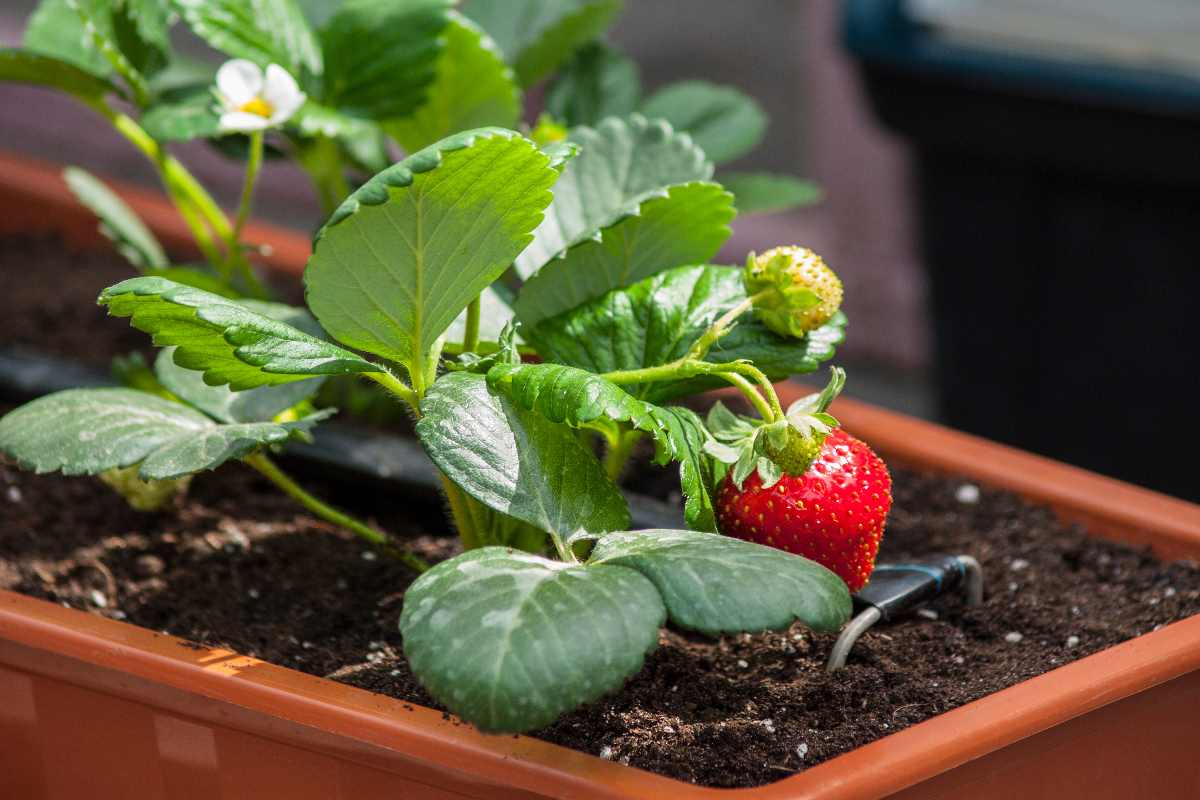
Even those with a green thumb can make some mistakes when it comes to potted strawberries. Here are the most frequent:
Using a pot that is too small or without drainage holes is the number one mistake: stagnant water is the main enemy of strawberries and quickly leads to root rot. Likewise, watering too often — even with the best intentions — weakens the plant: always wait until the top few inches of soil are dry before watering again.
Another common mistake is forgetting to eliminate the runners (see the dedicated paragraph): by letting them grow, the plant wastes precious energy that could go towards fruit production. Finally, many neglect fertilization after harvest, thinking that the plant “is going on pause”: on the contrary, it is precisely in this phase that the foundations are laid for abundant production the following year.
When to buy seedlings
Choosing the right time to purchase and plant the seedlings is essential to starting off on the right foot. In general, the ideal period is between March and April, when temperatures begin to rise and the risk of late frosts is reduced. If you choose ever-flowering varieties – like those recommended in this guide – you can also opt for planting between August and September: the plants will have the whole autumn to root and will be ready to produce as early as the following spring.
When purchasing seedlings, always choose firm ones, with bright green leaves and without spots. Avoid those with roots that protrude excessively from the pot – they could be stressed – and always prefer local producers or nurseries, which offer varieties already adapted to the climate of your area.
Parasites and diseases: how to recognize them and intervene
Strawberries grown in pots are generally more protected than those in the open ground, but they are not immune to attacks by parasites and diseases. The most common are three.
The red spider appears with yellowish dots on the leaves and a thin web on the underside: it loves heat and dry air, so in summer keep an eye on plants exposed to full sun. To combat it naturally, you can spray the leaves with a solution of water and neem oil.
Powdery mildew, the classic white disease, appears as a greyish-white floury film on the leaves and fruits. Favored by humidity and air stagnation, it is fought with a solution of water and sodium bicarbonate (one teaspoon per liter of water), to be sprayed directly on the affected parts.
Fruit rot (caused by the Botrytis fungus) is recognizable by fruit turning brown and moldy before ripening. The best way to prevent it is not to leave ripe fruit on the vase for too long, ensure good air circulation between the plants and always water at the base, avoiding wetting the leaves and flowers.
Solutions for those with little space
If you have a small balcony or very little space available, don’t give up on the idea of growing strawberries: vertical cultivation is the solution for you. Increasingly widespread in urban contexts, it allows you to exploit the walls of the balcony or terrace thanks to felt wall pockets, pot-holder columns or tower structures, which stack the plants on several levels, taking up just a few square centimeters of flooring.
For those who want to go a step further, hydroponic systems represent a fascinating and increasingly accessible alternative. In this case the plants grow without soil, with the roots immersed in an aqueous nutrient solution: the result is faster growth, significantly lower water consumption than traditional cultivation and often more uniform fruits. There are compact hydroponic kits designed specifically for domestic use, easy to assemble and manage even without experience.
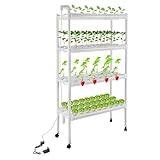
Vertical garden planting Hydroponic kit suitable for home gardens, offices and other indoor and outdoor places. Suitable for growing salad, rapeseed, celery, beetroot, strawberries
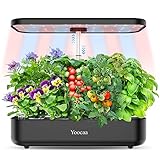
Yoocaa Smart Garden for Growing 12 Plants, Mini Hydroponic Greenhouse for Home, Hydroponic Complete Kit with LED Light for Indoor Growing – Adjustable Height and Automatic Timer (Dark Black)
You might be interested in:
