
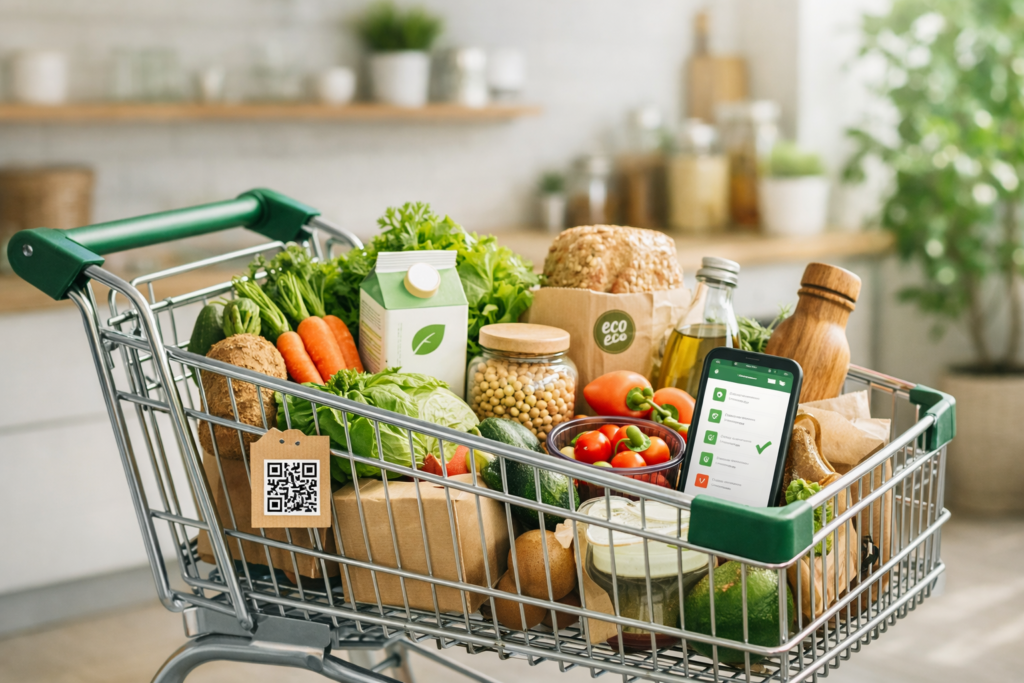
Have you ever stood in front of the supermarket shelf, torn between the desire to purchase the most environmentally friendly product and the need to not exceed your weekly budget? If the answer is yes, you are not alone.
According to the new Consumer Trends Report 2026 ofEIT Food Consumer Observatorymost Europeans are navigating the same troubled waters. Between biting inflation and concern about the climate, the way we eat is changing. It’s no longer just about following a diet, but about finding a balance between your wallet, mental well-being and respect for the Planet. So how will we fill the cart in the coming years?
Here are the 5 trends that will transform our tables between now and 2035, explained without mincing words.
The revenge of branded products (and home cooking)
Let’s face it clearly: shopping has become expensive. The report highlights how economic pressure is pushing more and more people towards the so-called private labels (private label products) and solutions value-for-money. It is not a defeat, but an intelligent adaptation strategy. The Every meal counts trend identified by the report tells us about consumers who, in order not to give up on quality or their own ethical values, cut out the superfluous and return to cooking at home and self-producing. It is a return to conscious home management: real value is sought, frills are avoided and the dignity of saving is rediscovered.
From the “basket” to the treasure: Upcycled food
Forget simple recycling: the new frontier is upcycling, the creative reuse of even leftovers. The “From trash to treasure” trend shows how consumers not only want to reduce waste, but are ready to purchase products made with ingredients that we would once have discarded. Imagine probiotic drinks made from unsold bread or fiber-rich snacks created from fruit processing waste. It is not a fallback, but a choice that combines curiosity and sustainability. However, there is one clear rule: the consumer wants “clean labels”. We want to know exactly what we’re eating, without compromising on taste or safety.
Proteins: beyond labels, common sense wins
Are we omnivores, vegetarians or flexitarians? The report suggests that labels matter less than substance. In the “Pondering protein” trend, it emerges that many consumers are confused about the ideal amounts and sources of protein. While there is curiosity about novelties such as algae (excellent for the marine environment and rich in Omega-3) and proteins from fermentation or mushrooms, the real lifeline remain the classics: legumes, dried fruit and cereals. They are familiar, economical and sustainable. Even those who consume meat are increasingly looking for “natural” and less processed options, sometimes wary of ultra-processed plant-based alternatives. The common goal? Diversify without stress.
Nourish your mind (and socialize without alcohol)
Health is no longer just a matter of calories or cholesterol. The “Food on the mind” trend reveals to us that mental well-being has become an absolute priority. We look for foods that help us manage stress, improve mood and concentration, focusing heavily on the gut-brain axis. The boom in Mindful Drinking also fits into this scenario: more and more people, especially among the younger generations, are choosing to reduce or eliminate alcohol. Not out of deprivation, but to socialize in a more authentic way and wake up refreshed. Functional and festive soft drinks are becoming the new symbol of conviviality.
Enough promises: we want proof (and no plastic)
Blind trust in brands is over. The “Farm to fact” trend highlights a skeptical consumer demanding radical transparency. Green writing on the packaging is not enough for us: we want certain data on sustainability and health. A rapidly growing concern? Microplastics. The fear that they could contaminate food is driving the demand for safer packaging and tangible scientific evidence. Technology is coming to our aid: apps and QR codes (for those who have the patience to scan them) are becoming tools to check if what we buy is really what it promises to be.
A look to 2035
The report imagines different future scenarios, but the common thread is one: resilience. Whether it is a return to “Natural and Local” with short and seasonal supply chains, or an “Affordable and Accessible” future where technology helps reduce costs, the path is marked. The power is in our cart: every time we choose a legume instead of a steak, or save a leftover from the bin, we are writing a piece of that future. And the good news is that, it seems, we’re all in this together.
