
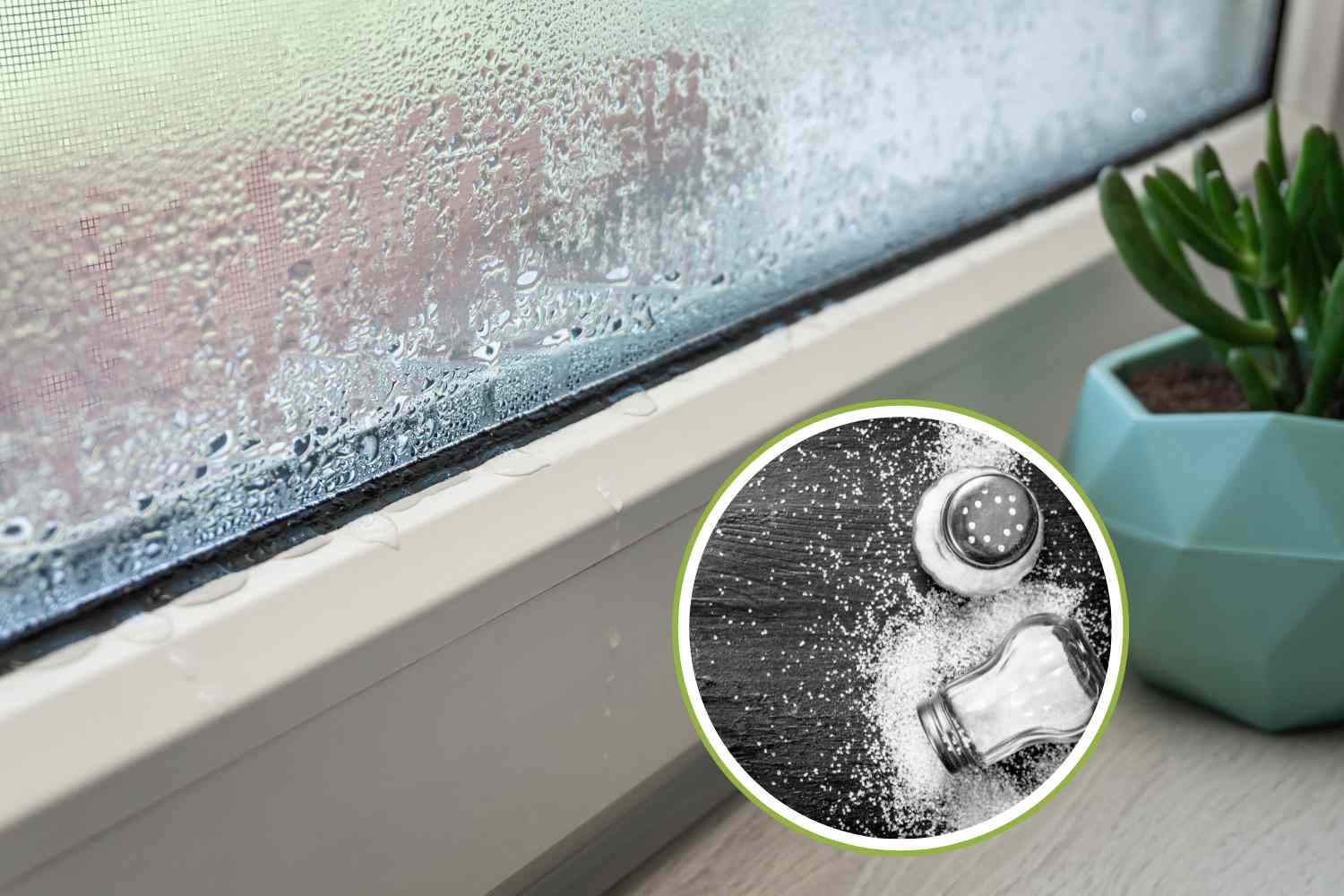
With the arrival of autumn and the first colds, many houses find themselves dealing with an enemy as quiet as annoying: humidity. Frequent rains, decreasing temperatures and closed windows for most of the day favor the formation of condensation and mold, especially in the less awarded rooms. It is precisely in this period that an old grandmother’s advice returns to circular: to place a container with salt near the windows. But is it an metropolitan legend or a remedy that has a concrete base?
The problem of humidity in the house
When the days are shortened and the cold forces to close doors and windows, the air inside the houses becomes heavier and saturated with water vapor. The difference in temperature between the warm interior and the cold outside causes the formation of droplets on the glass: it is the phenomenon of condensation.
If overlooking, this process leads to black mold halos on the fixtures, unpleasant smells in the tissues and a general worsening of the quality of the domestic air. It is not a simple aesthetic problem: breathing in a humid environment can cause inconvenience to those suffering from allergies, asthma or respiratory problems.
The salt remedy
In countries known for long periods of rain, such as the United Kingdom or North of Spain, this trick has long been a small daily habit. The idea is simple: fill a container with salt and place it next to the glass. The reason? The salt is hygroscopic, that is, capable of attracting and retaining the humidity present in the air.
According to those who practice it, this solution helps to limit the formation of drops on the glass and reduce humidity in the rooms. But the real question remains: how much does it really work?
What experts say
Andy Ellis, home expert and gardening, confirmed to the British newspaper Mirror that the method is not a folkloristic invention. “The salt naturally absorbs humidity from the air and contributes to reducing condensation on the glass. It is an economic makeup, within everyone’s reach and which does not require any effort,” he said.
Of course, miracles should not be expected: a salt container cannot replace an electrical dehumidifier or solve structural problems of infiltrations or isolation. But to manage small and annoying episodes of condensation it can be a simple and effective solution.
Condensation science
To understand why salt can help, you have to return to the condensate mechanism. The hot air retains more water vapor. When this comes into contact with a cold surface, like the glass of a window in winter, the steam turns into water and slips along the fixtures.
At that point the humidity accumulates, infiltrating the curtains, clothes and walls, creating fertile soil for mold and bacteria. The salt, absorbing part of that steam before it turns into droplets, contributes to containing the problem.
How to apply makeup
There is no need to equip. Just a glass, a bowl or a small jar filled with a few tablespoons of coarse salt. For larger windows, you can increase the quantity or arrange two nearby containers. The only precaution is to replace the salt when it is moistened too much, a sign that it has already done its job.
The main advantage is the almost null cost: it is a product that we all already have in the kitchen. In addition, it does not release harmful substances, it does not consume electricity and does not require particular maintenance.
When salt is not enough
It is good to clarify it: salt is a palliative, not a definitive solution. If humidity is caused by structural problems such as infiltrations, poor insulation or thermal bridges, more radical interventions are needed. In these cases, the advice of experts is to combine different precautions: to regularly ventilate the rooms, avoid spreading the laundry in closed environments, use a dehumidifier and, when possible, improve the insulation of the house.
Acerere the house every day
It seems trivial, but opening the windows remains the first defense against humidity. Ten minutes of air exchange are enough in the morning and in the evening to expel the accumulated steam.
The best time is when it is not raining outside and the air is drier, even if cold. Better to open the windows completely for a short time rather than keep them a long time: in this way the air is really reciprocated without excessively cooling the walls.
Use a dehumidifier
For those who live in particularly humid areas or in poorly isolated houses, an electric dehumidifier is the most effective choice. These appliances suck the air, eliminate steam and release it drier.
The advantage is immediate: in a few hours the condensate is significantly reduced and the perceived temperature becomes more comfortable. Some models also have filters that improve air quality, eliminating dust and allergens.
Limit the laundry lying in the house
One of the most common mistakes is to spread the role inside the house during the cold months. The water that evaporates from the fabrics quickly increases environmental humidity, worsening condensation on the glass.
If you do not have an dryer, the alternative is to spread in a well -ventilated room, possibly with an open window or the dehumidifier on.
Check the heat sources
Heating also has a role in the management of humidity. The radiators positioned under the windows help to keep the glass hot, reducing the formation of drops.
But be careful of temperature changes: keep the house excessively hot compared to the outside worsens condensation. Better to maintain a constant and not too high temperature, around 19-20 degrees.
Exploit plants that absorb humidity
Some apartment plants are not only decorative, but also contribute to absorbing part of humidity. Among the most suitable are the Boston fern, the bamboo palm and the Tillandsia.
Of course they do not replace the main solutions, but they can be a small natural and pleasant support to have at home.
Intervene on critical points
If humidity is not only seasonal but persistent, the problem can be structural: infiltrations from the walls, poor insulation, thermal bridges. In these cases, salt or dehumidifier are only palliative. Targeted jobs are needed, such as isolating the walls, replacing the fixtures or treating walls with anti -mold paints.
They are more expensive interventions, but they represent the only way to definitively eliminate the problem.
The winning strategy: combine multiple remedies
There is no only magical solution against domestic humidity. The salt container works well as an economic aid, but must be joined to other habits: arsis, reduce steam sources, keep the temperature constant and, if necessary, rely on the technology of dehumidifiers.
With a combination of daily precautions and, where needed, structural interventions, the house can be transformed into a healthier and more pleasant environment, even in the most humid months of the year.
