
The praying mantis Mantis religion it is a very elegant insect widespread throughout central Europe and belonging to the insect family Mantids. Particularly appreciated for its predatory abilities, this insect has given rise to a series of fighting styles in martial arts that imitate attacks on its peers, but contrary to what one might think, the praying mantis is totally harmless to humans and also has its own sacs in which the female lays her eggs.
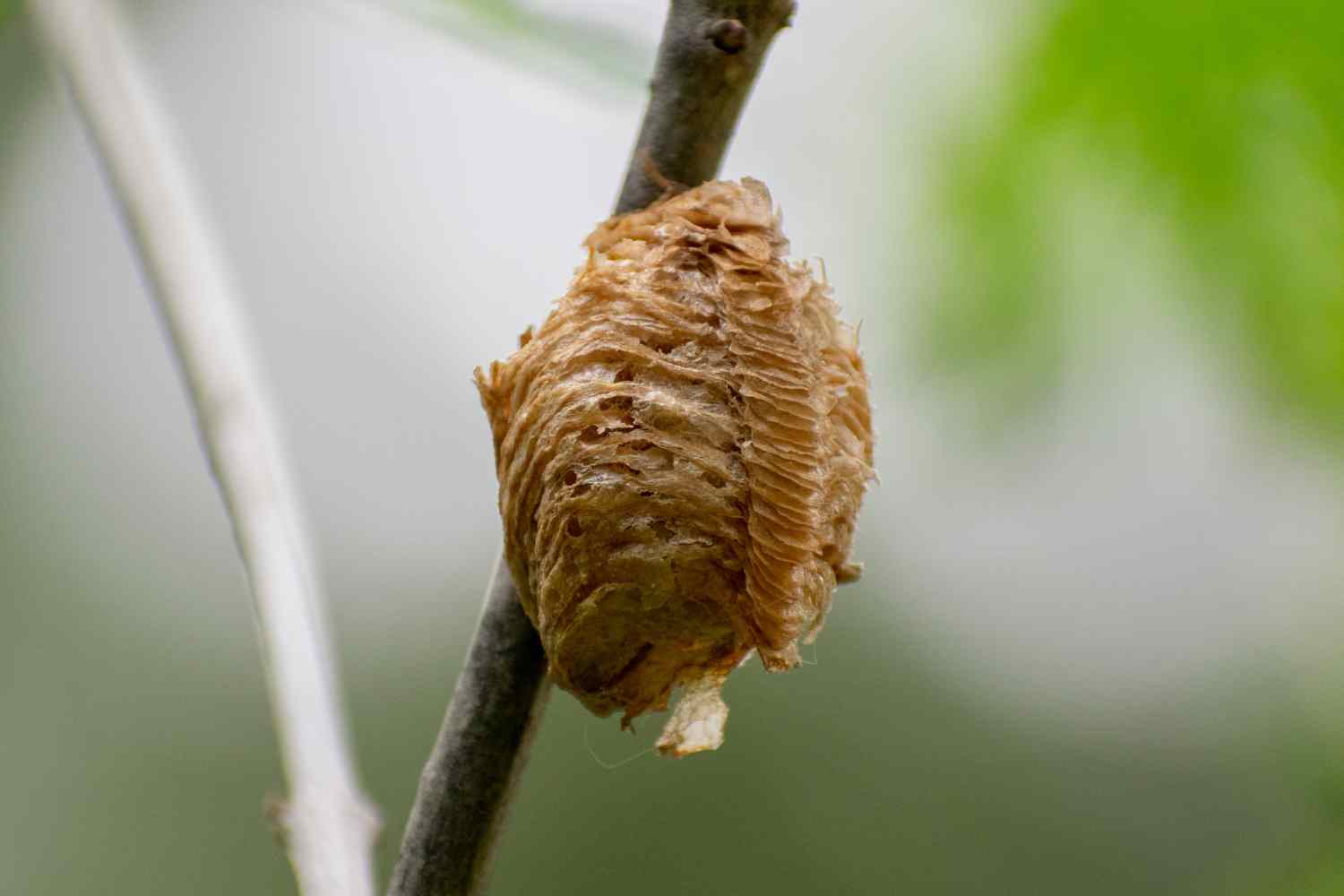
The female usually kills the male after mating which takes place in November while throughout the winter the unborn babies grow in the oothecae, more commonly called sacs, and then reach full development in high summer where the specimens are fully considered adults. From November to May it is therefore possible that you will spot its sacs in the garden or vegetable patch which contain around 60-70 eggs each. (Read also: If you come across this insect, don’t kill it. The scutigera is not only harmless, but also very useful in the home)
Found this female Praying Mantis (Mantiseditore) laying her ootheca (egg mass) on the shutter. It will expand, harden & darken like polyurethane foam. First time I’ve ever caught one ‘in the act’ laying, although the ootheca are a common sight. pic.twitter.com/RpeC75m7yN
— Paul Tout (@adriawildlife) September 13, 2020
The oothecae should never be removed first of all because the praying mantis is an expert hunter of mosquitoes, wasps, bedbugs, flies and parasites, proving to be in all respects an excellent helper in the maintenance of the green area in which it has chosen to proliferate and in the control of its summer infestations.
Secondly, this insect is not at all dangerous for us humans, in cases it can bite – if annoyed – but its bite is not poisonous and does not cause any itching so there is nothing to fear. Furthermore, they are absolutely not dangerous for the health of your plants.
If you spot a sac in your garden, therefore do not destroy it, but rather stop using fertilizers or other chemical substances that can harm the animal and its young. Oothecae can be found anywhere such as between the leaves of plants, in the trunks of trees or even in some walls. In winter it is much easier to notice them among the branches of trees that are bare, while in spring they can camouflage themselves well.
The sacs are 2-3 centimeters large on average, are mostly rounded and have colors that vary from brownish to white-beige. These casings that the female secrets will protect the praying mantis babies until they hatch around May.
How to photograph and report an ootheque: why it is important to do so
If you come across an ootheca on a walk or in your garden, the best thing you can do — other than leave it where it is — is photograph it and report it. Alien species of mantis have been present in Italy for some years, such as the Asian giant mantis Hierodula tenuidentata and the Indochinese giant mantis Hierodula patellifera, whose spread must be carefully monitored by scholars to understand their impact on the local ecosystem.
Reporting a sighting is simple and does not require specific skills. Platforms like iNaturalist or the Citizen Science Center allow anyone to upload georeferenced photos that end up directly in entomologists’ databases. A good photo should include the bag in context, possibly with a size reference such as a coin or pencil. If the ootheca is located in an accessible location, also noting the type of plant or surface on which it is placed can be valuable information for researchers.
Praying mantis and children: what to do if they find it
It’s a common scene: a child finds a praying mantis in the garden and the adults’ first reaction is to push it away, convinced that the insect could be dangerous. There is actually no cause for concern. The praying mantis is completely harmless to children, it is not poisonous and its bite – completely unlikely unless rough and prolonged manipulation – is equivalent to a light pinch, without consequences.
Rather than discouraging contact, an encounter with a mantis can become an extraordinary little lesson in nature. Observing it moving its head, following the movements with its eyes or holding its front legs still waiting are behaviors that fascinate children and stimulate curiosity towards the world of insects. The only precaution is to invite the little ones not to squeeze it too tightly and not to scare it with sudden movements, both out of respect for the animal and to avoid the defensive clamp. Everything else is pure wonder.
The praying mantis in the organic garden: which parasites it really eliminates
Anyone who grows an organic vegetable garden knows how difficult it is to keep pests under control without resorting to chemicals. The praying mantis, in this sense, is one of the most effective allies that nature can offer. Its diet is varied and includes many of the insects that most damage domestic crops: green bugs that attack tomatoes and green beans, flies that infest ripe fruit, moths whose caterpillars devastate vegetable leaves and even some beetles that feed on the roots.
It must be said honestly that the mantis does not discriminate: being a generalist predator, it can also feed on useful insects such as bees or ladybugs. However, in a healthy and well-balanced garden, where biodiversity is high, the contribution of the mantis to pest control far outweighs the possible side effects. The key is not to focus on the mantis as the only solution, but to integrate it into a rich ecosystem where it coexists with other beneficial insects, guaranteeing that natural balance that no pesticide can replicate.
The false myths about the praying mantis: it’s time to dispel them
Despite being a relatively common and studied insect, the praying mantis is still surrounded by popular beliefs that have no scientific basis. The most widespread is that of venom: in many cultures, and even today in some Italian rural areas, its bite is believed to be poisonous or that it can cause serious allergic reactions. This is not true, the mantis does not have venom glands of any kind and its bite, in the very rare cases in which it occurs, is completely free of toxic substances.
Another myth that is hard to die is that which sees her as a bringer of bad luck or a harbinger of negative events. In some Mediterranean popular traditions, the praying mantis was feared and kept away with superstition. Nothing could be further from reality: on the contrary, its presence in a garden or field is an excellent sign of environmental health, indicative of a balanced ecosystem that is not very contaminated by chemical substances. Finally, there are those who are convinced that oothecae are pockets of parasitic insects or eggs that are harmful to plants: in this case too this is an error, and destroying them means depriving your garden of dozens of completely free and effective future natural predators.
