
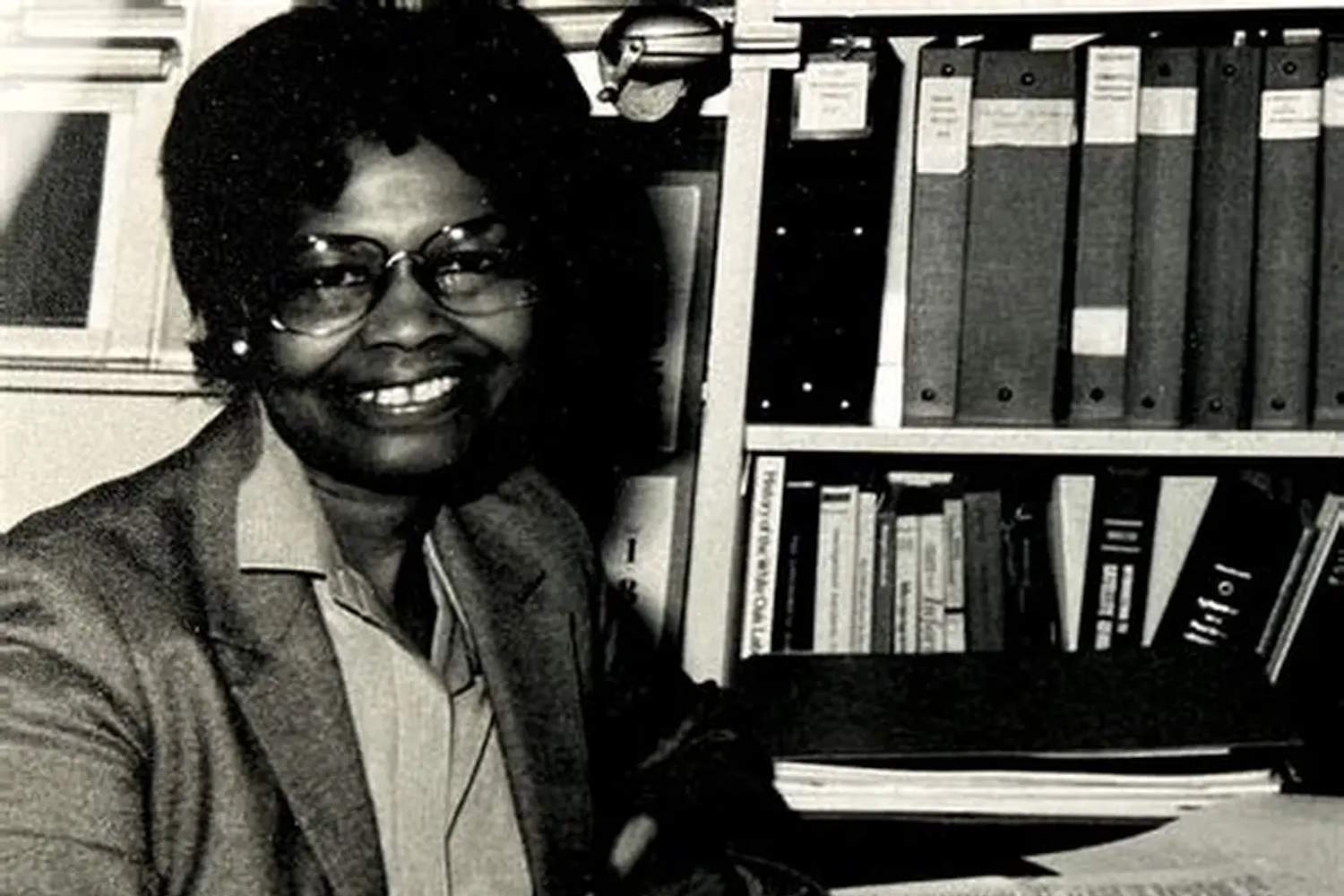
From geodesy (complex of operations for connecting points on the Earth’s surface) to models of the Earth’s shape with which today we can determine the positions of any point on Earth with an error of a few centimeters. She, Gladys Westplayed a very important role in the development of the current global positioning system, better known as GPS.
Having passed away a few weeks ago at the age of 95, her merits were recognized late. As happened to others, obviously. Because she is a woman, because she is black.
On the International Day of Women and Girls in Science, which falls every year on February 11 to celebrate the notable contributions of women in science and raise awareness that science and gender equality must go hand in hand to address major global challenges, here’s why it’s worth remembering West.
Who was Gladys West, the mathematician who made GPS possible
For much of her life, Gladys West’s name remained unknown to the general public. Yet, his silent and meticulous work contributed decisively to the development of one of the most used technologies in the world: GPS.
It was at the United States Naval Weapons Laboratory that he developed complex geodetic systems capable of precisely measuring the shape of the Earth, a fundamental step in the birth of the global positioning system. A technical job, away from the spotlight, but capable of transforming the daily lives of billions of people: from road navigation to smartphones, up to the management of emergencies and transport.
His personal story tells much more than a scientific success. Born in 1930 in a rural area of Virginia marked by poverty and segregation, West understood early that education would be the only path to redemption. He attended segregated schools and walked miles to study. Then, thanks to her excellent results, she obtained a university scholarship in mathematics, in an era in which being a woman and black meant facing double obstacles.
In 1956 he went to work at the naval facility of Dahlgrenbecoming one of the very few African American people present. Here she began as a computer programmer and participated in very advanced scientific projects, managing to perform billions of calculations when computers still worked with punched cards.
The decisive step towards GPS
In the 1970s and 1980s, West led satellite data analysis programs and contributed to the precise measurement of the Earth’s surface, taking into account gravity and tides. His 1986 study provided the accurate geodetic model of the Earth that would become the technical basis of modern GPS.
An enormous result, which however remained secret for a long time due to the military nature of the research. West retired in 1998 and even earned a doctorate after overcoming a stroke. But the world only really discovered his name in 2017, almost by chance, when a short biography written for a university meeting attracted media attention.
From that moment came prizes, honors and inclusion among the great female figures of contemporary science. A late recognition that made her a symbol of all those brilliant minds who remained in the shadows, especially women and people of Afro-descendants.
