
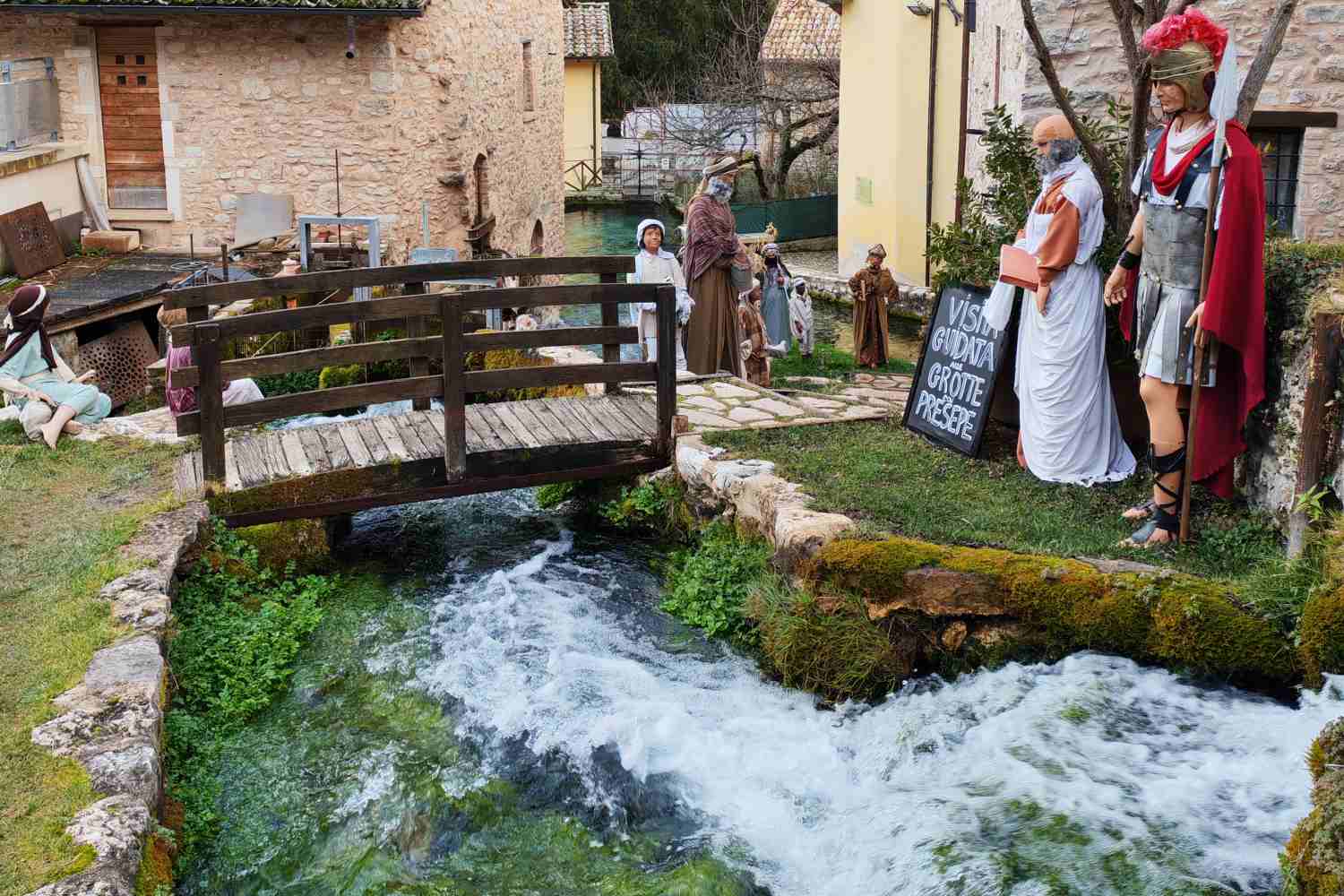
On our last camper trip at the beginning of the year we finally visited Rasiglia, in Umbria, after dreaming about it for years. Immersed in the Apennine mountains, at over 600 meters above sea level, it is a small hamlet in the municipality of Foligno which preserves the charm of the medieval villages intact. A small village of few souls that seemed almost forgotten but which is now besieged by travelers and photographers for its unique characteristic: a rare balance between landscape, history and water, an element that here is not a simple setting but a true protagonist.
A village shaped by the springs
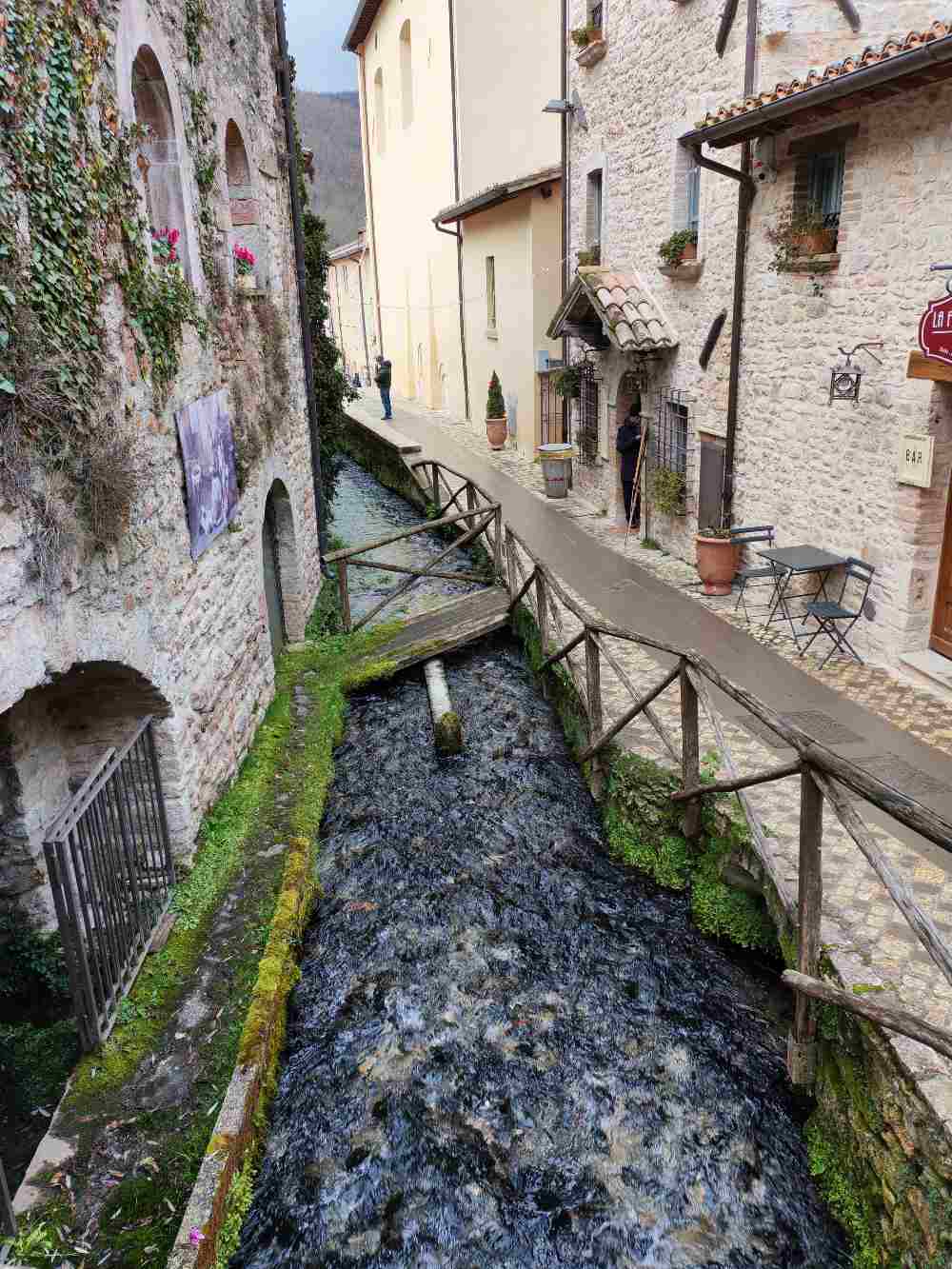
Its natural amphitheater structure and the constant presence of water make it a unique place, often defined as the “Venice of Umbria”. A nickname that comes from the intertwining of streams, springs and waterfalls that cross the town, accompanying every step with their murmur.
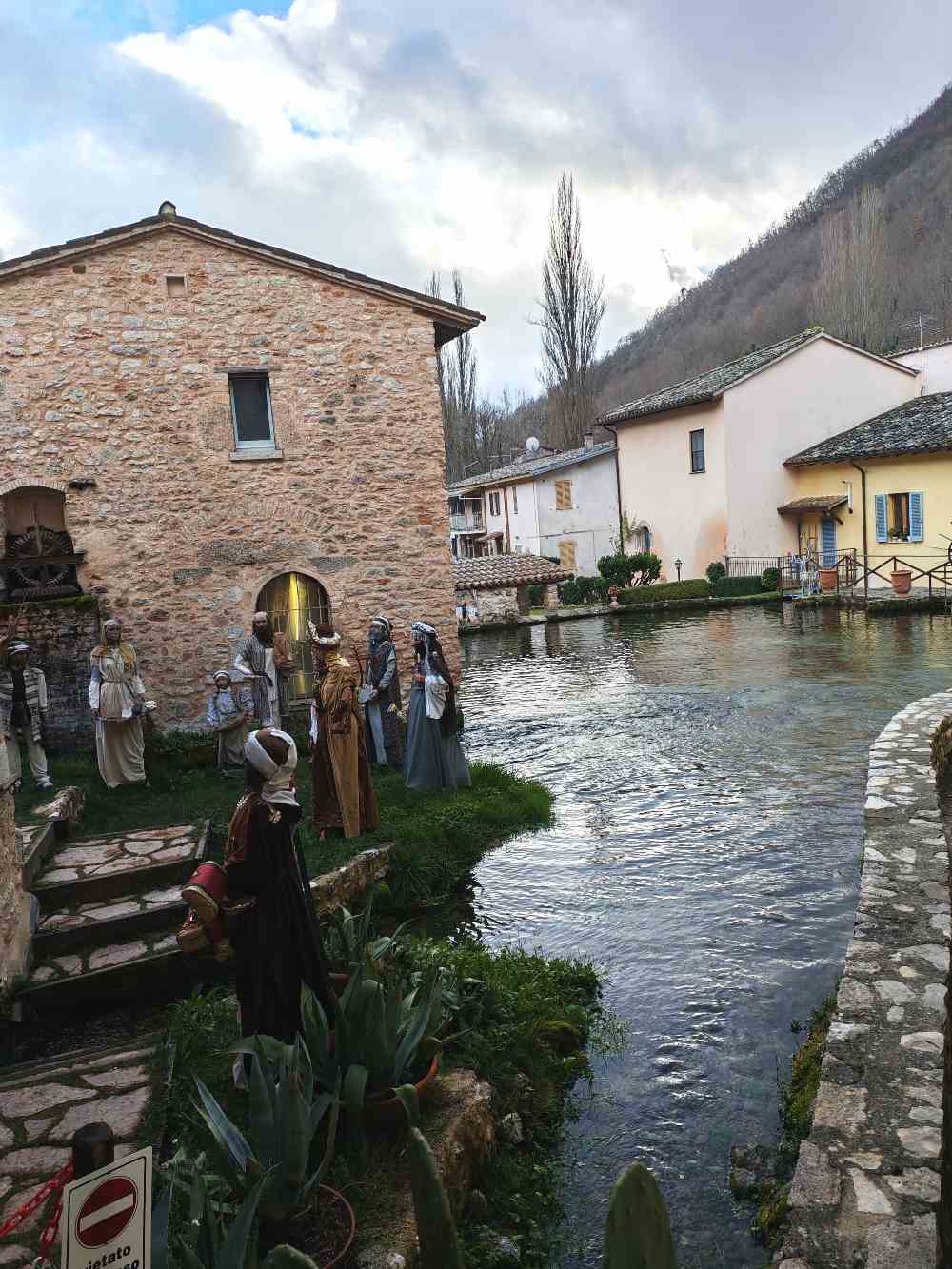
The Capovena spring, which originates in the upper part of the town, feeds a network of streams, canals and waterfalls that cross the entire town until they flow into the famous Peschiera, a large medieval pool connected to the Menotre river.
Next to Capovena, the area is home to other fundamental springs such as Alzabove, Venarella, Le Vene and Vena Pidocchiosa, some of which are still used today for the water supply of the Southern Umbrian Valley. A complex natural system that makes Rasiglia an interesting case also from an environmental and hydrogeological point of view.
The medieval origins and strategic role
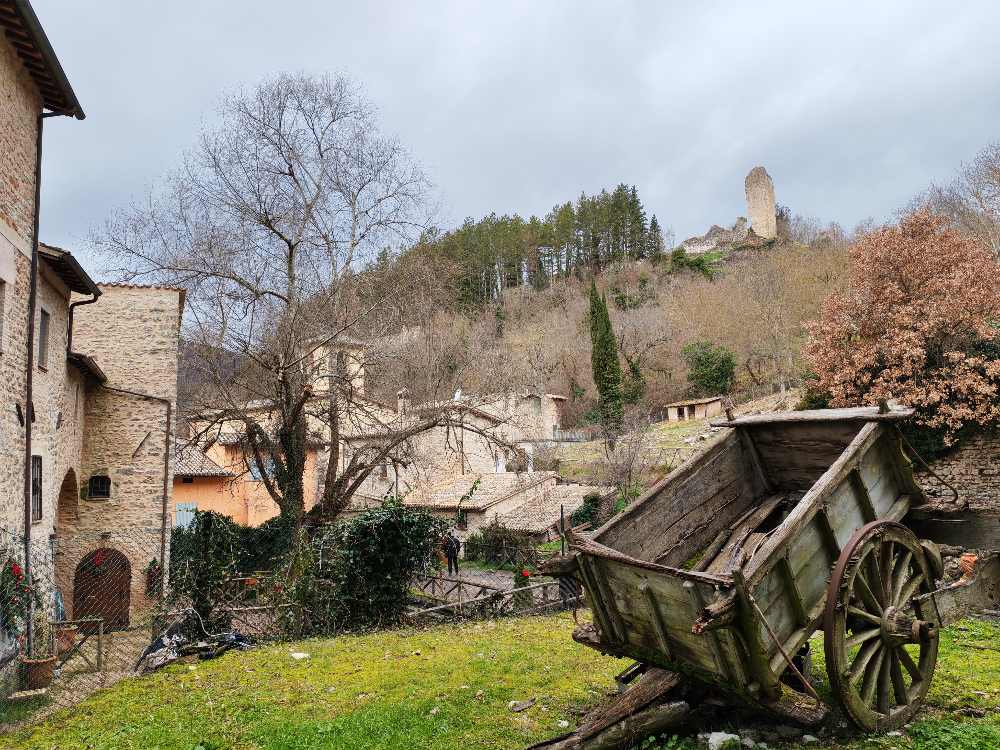
The first written testimonies about Rasiglia date back to the 12th century. Its position, on the border between the Foligno area and that of Spoleto, pushed the powerful Trinci family to fortify the area with the Castrum et Roccha Rasilia. Today, sections of the walls and a tower remain of the fortress, but its presence continues to illustrate the strategic role of the village along the ancient commercial routes that connected the Adriatic and Tyrrhenian Sea, such as the Via della Spina.
A productive past linked to water
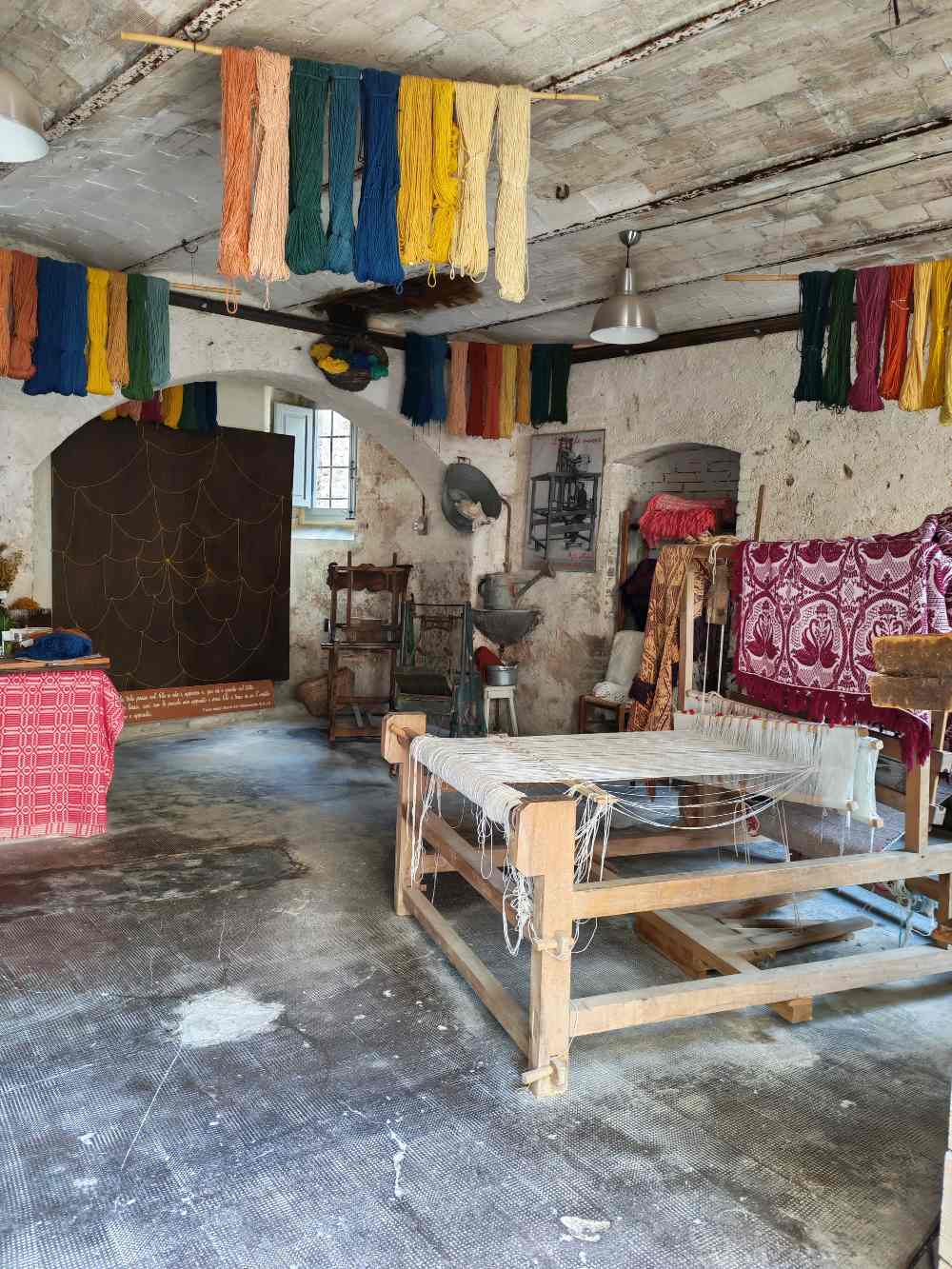
The abundance of water favored the birth of mills, fulling mills and factories, making Rasiglia an important center for wool processing, weaving and dyeing. A prosperity that continued without interruption until the arrival of the industrial revolution, when the new machinery and the movement of the population towards Foligno triggered a slow decline. Even today it is possible to observe fifteenth-century mills, historic looms and original tools that testify to the local production tradition.
From decline to rebirth thanks to the local community
The twentieth century marked a phase of depopulation, aggravated by the 1997 earthquake, which caused further damage and abandonment. It seemed like the end of a historical cycle, but Rasiglia knew how to react. The turning point came in 2007 with the commitment of the Rasiglia and its springs Association, which started a recovery process based on maintenance, protection and valorisation of traditions. The renovation of the Peschiera, the recovery of the ancient production buildings and the organization of events have returned a new vitality to the village, with social media doing the rest in a rebirth that has become a model of heritage protection.
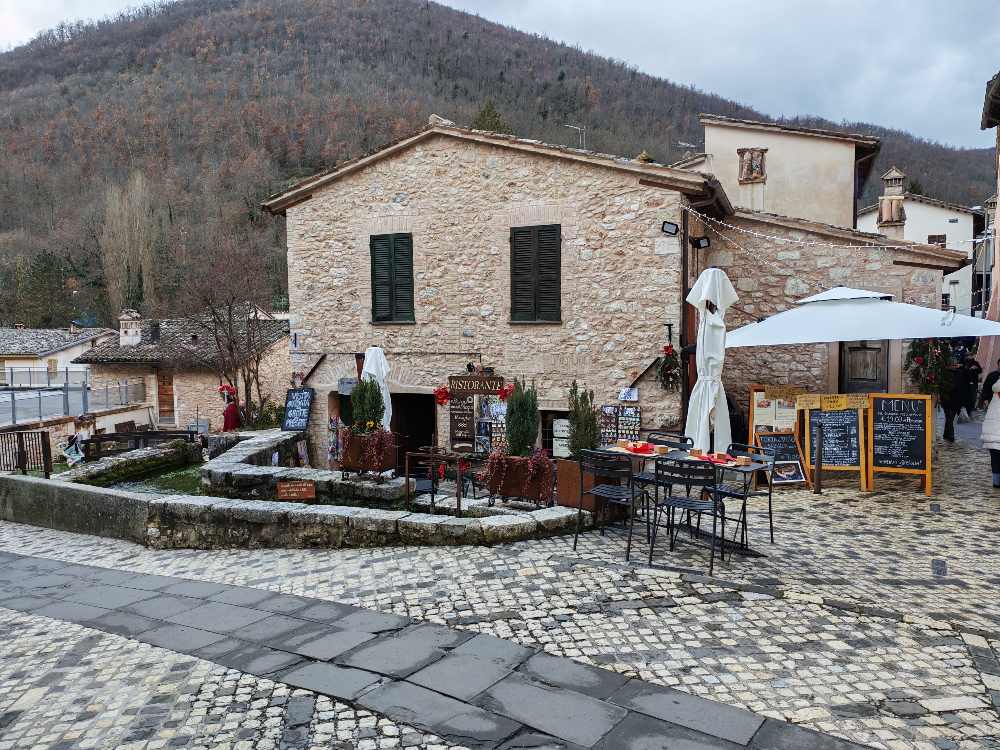
A village without cars, punctuated by water
Today Rasiglia has around 40 inhabitants. The growing influx of tourists represents an opportunity, but also a challenge. The true richness of the village lies in its authenticity, in a relationship with the water and the territory that requires respect and attention. Rasiglia does not ask for fanfare, but for time and listening.
One of its secrets is the choice to keep the historic center free of cars, left in the external car parks. The village can only be explored on foot, following the rhythm of the water that flows between stone, greenery and flowers. Each season offers a different scenario: spring and summer enhance the colors and freshness of the waterways, while winter offers more intimate and evocative atmospheres.
Among the most awaited moments of this period is undoubtedly the live nativity scene, which animates the village on 26 December and 6 January and which we were lucky enough to see, albeit on a gloomy day. The hope for the future? For us to return to visit it with sunnier weather which gives even more intense colors reflected in the water. For Rasiglia, however, to remain forever as it is: beautiful and pure.
You might also be interested in:
