
The air you breathe in High sabina He knows of woods, of history and, for some time, of the future. Here, where it depopulation It makes itself felt more than elsewhere – a drop of 4.2% of residents against the national average of 0.3% – ten small municipalities have decided to stop feeling on the margins and writing a new beginning together. Not a book of dreams, but a concrete project, Feed by PNRR funds and from a vision that weaves artificial intelligence and ancient wisdom.
Saturday 12 July, a Marceellithe smallest town in Lazio, a party will be staged which is much more than a festival. It will be the baptism of a community that has chosen and joined. The traditional Trousersthe great puppets of papier -mâché, for the first time they will dance together, in a collective choreography that knows of propitiatory ritual. They celebrate a pact, a contract preamble signed by the mayors of Rocca Sinibalda, Belmonte in Sabina, Colle di Tora, Longone Sabino, Marcetelli, Torricella in Sabina, Monteleone Sabino, Poggio Moiano, Pidegio S. Lorenzo and Varco Sabino. Together, 3500 souls and an ambitious goal count: repopulate the 5% area by 2035.
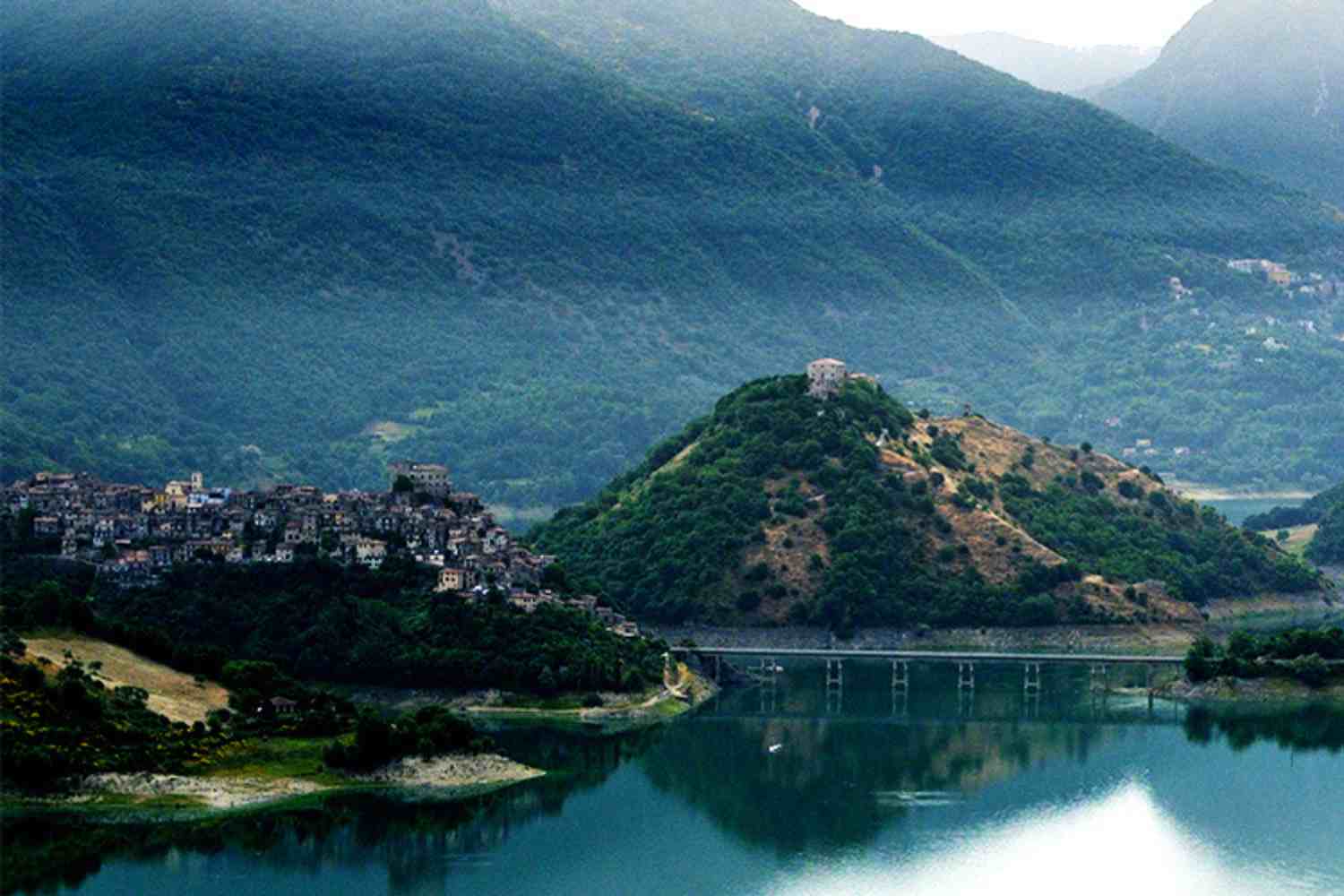
The project is called ‘IN. High sabina‘, where’ in ‘stands for “natural intelligence”, that of the territory itself, rich in among the most important water resources in Europe, such as the basins of the lakes of the Turano and the jump that quench their thirst. Resources that today, thanks to a meticulous mapping work, become the basis for a circular and kind economy.
But it is a battle that is also fighting on a political and cultural level. “Let’s say no to the accompaniment for the end of life for the internal areas”, thunders Stefano Michelimayor of Rocca Sinibalda and the lead municipality. His is a heartfelt appeal against the idea that the villages are “terminal patients to be accompanied to death as stated by Minister Foti”. For Micheli, the cure passes from the “Ricucing the territories“, Transforming the strategic plans into structural policies, investing in essential services such as school, health and mobility, and activating a tax advantage for those who decide to stay, or return.
The project translates these words into 15 concrete actions: from the creation of a renewable energy community to the sustainable management of forest assets, from the strengthening of the electric mobility to the relaunch of local agriculture. The idea, as he explains Davide Marinoprofessor at the University of Molise, is “transforming these natural resources into services for the benefit of the population” and “enter them on the market, certainly not to commodify them but to enhance them”. The real change of pace lies here: “The entire territory of the Alta Sabina will think no longer fragmentedly but as a single subject”.
This new cohesion feeds on ancient roots but uses avant -garde tools. “Technology will play a central role,” explains the territorial sociologist Elena Battaglinidesigner of the project, “but will be at the service of the community and natural resources of the territory”. The brightest example is the birth of the Masthe Alta Sabina coin. It is not a cryptocurrency on which to speculate, but a digital portfolio based on trust and exchange. Through a web platform and an app, citizens will be able to offer and receive services. A passage by car to a neighbor, the delivery of spending on an elderly person, the care of a common flowerbed: every gesture of solidarity will generate an accumulation of Mas, spent to obtain other services within the community. The real revolution? It is the community itself that decides the value of each action, in a participatory model that feeds a virtuous circle of mutual help.
While the trousers will dance to Marceelli, they will not only celebrate tradition, but the birth of an economy of us, where the most precious capital is the time donated to others and the greatest wealth is a community that decides, united, not to want to disappear.
