
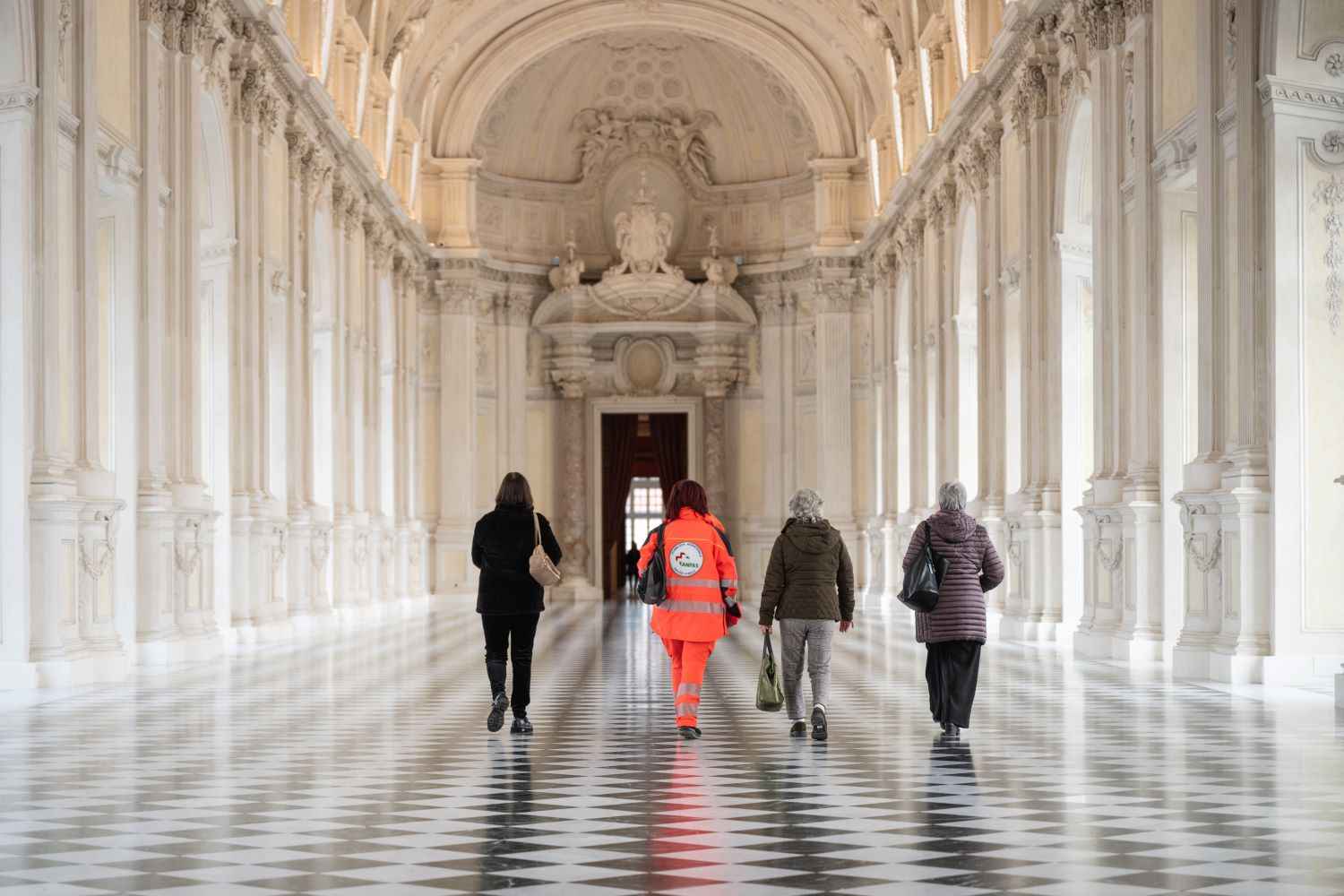
Not just drugs and traditional therapies: in Piedmont the doctor can also prescribe a visit to the museum. With the “Wellbeing Museum: treatment paths through art and culture” project, local healthcare experiments with a new form of intervention, based on social prescription. The initiative, launched by ASL TO3, integrates cultural experiences into personalized treatment paths, transforming art into a concrete tool to support psychophysical well-being.
How the project works
In the new model, general practitioners can combine traditional therapies with cultural activities prescribed via a white prescription. Guided tours, artistic workshops, experiential activities and moments of narration thus enter the therapeutic plan of people in fragile conditions. The objective is to broaden the concept of care, enhancing the role of relationships, emotions and social participation.
The project was born as an evolution of the “Oulx: in arte salus” experience and involves two important cultural institutions in the area: the Castello di Rivoli and the Reggia di Venaria. Both places have already been involved for some time in initiatives that intertwine culture and health, and have now become an integral part of therapeutic paths.
A recognized scientific basis
The project does not arise from an isolated intuition, but is based on consolidated scientific evidence. A report by the World Health Organization, based on over 3,000 international studies, demonstrated the role of the arts in the prevention, psychological support and management of chronic diseases.
Cultural experiences in fact activate psychological, biological and social mechanisms that contribute to improving the quality of life. In this sense, social prescribing represents a holistic approach, capable of combining clinical interventions with non-pharmacological tools useful for counteracting anxiety, isolation, mild depression and social fragility.
A healthcare model more open to the community
The project involves a multi-professional team made up of doctors, nurses, psychologists, cultural workers and local entities. The selected patients are placed in small groups and accompanied to museums, where targeted activities stimulate memory, movement, emotions and relationships. At the same time, the process is monitored from a clinical point of view, with a final evaluation of the results.
This experimentation marks an important step: healthcare opens up to the cultural dimension and the territory, going beyond the exclusively clinical model. It is not a question of replacing traditional treatments, but of supporting them with tools capable of strengthening the overall well-being of the person. A simple but powerful idea: culture not as an ornament, but as an integral part of care.
You might also be interested in:
