
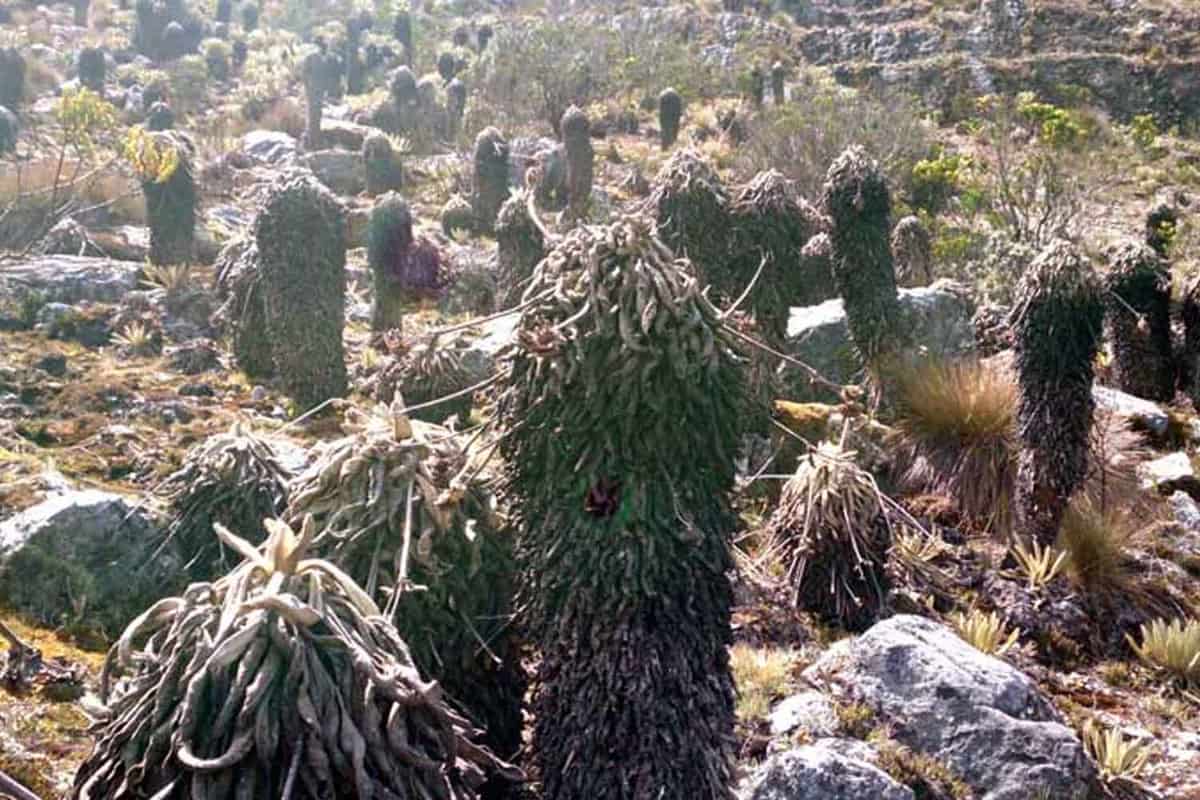
In the Colombian Andes, at around 4,000 meters above sea level, there is a nursery specialized in the cultivation of frailejones, the plants that collect water from atmospheric humidity and contribute to the water supply of millions of people. It is located in the El Cocuy National Natural Park, where for about thirty years park rangers, researchers and farmers have collaborated to restore native vegetation damaged by fires, deforestation and grazing expansion.
The nursery is called Cepame (Pilot Experimental Center for the Equatorial High Mountains) and, according to a report created by Mongabay Latam and Rutas del Conflicto, since 2011 it has contributed to the restoration of approximately 9,451 hectares of páramo, the particular high mountain ecosystem on which a large part of Colombia’s water resources depend.
A nursery for frailejones at 4,000 meters above sea level
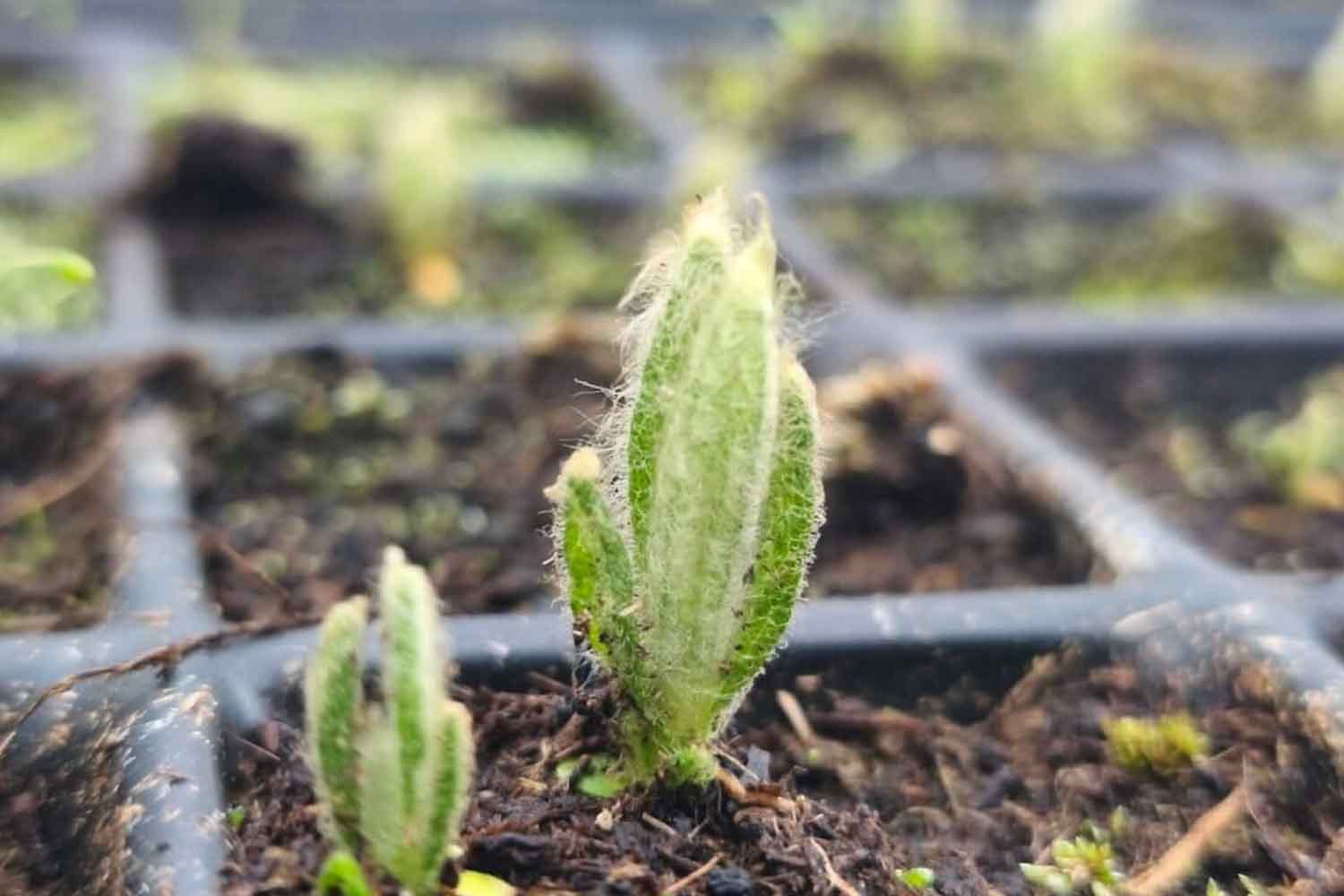
Under the cover of a 250-square-meter greenhouse are rows of black bags containing thousands of small plants. A sort of plant nursery, where we try to reproduce the conditions necessary for the germination of seeds in an environment where temperatures can drop to 10 degrees below zero.
Cepame is one of the four nurseries of the El Cocuy National Natural Park and is home to several species of frailejones, including Espeletia lopezii and Espeletia cleefii, as well as trees, shrubs and medicinal plants typical of these mountains.
©Parque Nacional Natural El Cocuy
As explained by César González Barrero, responsible for ecological restoration activities in the park’s nurseries, interviewed by Mongabay, the seedlings must reach about 20 centimeters in height before they can be transferred to their natural habitat. To get to that size requires about two years of treatment.
The structure can accommodate up to 20,000 specimens and every year approximately 10,000 plants complete the propagation process. Of these, between 7,000 and 8,000 manage to survive after being transferred to the ground.
Farming families in the area are also participating in the project, as they have known these mountains for generations and know when to collect the seeds, when frosts risk damaging them and how to dry them without exposing them excessively to the sun. Part of the seedlings are planted on their properties, through conservation agreements with the park.
Because frailejones are considered the guardians of the water
Relatives of sunflowers and daisies, frailejones have long leaves covered in silver fuzz that make them appear to be covered in felt. Their name literally means “great friar”, because the silhouettes of these plants emerging from the fog reminded the explorers of those of hooded monks.
The dead leaves, instead of falling, remain attached to the stem, forming a sort of natural coat. The hair on the leaves, on the other hand, helps to convey the water droplets present in the atmosphere towards the ground.
Research by the National University of Colombia, conducted in the Los Nevados National Natural Park, analyzed around 80 plant species distributed across five communities. After two years of monitoring water flows, the researchers observed that the vegetation characterized by the presence of grasses and frailejones was the one that allowed the greatest quantity of water to reach the ground.
The soils of the páramos, rich in organic matter, then function like enormous natural sponges: they accumulate water and gradually release it, feeding springs, streams and rivers. According to the Colombian Ministry of the Environment, these ecosystems are fundamental to the country’s water security and the conservation of its biodiversity.
The former miner who today accompanies volunteers to the Andes
El Cocuy is one of the initiatives to recover the vegetation of the Colombian páramos. In Monguí, in the department of Boyacá, there are also those who have decided to dedicate themselves to the cultivation of frailejones after having spent part of their lives eradicating them.
As told in the report for NPR, Moisés Moreno is 53 years old, with a past as a farmer and miner and a greenhouse at over 3,000 meters above sea level. As a boy he cleared frailejones to make room for potato fields and pastures. After being injured in a coal mine collapse, he decided to return to working outdoors and began to independently study the ecosystem in which he had grown up.
Today he grows frailejones and accompanies tourists and volunteers to the mountains to replant the specimens grown in his nursery. Some participants become so fond of the seedlings that they give them names: Julieta Barba, a biologist NPR met during one of the excursions, named hers Gerry, in honor of her mother. During the same excursion, the journalist also documented the presence of grazing cows and barbed wire fences within the protected area.
In Colombia, frailejones have also become the protagonists of cartoons
Also contributing to the popularity of these plants is a frailejón with two large eyes, a mouth and a song that is particularly difficult to get out of your head. His name is Ernesto Pérez and he was born in Cuentitos Mágicos, a children’s production on Colombian public television.
In January 2022, his song dedicated to protecting water went viral on TikTok. Since then Ernesto has even released a music album and received recognition for his contribution to environmental education. An influencer with lots of leaves and roots, in short. As NPR reports, some of the volunteers who now participate in the excursions organized by Moreno learned about the importance of frailejones thanks to that character.
© Parque Nacional Natural El Cocuy
Losing in a few hours what takes decades to grow
The expansion of agricultural, ranching and mining activities, together with fires and climate change, threatens the survival of these plants. In the El Cocuy nursery, as documented by the Mongabay report, biologist Adriana Sánchez Andrade of the University of Rosario and her student Anamaría Rozo are studying the effects of rising temperatures on native vegetation. To do this, they transferred young specimens of five plant species from a nursery at 4,000 meters above sea level to one located 500 meters lower.
Initial observations indicate that some plants grow faster, but may also be more exposed to attacks by parasites and herbivores. For frailejones, recovering lost soil takes a long time: these plants generally grow a few centimeters per year. A fire can erase the result of entire decades of growth in a few hours.
